
EURUSD
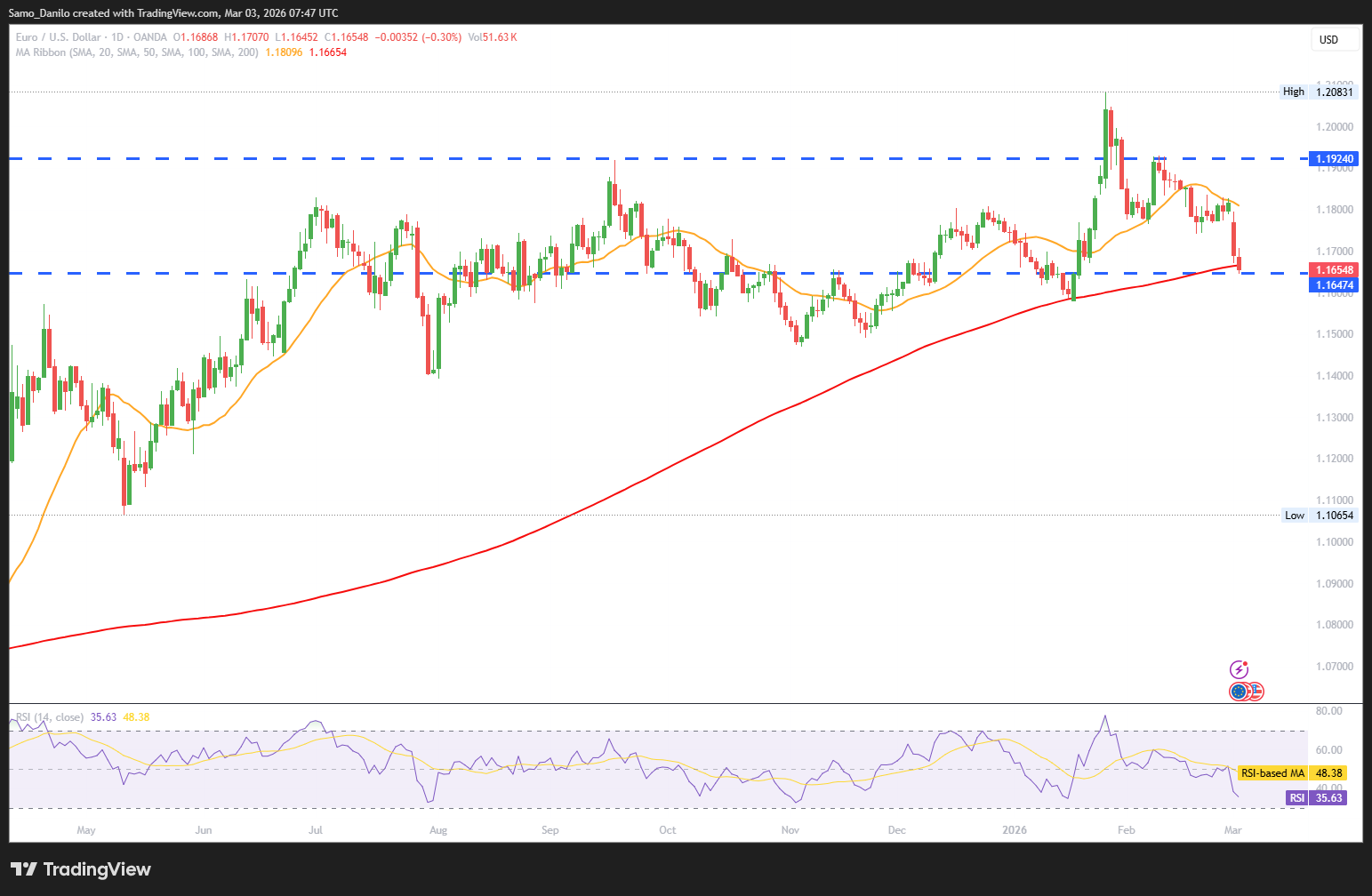
- EUR/USD Price: EUR/USD is trading lower near 1.1660 during the European session, hovering close to a five-week low. The inability to stage a meaningful rebound suggests persistent downside pressure and fragile near-term sentiment around the euro.
- ECB signals: Austria’s central bank governor Martin Kocher stated that the European Central Bank should be ready to move rates quickly in either direction. While the ECB has kept rates on hold since June, this rhetoric reinforces a data-dependent stance rather than signaling an imminent easing cycle.
- Rate cut: Eurozone money markets have almost fully priced out the probability of an ECB rate cut in 2026, with odds dropping to just 8% by December from around 40% previously. This repricing reflects growing confidence in economic resilience and stabilizing inflation, which could provide structural support to the euro if sustained.
- Security tensions: French President Emmanuel Macron introduced a potential “forward deterrence” strategy, including the possibility of deploying nuclear assets abroad for the first time. Increased security tensions in Europe may weigh on investor confidence in the region, adding a geopolitical risk premium that complicates the euro’s outlook.
- Inflation data: Markets now await the preliminary Eurozone HICP release for February, with headline inflation expected at 1.7% YoY and core at 2.2% YoY. A steady reading would reinforce the ECB’s current pause, while any upside surprise could further reduce easing expectations and offer near-term support to EUR.
| SMA (20) | Slightly Rising |  |
|
| RSI (14) | Falling |  | |
| MACD (12, 26, 9) | Falling | | |
Closing statement: EUR/USD remains under pressure near multi-week lows, with markets balancing reduced rate-cut expectations against heightened geopolitical uncertainty. The upcoming inflation data will be pivotal in determining whether the pair stabilizes or extends its downside momentum.
GBPUSD
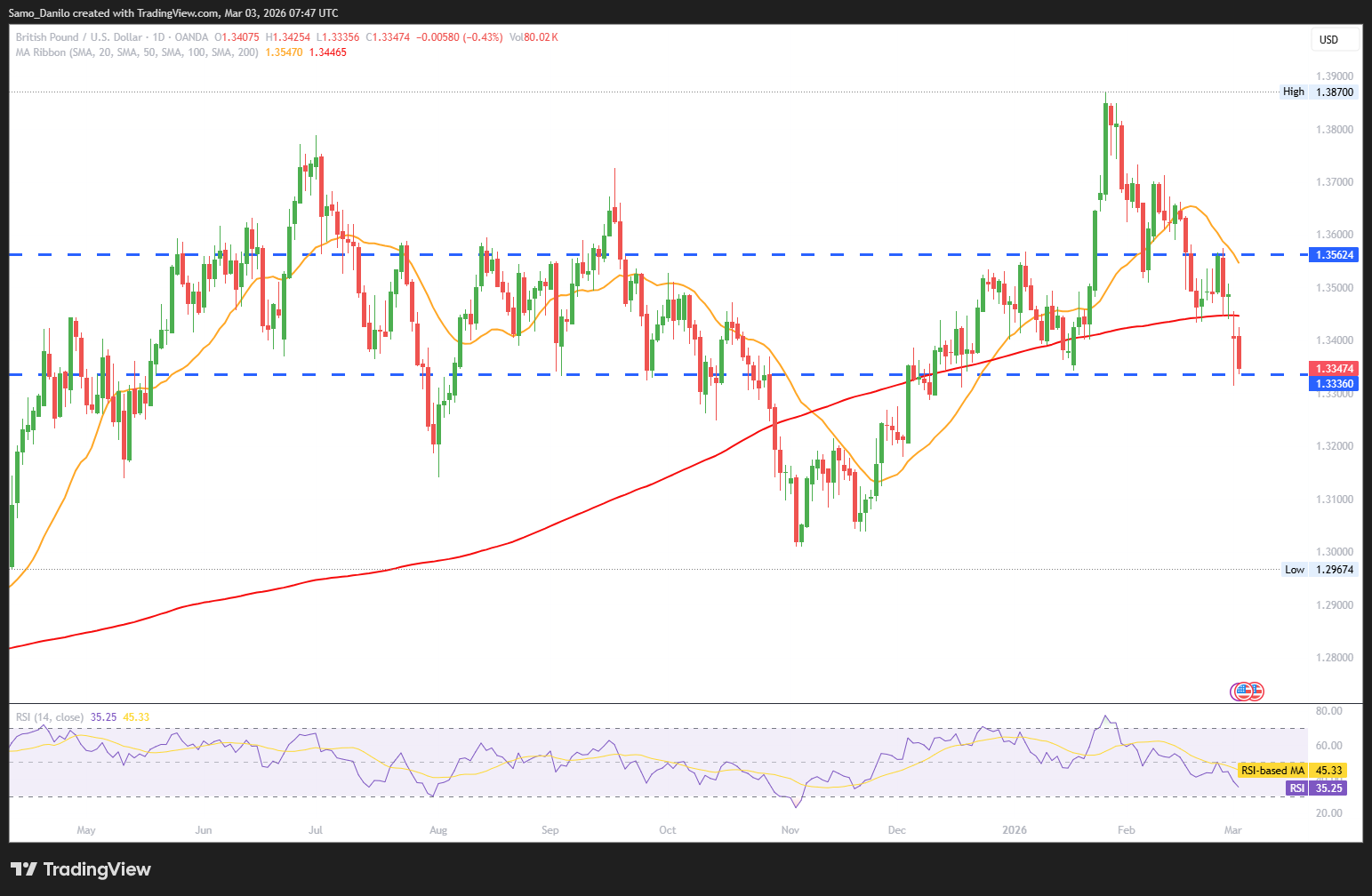
- GBP/USD Price: GBP/USD extends its slide for a fourth consecutive session, trading near 1.3330 during European hours. The pair remains under pressure as broader US Dollar strength and geopolitical risk sentiment dominate near-term flows.
- BoE's Taylor: Bank of England MPC member Alan Taylor stated at a conference hosted by Norges Bank that it is too early to fully assess the impact of rising oil prices on UK inflation and growth. However, the Bank of England is closely monitoring developments, highlighting the uncertainty surrounding the inflation outlook amid the war-driven energy shock.
- Spring Statement: Chancellor Rachel Reeves is set to deliver the UK Spring Statement later today, outlining a new economic outlook (though not a revised fiscal framework). Even in the absence of major policy shifts, UK financial markets remain particularly sensitive to political uncertainty, which could amplify volatility in Sterling.
- Rate cut: Surging oil prices have reignited inflation concerns in the UK, prompting traders to scale back dovish BoE expectations. The probability of a March rate cut has dropped to below 50%, from nearly 80% before Monday’s open. This repricing offers some theoretical support to GBP, though it is currently overshadowed by external risk dynamics.
- US Dollar: The US Dollar remains firm amid escalating tensions between the United States and Iran. The US Dollar Index is trading near a six-week high around 98.80, reflecting increased safe-haven demand. This broad USD strength continues to weigh heavily on GBP/USD.
| SMA (20) | Slightly Falling | |
|
| RSI (14) | Falling | | |
| MACD (12, 26, 9) | Falling | | |
Closing statement: GBP/USD remains pressured by dominant US Dollar strength and geopolitical uncertainty, despite reduced BoE rate-cut expectations. Near-term direction will likely hinge on developments in the US-Iran conflict and market reaction to the UK Spring Statement.
XAUUSD
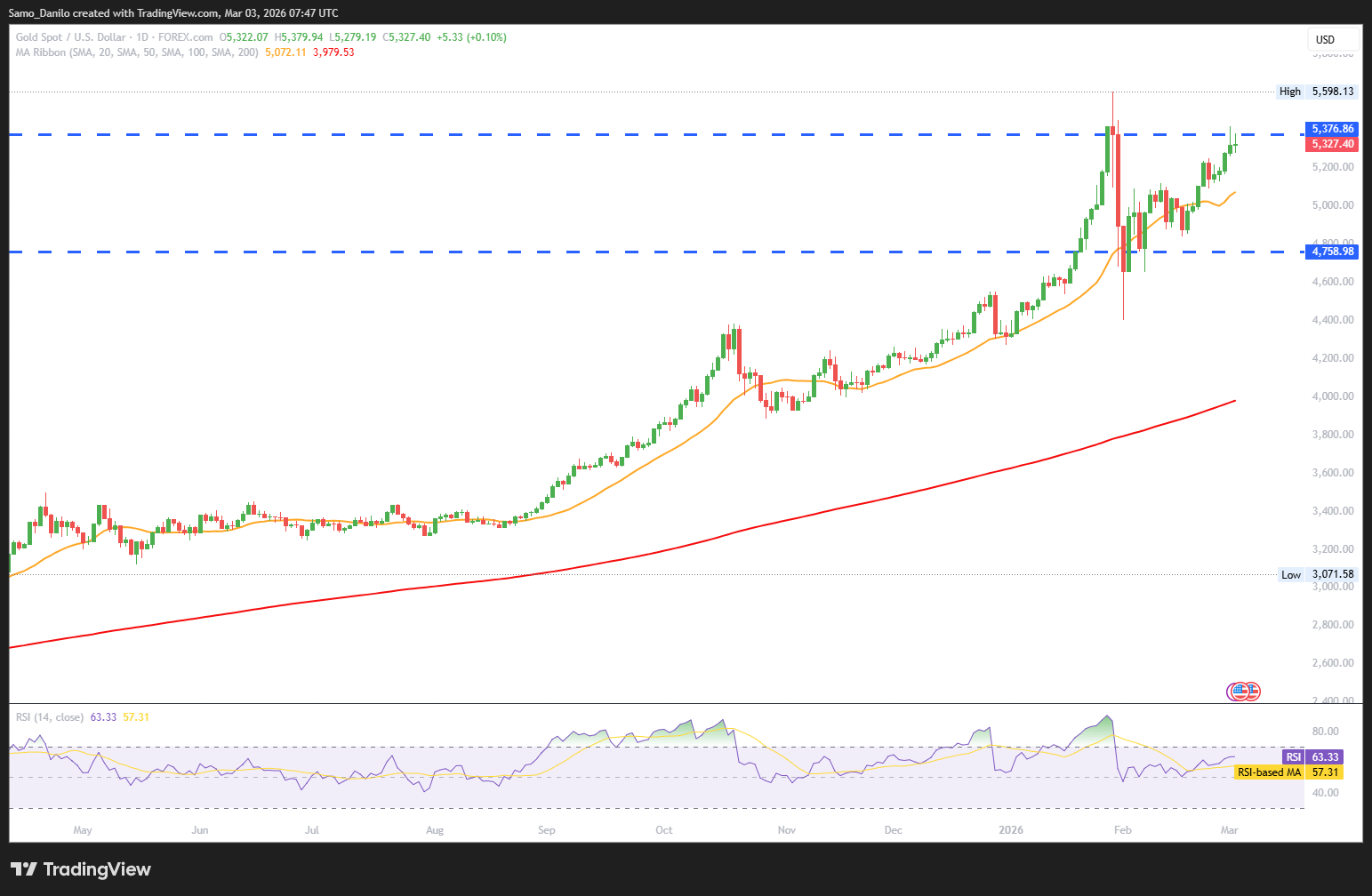
- XAU/USD Price: Gold maintains its positive bias for a third consecutive session, trading around $5,320 ahead of the European open. The steady climb reflects persistent safe-haven demand as investors hedge against escalating geopolitical and security risks.
- Conflict escalation: Iran has intensified missile and drone attacks across multiple Persian Gulf states, including a reported drone strike targeting the US Embassy in Riyadh, Riyadh. The widening scope of the conflict significantly raises regional instability, reinforcing gold’s appeal as a defensive asset.
- US signals: US Secretary of State Marco Rubio warned of a major increase in attacks within Iran over the next 24 hours. His comments followed statements from President Donald Trump, who suggested that a larger wave of action is forthcoming. These signals heighten the probability of a prolonged conflict, sustaining risk-off flows into gold.
- Travel warning: The United States Department of State has urged American citizens to leave Middle Eastern countries immediately due to serious safety concerns. Such official warnings typically intensify global risk aversion, further underpinning demand for safe-haven assets.
- Labor data: Looking ahead, markets will closely monitor the US Nonfarm Payrolls report for February. Strong employment data could support the US Dollar and Treasury yields, potentially limiting gold’s upside, while weaker data may reinforce the metal’s bullish momentum.
| SMA (20) | Rising | | |
| RSI (14) | Rising | | |
| MACD (12, 26, 9) | Rising | | |
Closing statement: Gold remains firmly supported by escalating geopolitical tensions and growing fears of a prolonged regional conflict. Unless US economic data significantly boosts the Dollar, the prevailing risk-off environment continues to favor further gains in XAU/USD.
CRUDE OIL
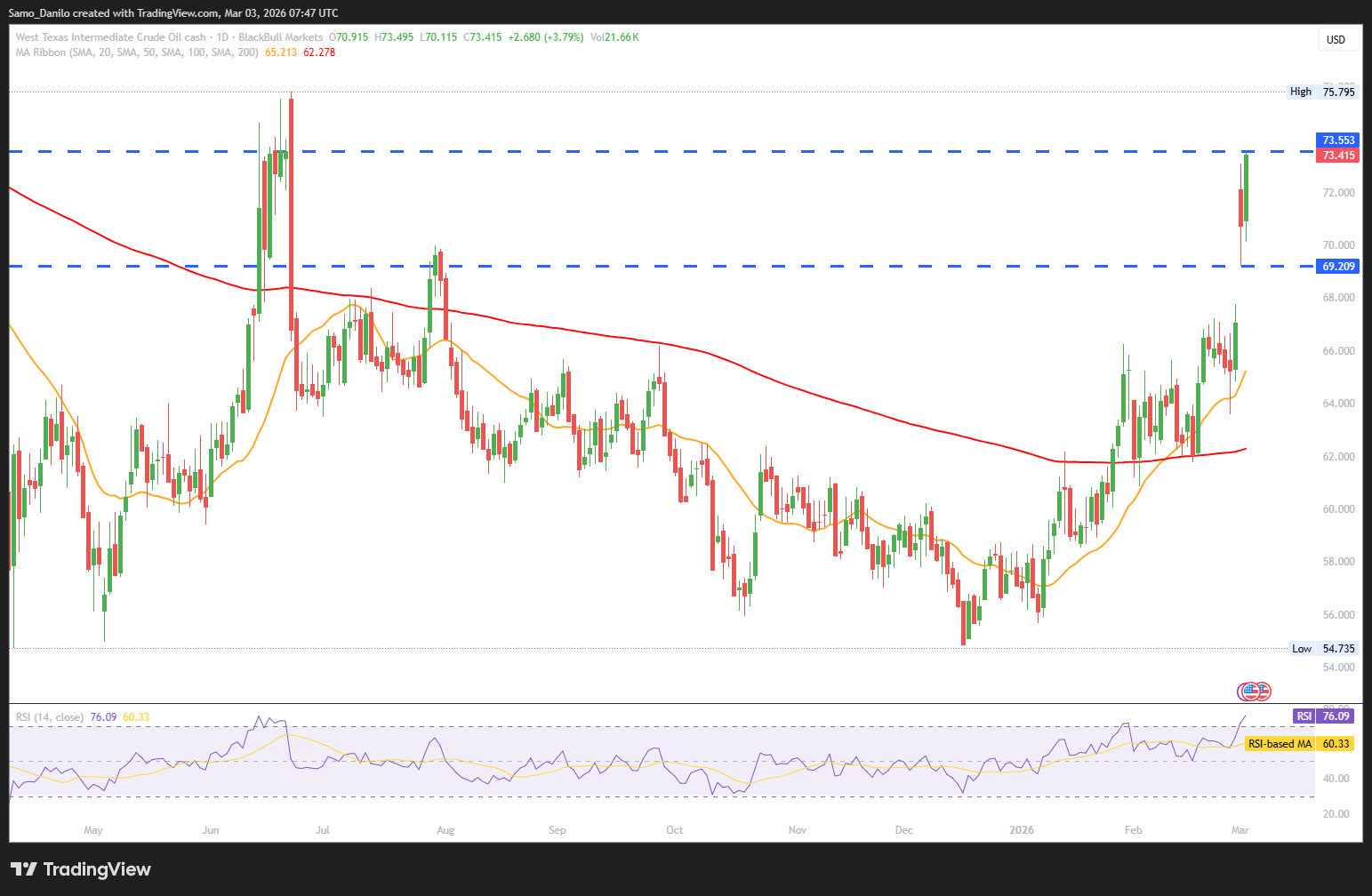
- Crude Oil Price: West Texas Intermediate (WTI) is trading higher near $73.00 during the early European session, extending gains as markets price in escalating supply disruptions in the Middle East. The bullish tone reflects heightened geopolitical risk premiums embedded in crude prices.
- Infrastructure disruptions: Strikes involving Israel, the United States, and Iran have severely impacted energy infrastructure. QatarEnergy reportedly halted LNG production after drone strikes, while Saudi Arabia shut down the Ras Tanura refinery, one of the world’s key crude export terminals, following another drone attack. These shutdowns materially tighten short-term supply expectations.
- Strait of Hormuz: Iran’s Islamic Revolutionary Guard Corps Navy effectively declared the closure of the Strait of Hormuz, prohibiting vessel transit through the critical maritime passage. Given that a significant share of global oil shipments passes through the strait, even temporary disruptions can cause sharp price spikes and extreme volatility.
- US mitigation measures: In response to facility shutdowns and shipping disruptions, the US administration announced a phased mitigation strategy. Treasury Secretary Scott Bessent and Energy Secretary Chris Wright are expected to outline stabilizing measures, potentially including strategic reserves or coordinated supply actions.
- Risk premium: Reports from Fox News indicate that two tankers were attacked in or near the Strait of Hormuz, further amplifying fears of prolonged maritime disruption. Such developments significantly elevate the geopolitical risk premium, reinforcing upward pressure on oil prices.
| SMA (20) | Rising | | |
| RSI (14) | Rising | | |
| MACD (12, 26, 9) | Rising | | |
Closing statement: WTI remains firmly supported by acute supply risks stemming from regional infrastructure damage and the effective closure of the Strait of Hormuz. Unless diplomatic de-escalation or credible mitigation measures materialize quickly, the balance of risks for crude oil prices remains skewed to the upside.
DAX
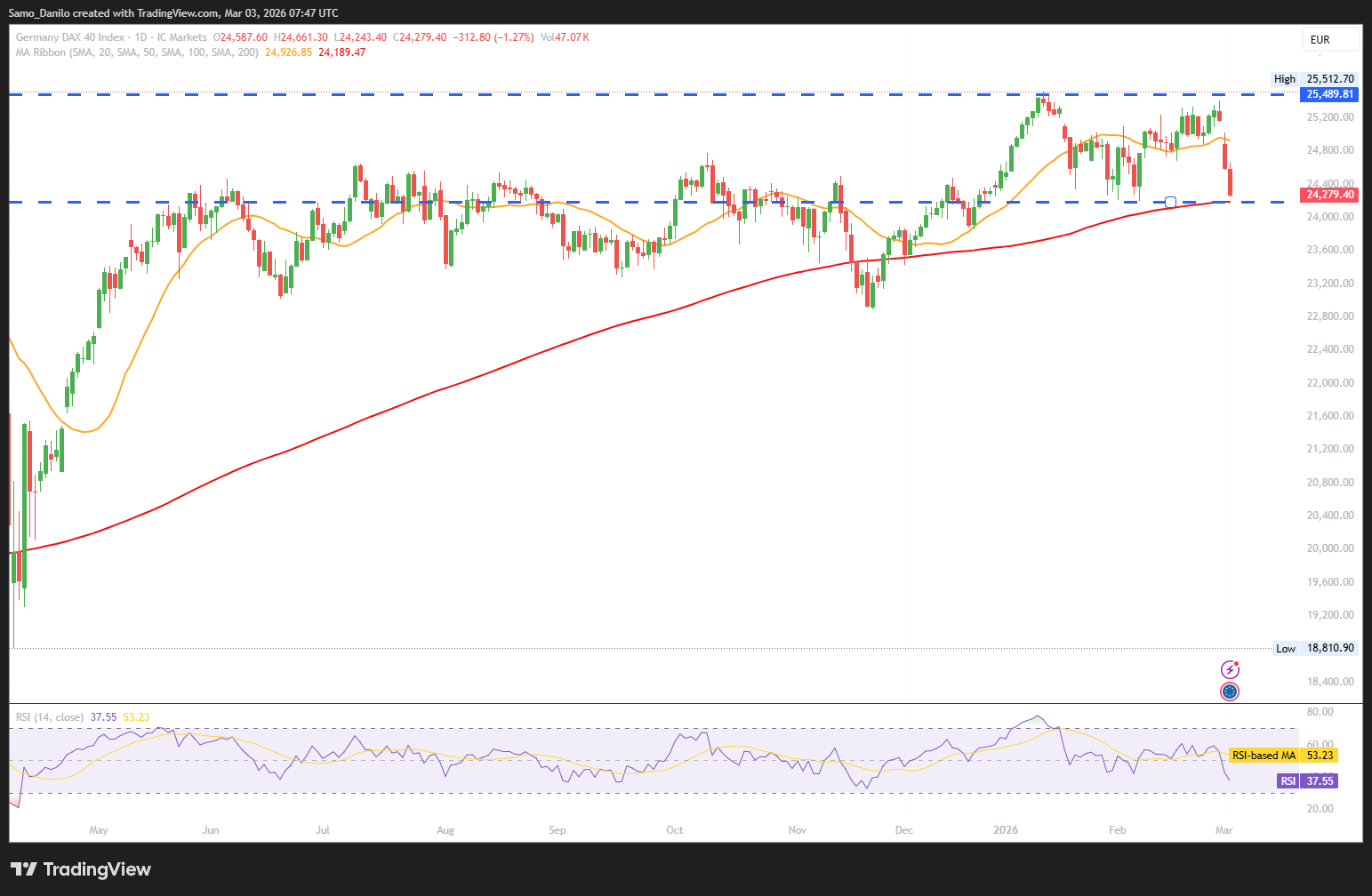
- DAX Price: The DAX is trading around 24,275 points, marking one-month lows. The sideways-to-lower trend reflects investor caution amid mixed corporate results and lingering geopolitical and macroeconomic uncertainties.
- Beiersdorf signals: Consumer goods company Beiersdorf reported weaker growth momentum, with flagship brand Nivea underperforming relative to previous years. CEO Vincent Warnery anticipates a volatile market environment in 2026 and slightly declining profit margins, weighing on investor sentiment toward the sector.
- Rheinmetall news: Analyst commentary from MWB suggests that Rheinmetall is unlikely to gain materially from ongoing Middle East tensions, though the stock retains a buy rating. This indicates selective market optimism rather than broad defensive support for DAX-listed industrials.
- US data: The US ISM Manufacturing Index came in near expectations at 52.4, though the prices index saw an uptick. In contrast, PMI survey measures of input and output prices continue declining, highlighting divergence in US manufacturing price pressures, which could influence global trade and European export sentiment.
- Fed policy: Fading dovish expectations for the June Federal Reserve meeting could prompt market concerns about near-term oil demand and broader economic momentum. Reduced stimulus expectations may limit upside for energy-linked sectors and weigh on broader equity performance.
| SMA (20) | Slightly Rising | |
|
| RSI (14) | Falling | | |
| MACD (12, 26, 9) | Slightly Falling | |
Closing statement: The DAX is under pressure, reflecting weaker corporate signals, mixed global manufacturing data, and shifting Fed policy expectations. Near-term downside risk persists unless European companies show improved earnings momentum or geopolitical tensions stabilize.