
EURUSD
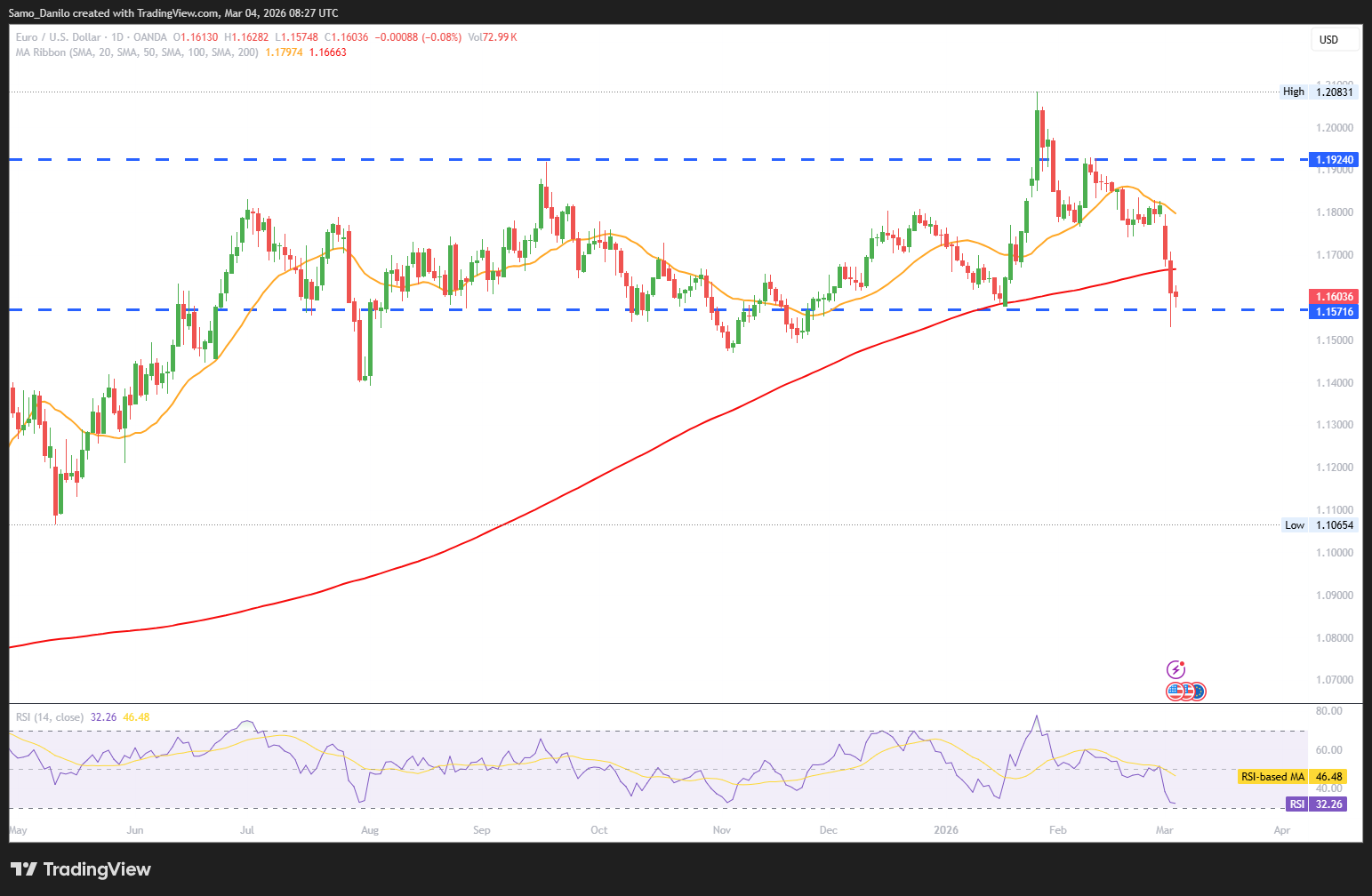
- EUR/USD Price: EUR/USD is trying to stabilize around the 1.1600 level during Wednesday’s European session as market sentiment slightly improves. After recent downside pressure, traders appear to be pausing aggressive positioning, allowing the pair to consolidate near short-term support.
- Energy dependence: According to Commerzbank FX analyst Antje Praefcke, escalating Middle East tensions are structurally more negative for the Euro than the US Dollar. Europe’s heavier reliance on energy imports and already modest growth trajectory amplify the macro vulnerability of the single currency relative to the USD.
- Sweden data: Sweden’s services PMI has declined from 58.9 in November to 54.3 in January, yet remains in expansionary territory. Although moderating, Sweden’s performance appears comparatively resilient versus broader Europe and the United States, offering a mildly constructive regional signal.
- Swiss inflation: Markets are also monitoring February inflation data from Switzerland, with CPI expected to rise 0.5% month-on-month while remaining slightly negative year-on-year. While not directly eurozone data, Swiss price dynamics can influence broader European rate sentiment and regional FX flows.
- Data ahead: Attention now turns to the final Eurozone Services PMIs, January unemployment data, and final February composite readings. The unemployment rate is expected to hold steady at 6.2%, supported by ongoing employment gains in Southern Europe. These releases may provide short-term volatility before US macroeconomic data takes center stage.
| SMA (20) | Slightly Rising |  |
|
| RSI (14) | Falling |  | |
| MACD (12, 26, 9) | Falling | | |
Closing statement: EUR/USD is attempting to stabilize after recent weakness, but structural headwinds tied to energy dependence and geopolitical risks continue to weigh on the Euro. Near-term direction will likely depend on Eurozone PMI confirmation and upcoming US data, which could either reinforce consolidation or reignite downside pressure.
GBPUSD
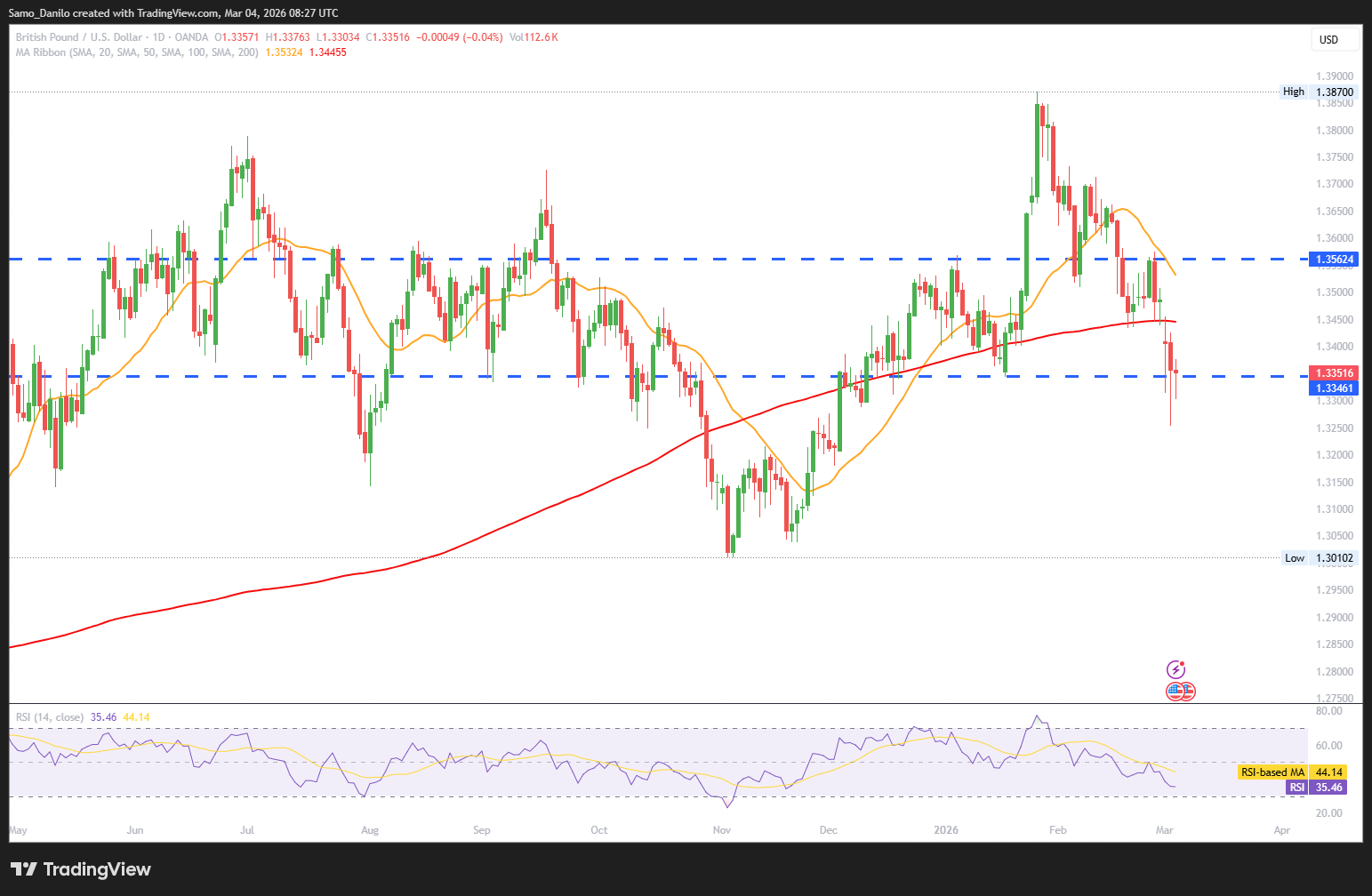
- GBP/USD Price: GBP/USD continues to trade in negative territory during Wednesday’s European session, hovering below the 1.3350 level. Persistent US Dollar strength amid global risk aversion is limiting any meaningful recovery attempts by the Pound.
- Spring Statement: The UK Spring Statement incorporated updated forecasts from the Office for Budget Responsibility (OBR). GDP growth for 2026 was revised down to 1.1% from 1.4% projected in November, while forecasts for 2027–2028 were upgraded. The mixed outlook reflects near-term softness but improved medium-term expectations.
- Gilts news: Fiscal headroom was revised higher by £2bn, rising from £21.7bn to £23.6bn. This modest improvement offers some reassurance to UK bond markets and helps stabilize HM Treasury’s fiscal credibility, though it has not been sufficient to materially lift Sterling.
- Safe haven: Escalating tensions in the Middle East are sustaining a global “flight to safety” dynamic, favoring the US Dollar over risk-sensitive currencies. This broader geopolitical backdrop continues to weigh on GBP/USD despite domestic fiscal adjustments.
- BoE rate: Traders have sharply scaled back expectations for further easing by the Bank of England. The probability of a rate cut later this month has dropped from around 80% last week to below 20%, according to Bloomberg. This repricing reflects heightened inflation risks and external uncertainty, though USD strength remains the dominant driver.
| SMA (20) | Slightly Falling | |
|
| RSI (14) | Falling | | |
| MACD (12, 26, 9) | Falling | | |
Closing statement: GBP/USD stays pressured as safe-haven flows into the Dollar overshadow improved UK fiscal metrics and reduced BoE easing expectations. Near-term direction will likely remain tied to geopolitical developments and broader USD momentum.
XAUUSD
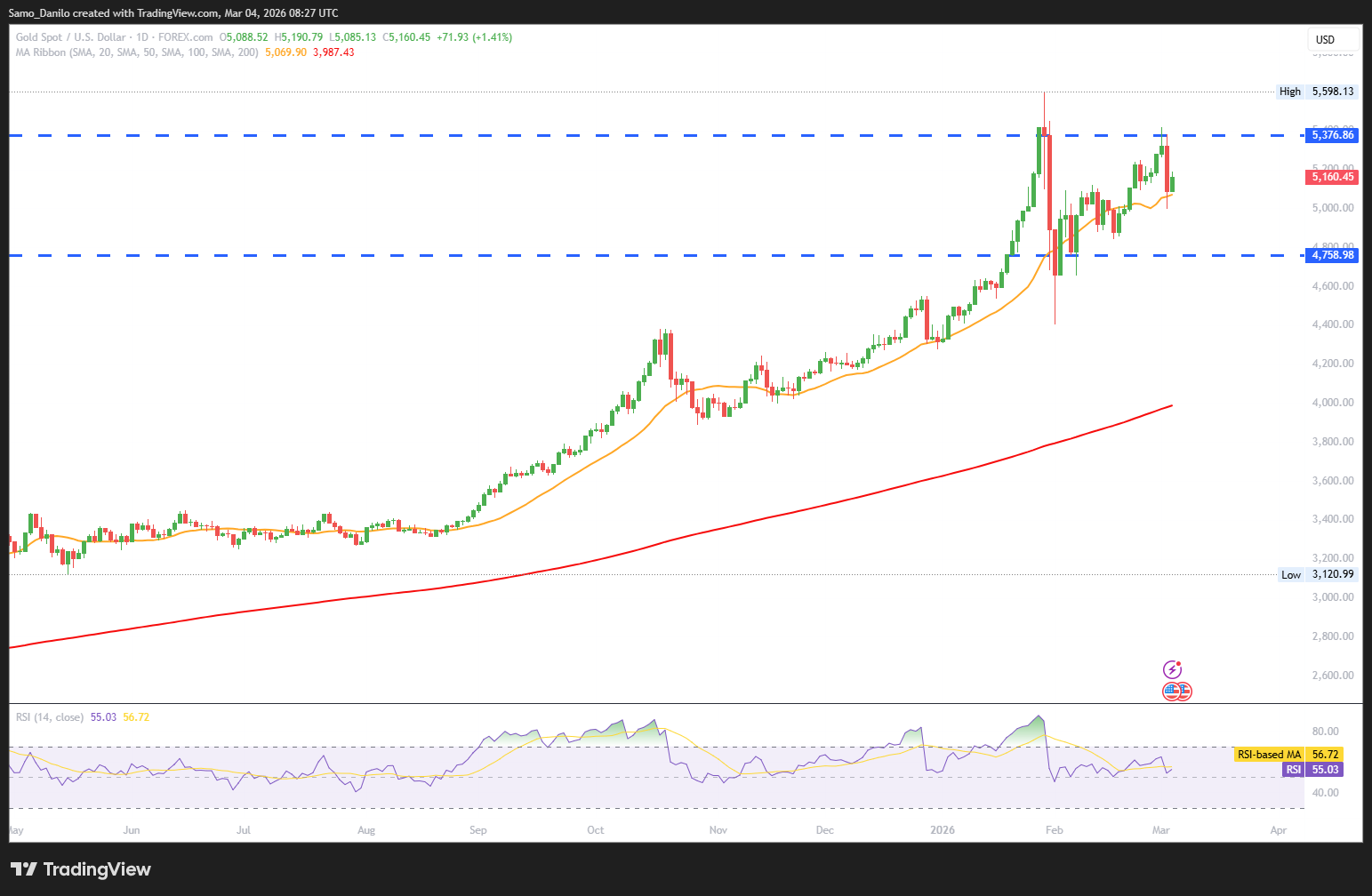
- XAU/USD Price: Gold maintains its intraday gains during Wednesday’s European session, trading slightly above the $5,150 level. The metal remains supported by persistent geopolitical risks, though upside momentum appears more measured compared to earlier surges.
- US signals: US President Donald Trump described the war as the “last best chance” to neutralize Iran’s ballistic missile and nuclear threat, suggesting the campaign could last four to five weeks, or even longer. Such rhetoric reinforces expectations of prolonged instability, sustaining safe-haven demand for gold.
- Retaliatory strikes: Iran continues retaliatory actions against Israel and US-linked targets, with reported strikes on the US embassy in Dubai and port infrastructure in Fujairah, United Arab Emirates. The widening geographical scope of attacks increases regional risk premiums and underpins gold’s defensive appeal.
- Chinese PMIs: February PMI data from China showed robust economic momentum, with manufacturing rising to 52.1, the fastest pace in over five years, and services expanding at a 33-month high. While stronger Chinese growth typically supports risk assets and industrial commodities, gold’s safe-haven demand currently dominates.
- Financial sector: Bank stocks are under pressure amid rising private credit stress, partly linked to earlier global software-sector selloffs on fears that artificial intelligence could disrupt existing business models. Broader equity weakness tends to increase portfolio hedging flows into gold, reinforcing its near-term resilience.
| SMA (20) | Rising | | |
| RSI (14) | Slightly Rising | |
|
| MACD (12, 26, 9) | Slightly Rising | |
Closing statement: Gold remains underpinned by escalating geopolitical tensions and rising financial market stress, even as strong Chinese data offers a partial offset to risk aversion. As long as conflict risks persist and equity volatility remains elevated, XAU/USD is likely to retain a constructive bias.
CRUDE OIL
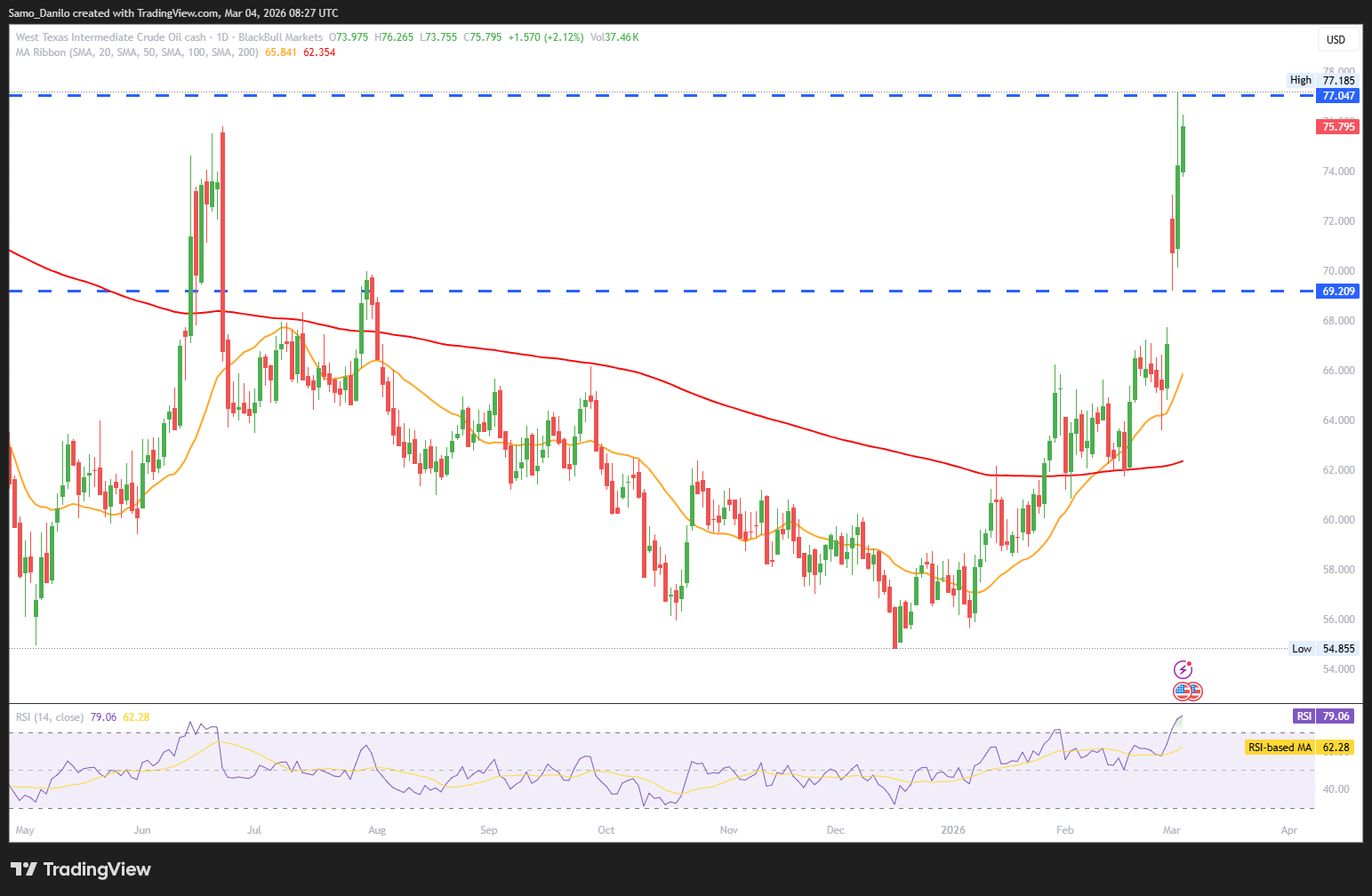
- Crude Oil Price: West Texas Intermediate (WTI) is trading near $75.40 during early European hours, maintaining elevated levels as supply disruption fears persist. The price structure reflects a sustained geopolitical risk premium tied to maritime security concerns in the Middle East.
- Strait of Hormuz: Tanker traffic through the Strait of Hormuz remains nearly halted for a fourth straight day amid continued air strikes. US President Donald Trump stated that the US Navy stands ready to protect vessels if necessary, with discussions reportedly including military escorts and insurance guarantees, according to Politico. The disruption to one of the world’s most critical oil transit routes continues to underpin prices.
- Macron's statement: French President Emmanuel Macron announced plans to form a coalition aimed at reopening and securing shipping lanes. However, analysts caution that even coordinated naval protection may not immediately restore confidence among shipping companies, especially given explicit Iranian threats to target vessels transiting the strait.
- US reserves: Attention now turns to upcoming data from the Energy Information Administration, which could indicate whether the US may begin releasing crude from its Strategic Petroleum Reserve (SPR). A potential SPR drawdown would aim to stabilize domestic supply and ease price pressures but may offer only temporary relief in a prolonged disruption scenario.
- US fuel prices: US gasoline prices have risen roughly 17% since mid-February and about 50% year-to-date, reaching around $2.50 per gallon, with projections of $3.25–$3.50 in the coming weeks. Rising pump prices heighten political and economic pressure on policymakers to act, potentially accelerating supply-side interventions.
| SMA (20) | Rising | | |
| RSI (14) | Rising | | |
| MACD (12, 26, 9) | Rising | | |
Closing statement: WTI remains firmly supported by ongoing maritime disruptions and geopolitical escalation around the Strait of Hormuz. While US and European mitigation efforts may temper extreme spikes, the current supply shock keeps the balance of risks skewed to the upside unless safe shipping routes are quickly restored.
DAX
- DAX Price: Germany’s benchmark DAX fell 3.4% on Tuesday, closing at 23,790.65 points, and is currently hovering near 23,900. The steep decline reflects heightened geopolitical risk, trade uncertainty, and energy supply concerns weighing heavily on cyclical and export-oriented stocks.
- Index review: The quarterly index review at the Frankfurt Stock Exchange adds a layer of technical uncertainty. Market participants are closely watching whether Lufthansa will rejoin the DAX on March 23 after nearly six years. A potential re-entry could trigger passive inflows, but the decision remains finely balanced.
- Trade tensions: US President Donald Trump reportedly threatened to cut trade ties with Spain following criticism of US military actions and disputes over base access. German Chancellor Friedrich Merz insisted Spain must be included in any US–EU trade agreement. Escalating tensions raise downside risks for German exporters, particularly autos, industrials, and capital goods producers.
- Energy risks: Since the outbreak of the war in Ukraine, Europe has relied heavily on LNG imports from the US and Qatar. Any disruption to LNG flows, while pipeline supplies from Norway and North Africa remain stable, could sharply increase gas prices. Higher energy costs would disproportionately impact German industry, a core driver of DAX earnings.
- Data ahead: Investors are awaiting February PMIs for Germany, the eurozone, and the US, alongside euro area producer prices and January labor market data. These releases will be critical in assessing whether economic momentum can offset geopolitical headwinds, or if growth expectations need to be revised lower.
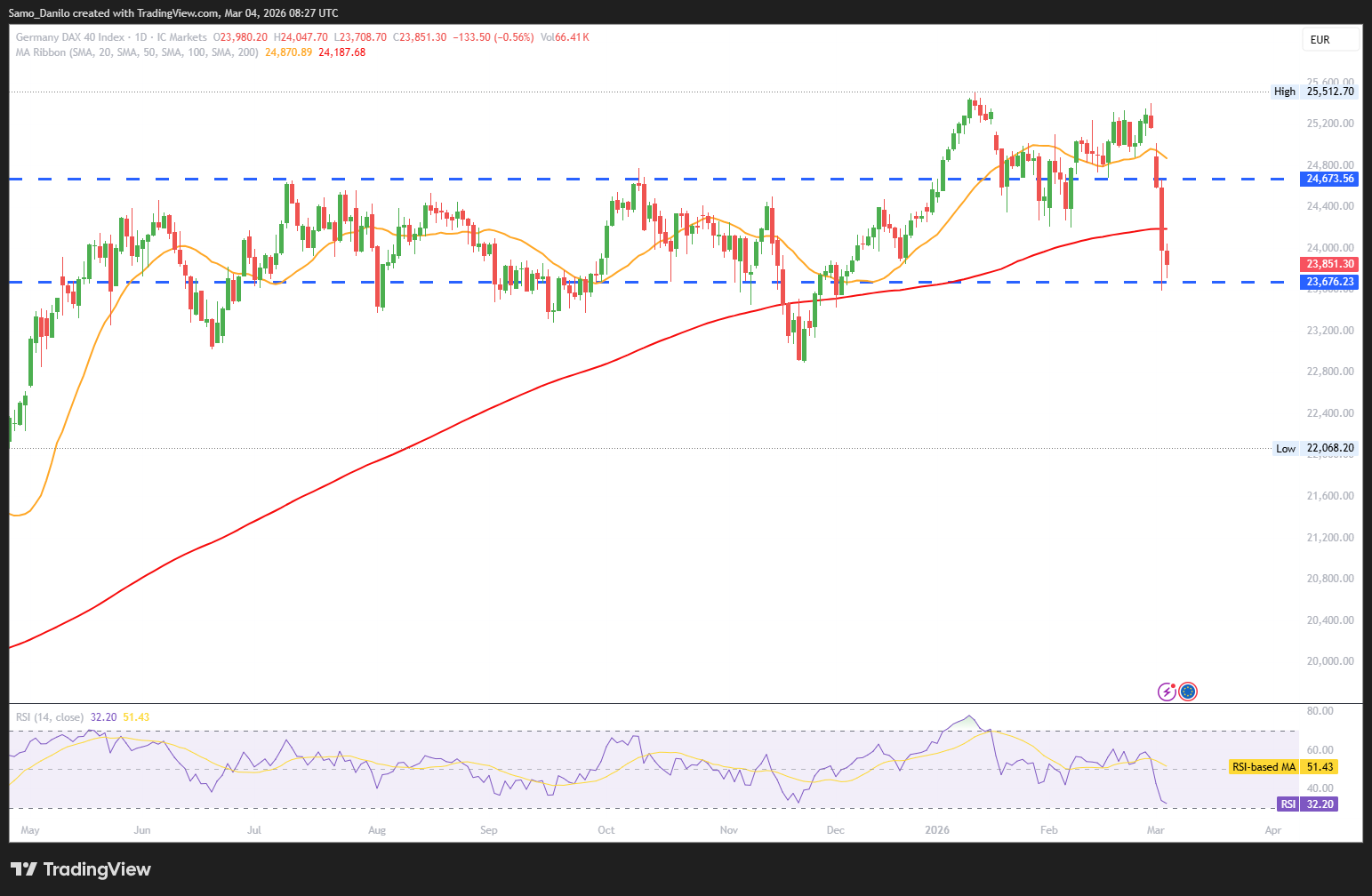
| SMA (20) | Slightly Rising | |
|
| RSI (14) | Falling | | |
| MACD (12, 26, 9) | Falling | | |
Closing statement: The DAX remains vulnerable amid geopolitical tensions, trade uncertainty, and energy supply risks. While technical factors like the index review may offer temporary support, the broader macro and political backdrop keeps downside volatility elevated in the near term.