
EURUSD
- EUR/USD Price: EUR/USD comes under heavy selling for a second consecutive session, sliding to a near four-week low around the 1.1680 area during Monday’s European trading hours.
- Geopolitics: Heightened geopolitical tensions have boosted demand for the safe-haven US Dollar, allowing it to extend its rebound from the lowest levels seen since early October and weighing further on the pair.
- Policy Stance: The European Central Bank left interest rates unchanged at its December meeting, with its guidance pointing to reduced urgency for additional rate cuts, offering some underlying support to the Euro.
- ECB's Lagarde: ECB President Christine Lagarde stressed that all policy options remain open, noting there was no discussion of either rate hikes or cuts at the December meeting, while some economists now expect rates to remain on hold through 2026.
- Eurozone Sentiment: The Sentix Investor Confidence index is due later today and will provide the first insight into euro area sentiment for 2026, after confidence improved through much of 2025 but ended the year on a softer note.
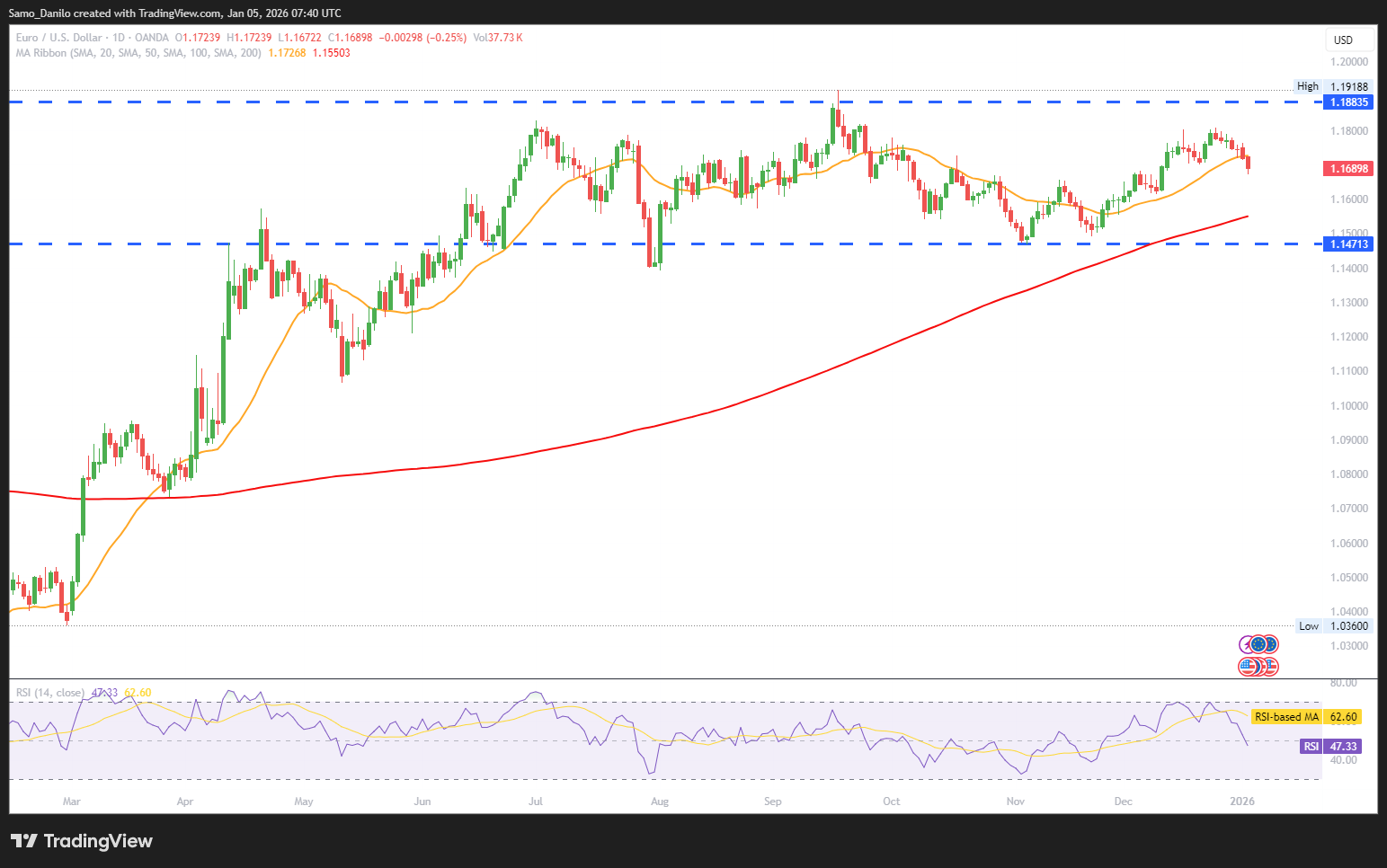
| SMA (20) | Slightly Rising |  |
|
| RSI (14) | Falling |  | |
| MACD (12, 26, 9) | Rising | | |
Closing statement: Near-term risks for EUR/USD remain skewed to the downside amid strong safe-haven USD demand, though a steady ECB policy outlook and potential stabilization in eurozone sentiment could limit deeper losses.
GBPUSD
- GBP/USD Price: GBP/USD extends losses for a second straight session, trading around the 1.3430 area during Monday’s European hours as selling pressure persists.
- Policy Expectations: The Bank of England is widely expected to follow a gradual easing cycle in 2026, which could provide medium-term support for the Pound. Money markets are pricing in at least one rate cut in the first half of the year and nearly a 50% probability of a second reduction before year-end, according to Reuters.
- US Data: Most final manufacturing PMIs were released on Friday. In the US, the PMI slipped to 51.8 in December from 52.2 previously, marking the slowest pace of expansion in five months amid weaker new orders and declining exports.
- Geopolitical Developments: Escalating geopolitical tensions are in focus after reports that US forces captured Venezuelan President Nicolás Maduro. US President Donald Trump warned that Washington could pursue further military action if Venezuela’s interim leadership fails to meet US demands, supporting risk-off sentiment and the US Dollar.
- Events Ahead: Traders are now looking ahead to the US December Jobs Report due on Friday, which could be a decisive catalyst for near-term USD direction and GBP/USD volatility.
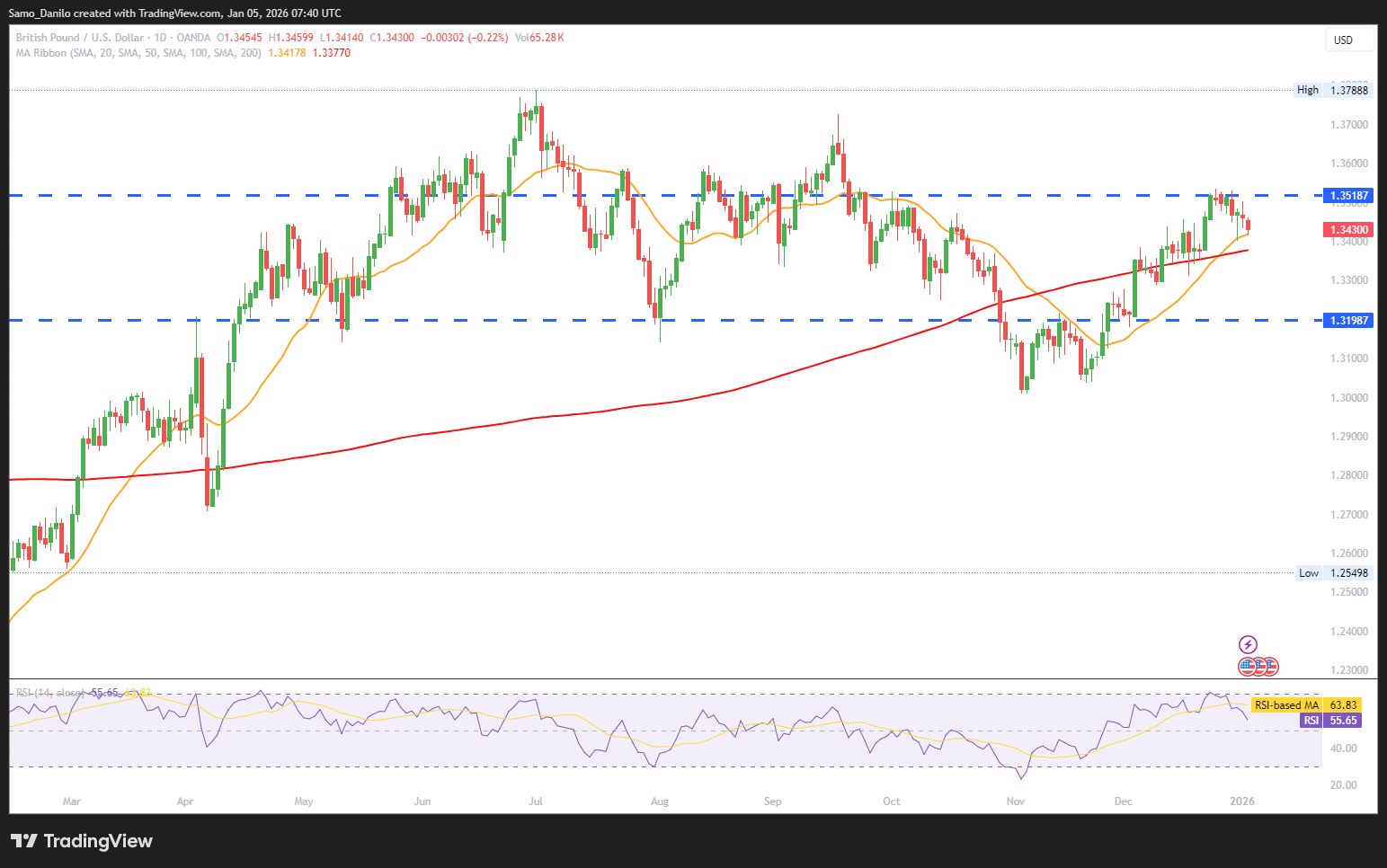
| SMA (20) | Rising | | |
| RSI (14) | Slightly Rising | |
|
| MACD (12, 26, 9) | Rising | | |
Closing statement: GBP/USD remains vulnerable in the short term amid geopolitical uncertainty and a firmer US Dollar, though expectations of a cautious BoE easing cycle may help limit downside over the medium horizon.
XAUUSD
- XAU/USD Price: Gold builds on intraday gains above the $4,420 level, climbing to a four-day high during early European trading as investors rotate into safe-haven assets amid rising global uncertainty.
- Geopolitical Risk: Fresh geopolitical tensions are adding to gold’s appeal after US President Donald Trump signaled potential action against Colombia and Mexico, expanding regional risk following the recent raid on Venezuela.
- Rate Cut: Markets are increasingly pricing in a possible Fed rate cut as early as March, with expectations for an additional reduction later this year. Lower rate expectations reduce the opportunity cost of holding non-yielding assets like gold.
- US Data: This week’s US macro calendar is heavy, with Nonfarm Payrolls and upcoming inflation data set to play a crucial role in shaping the Fed’s policy path and near-term gold volatility.
- China Growth: China’s RatingDog Services PMI slipped to 52.0 in December, the weakest expansion in six months. Softer new business growth and declining foreign demand highlight slowing momentum in the world’s second-largest economy, supporting defensive positioning in gold.
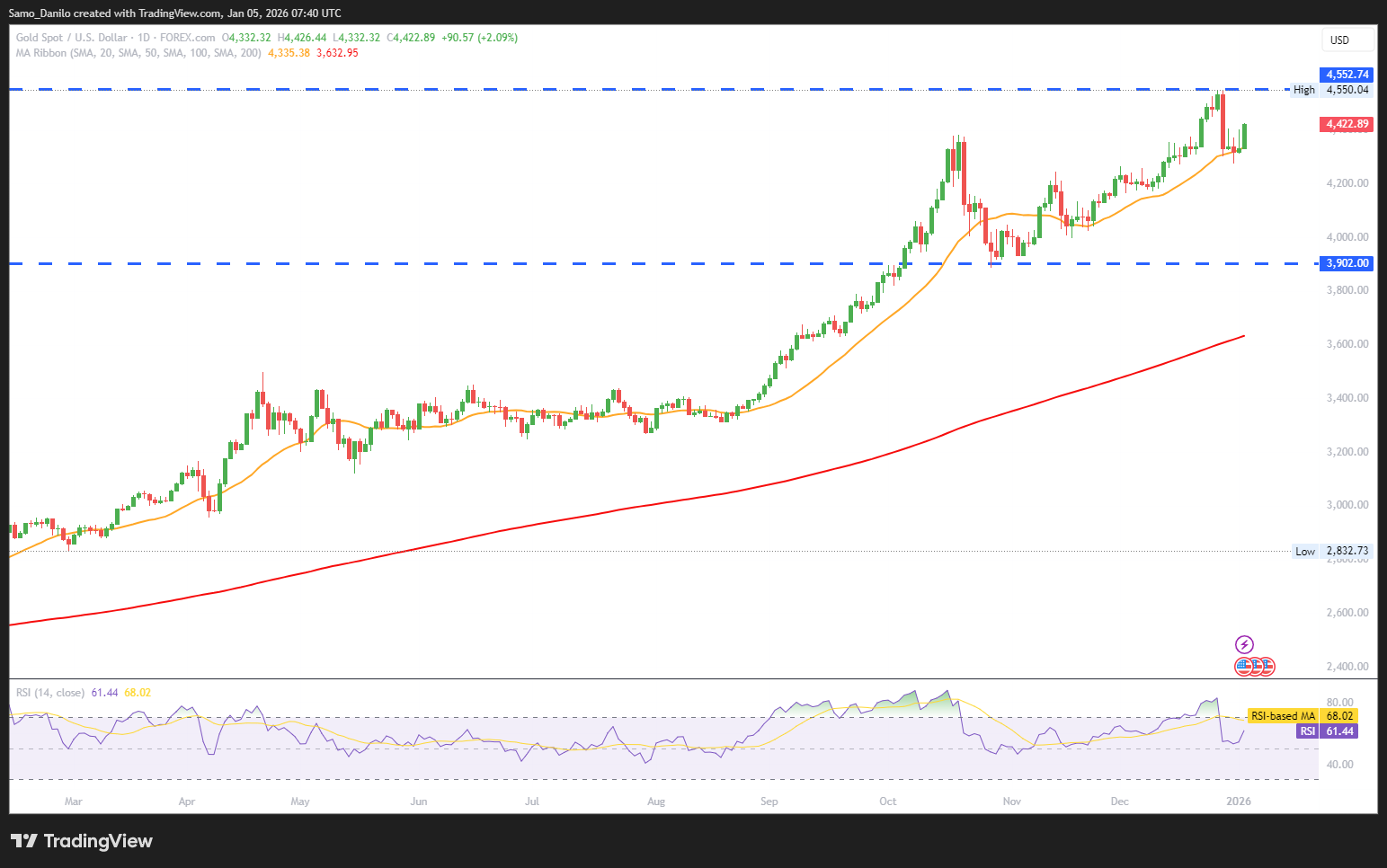
| SMA (20) | Rising | | |
| RSI (14) | Rising | | |
| MACD (12, 26, 9) | Rising | | |
Closing statement: XAU/USD remains underpinned by safe-haven flows and easing Fed rate expectations, with further upside possible if geopolitical risks persist or US data reinforce a dovish policy shift.
CRUDE OIL
- Crude Oil Price: WTI trades lower near $56.60 in early European hours, extending recent weakness as supply-side factors outweigh geopolitical risk premiums.
- Venezuela Developments: US President Donald Trump announced plans for major US oil companies to return to Venezuela to help refurbish its deteriorated oil infrastructure. While the move surprised markets, near-term implications for global oil supply are likely limited, given the time required to restore production capacity.
- OPEC+ Supply: OPEC+ reaffirmed its November decision to maintain current output levels through March following a brief meeting on Sunday. The group did not discuss recent US actions in Venezuela, signaling continuity in supply policy.
- Production Trends: OPEC+ members raised oil output targets by roughly 2.9 million barrels per day during the first ten months of 2025, before holding production targets steady at their November and December meetings, reinforcing concerns about ample supply.
- Geopolitical Risks: Russia’s defense ministry claimed that Ukraine has launched daily drone attacks on Moscow since the start of 2026, aiming to disrupt military logistics and energy infrastructure. While these tensions add a risk premium, they have so far failed to offset broader supply and demand concerns.
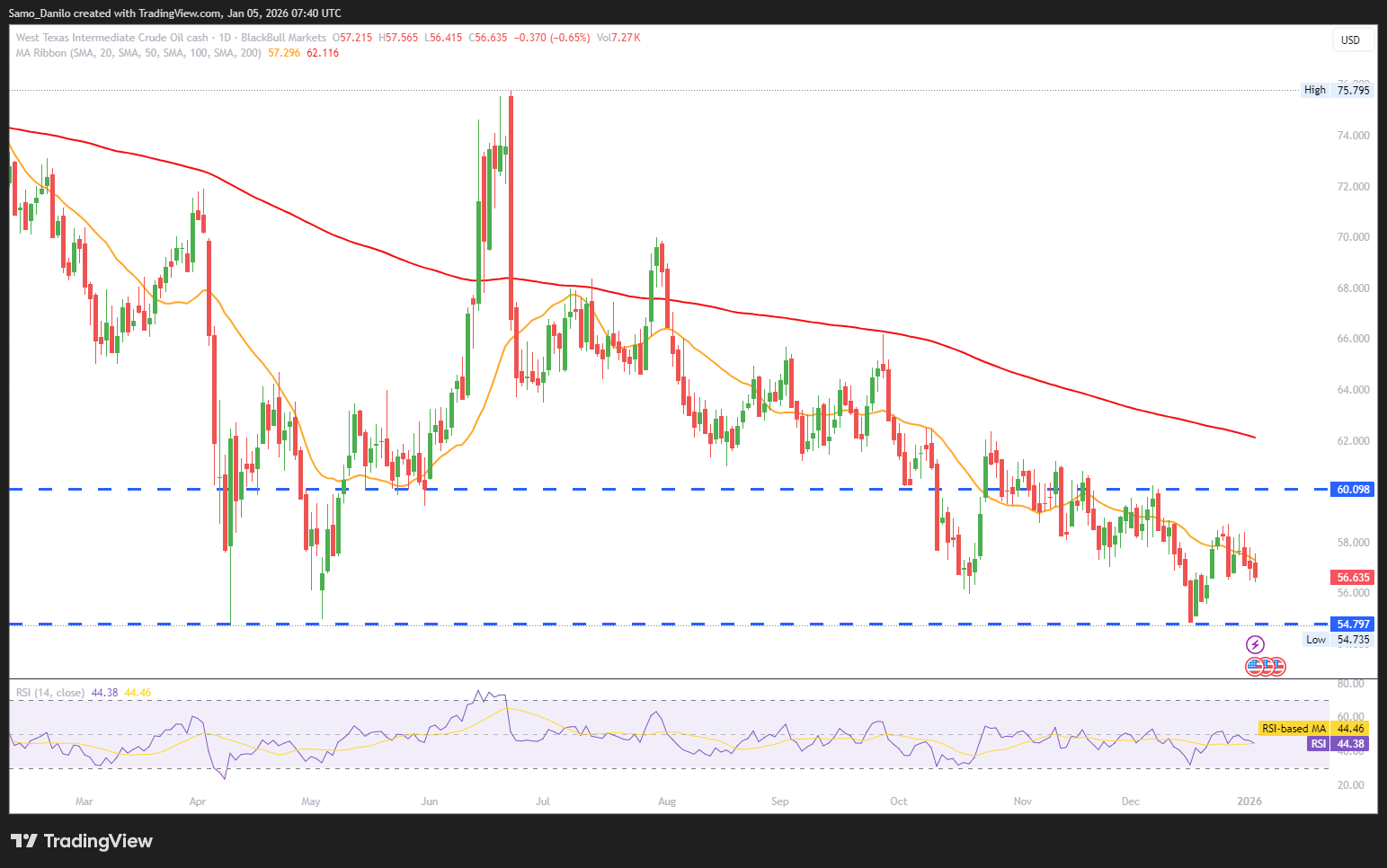
| SMA (20) | Falling | | |
| RSI (14) | Slightly Falling | |
|
| MACD (12, 26, 9) | Slightly Falling | |
Closing statement: WTI remains pressured by supply-side stability and expectations of adequate global production, with geopolitical risks offering only limited upside support in the near term.
DAX
- DAX Price: The DAX continues to grind higher and is trading around 24,650 points, extending its advance toward the October record high near 24,771 points.
- Growth Outlook: According to a pessimistic forecast from the Handelsblatt Institute for Economic Research (HRI), Germany’s economy is expected to grow only 0.7% in 2026 and 0.9% in 2027, highlighting a subdued medium-term macro backdrop.
- Manufacturing Momentum: Final euro area Manufacturing PMI fell to 48.8 from 49.6, signaling deeper contraction. Output and new orders weakened further, with Germany, Italy and Spain showing the most pronounced declines.
- Household Balance: Despite economic headwinds, German household wealth has climbed to a record €10 trillion, reflecting elevated savings and financial asset holdings amid ongoing uncertainty.
- Data Watch: Market participants are now focused on Germany’s preliminary Consumer Price Index release on Tuesday, which could influence inflation expectations and near-term index direction.
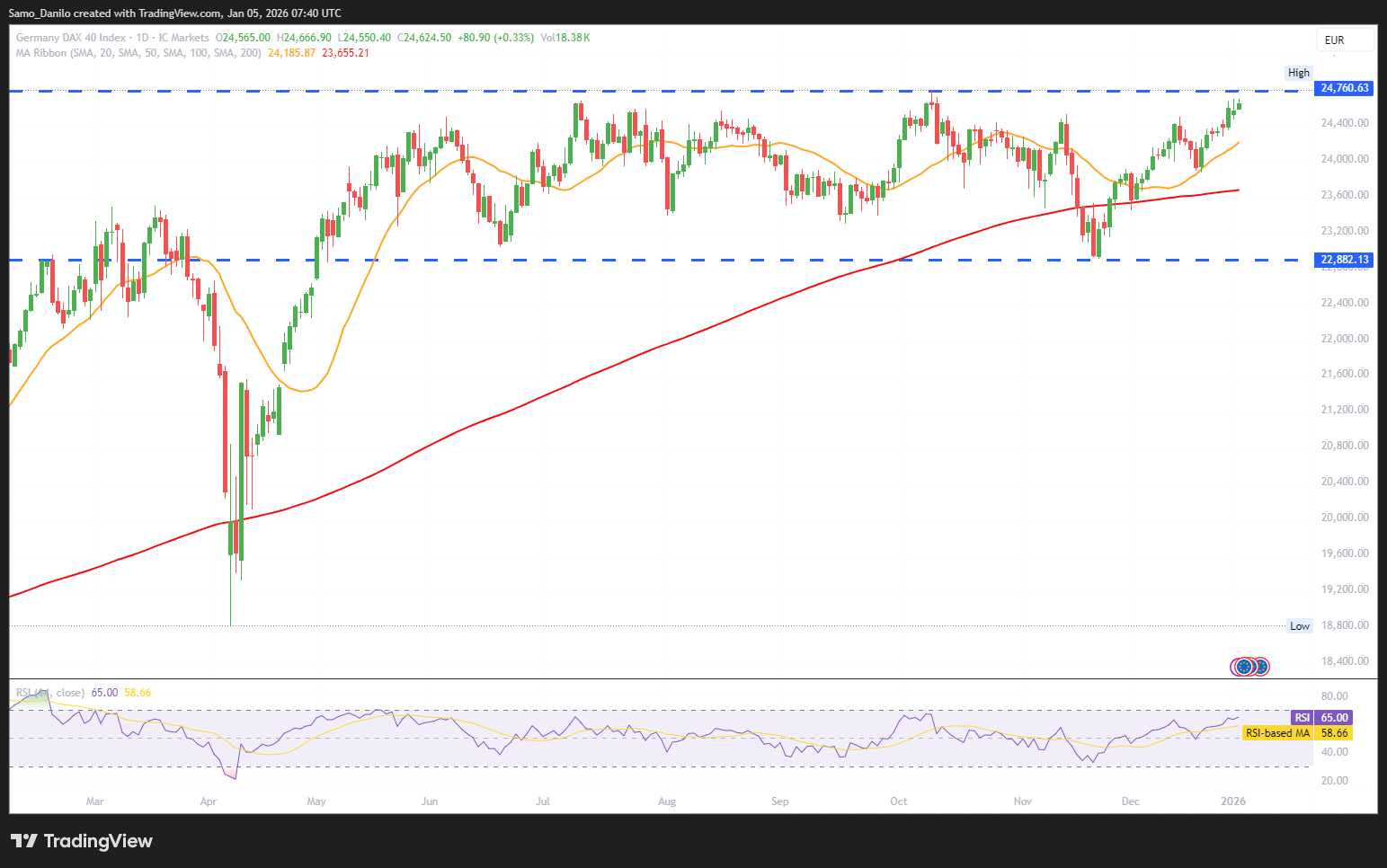
| SMA (20) | Rising | | |
| RSI (14) | Rising | | |
| MACD (12, 26, 9) | Rising | | |
Closing statement: The DAX remains supported by strong price momentum and resilient household balance sheets, but weakening manufacturing data and muted growth forecasts suggest upside may become increasingly data-dependent near record highs.