
EURUSD
- EUR/USD Price: The EUR/USD is trading around 1.1600 during the European session on Thursday, giving back modest gains from the previous day. The pair remains under pressure as investors continue to favor the US Dollar amid heightened geopolitical uncertainty.
- Middle East: The conflict involving the United States, Israel, and Iran has entered its sixth day, with Israel launching new strikes on military infrastructure in Tehran. Meanwhile, the US military signaled that it may begin striking progressively deeper targets inside Iran. The escalation supports safe-haven demand for the US Dollar, weighing on the Euro.
- ECB's Kazaks: European Central Bank policymaker Martins Kazaks indicated that the European Central Bank should “sit tight” and maintain current interest rates for now. Policymakers prefer to assess the economic consequences of the Middle East conflict before making further monetary policy adjustments.
- ECB rate: Despite the cautious tone from policymakers, money markets are increasingly pricing the possibility of tighter policy. Traders now see nearly a 40% probability of an ECB rate hike by year-end following stronger-than-expected Eurozone inflation data for February, suggesting inflation risks remain present.
- Retail sales: Attention now shifts to the upcoming Eurozone Retail Sales data for January, where economists expect a 1.7% monthly increase. A stronger-than-expected reading could provide short-term support for the Euro by signaling resilient consumer demand within the euro area economy.

| SMA (20) | Slightly Rising |  |
|
| RSI (14) | Falling |  | |
| MACD (12, 26, 9) | Falling | | |
Closing statement: EUR/USD remains pressured by geopolitical risk and stronger safe-haven flows into the US Dollar. However, resilient Eurozone data and rising expectations for tighter ECB policy could provide intermittent support for the Euro in the near term.
GBPUSD
- GBP/USD Price: The GBP/USD is trading lower around 1.3340 during the European session on Thursday, down roughly 0.22% against the US Dollar. The Pound Sterling underperforms most major currencies as investors continue to favor the Dollar amid heightened geopolitical risks.
- Energy market: The ongoing war involving the United States, Israel, and Iran has severely disrupted global energy flows by choking shipments through the Strait of Hormuz. This has triggered a surge in global energy prices, increasing economic uncertainty across international markets.
- UK inflation: The United Kingdom relies heavily on imported energy, making its economy particularly sensitive to rising oil and gas prices. Higher energy costs could further intensify inflationary pressures, which are already running above the Bank of England’s 2% target, complicating the central bank’s monetary policy outlook.
- UK Government: UK Chancellor Rachel Reeves stated that the government remains confident in its economic strategy despite rising geopolitical risks. She acknowledged that the Middle East conflict could push inflation higher but emphasized that policies are designed to shield the economy and households from external shocks.
- US Labor data: The latest ADP National Employment Report showed that US private companies added 63,000 jobs in February, significantly above expectations of 50,000 and well above the previous reading of 11,000. The stronger labor market data reinforces the resilience of the US economy and supports the US Dollar against the Pound.
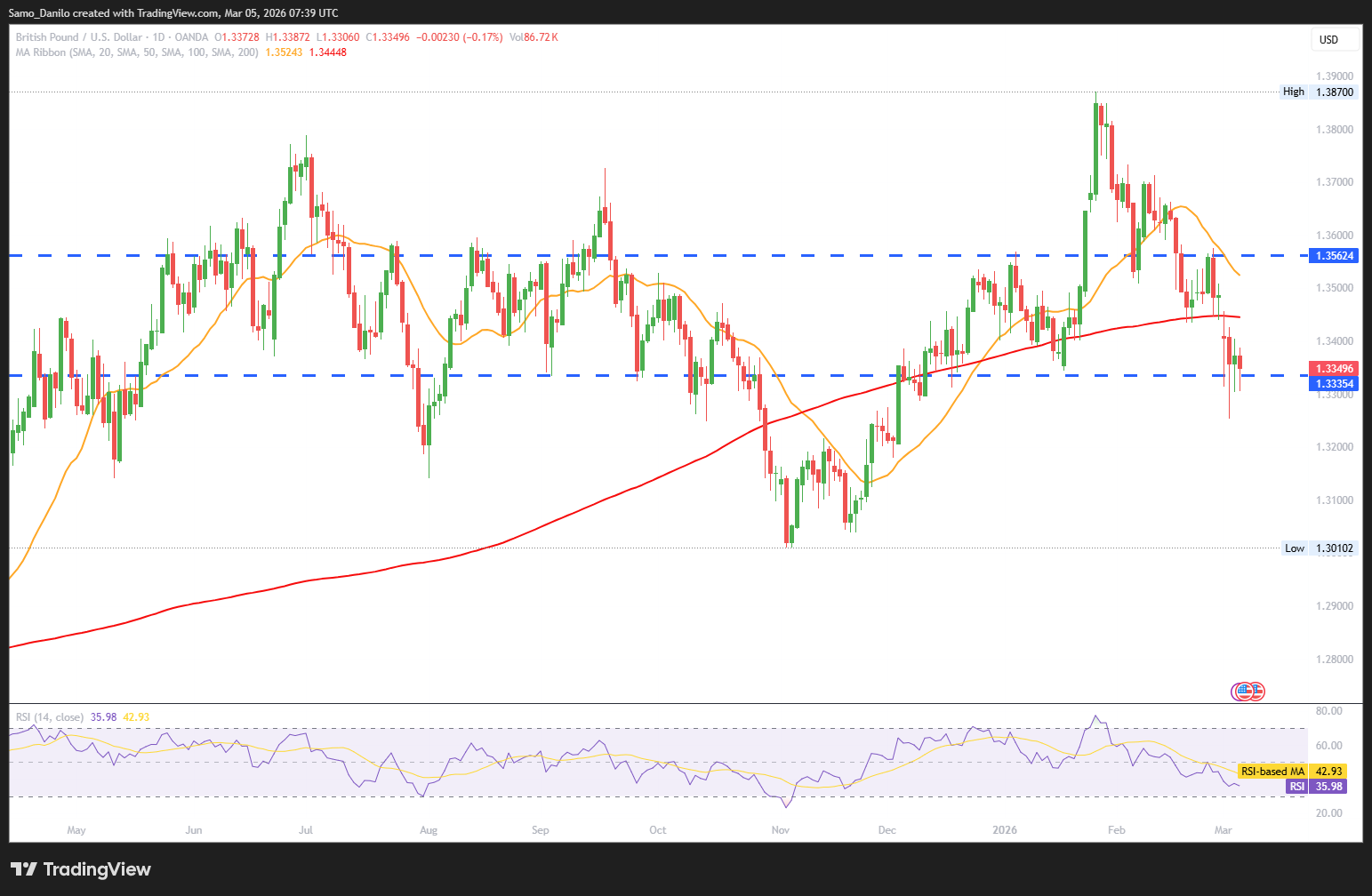
| SMA (20) | Slightly Falling | |
|
| RSI (14) | Falling | | |
| MACD (12, 26, 9) | Falling | | |
Closing statement: GBP/USD remains under pressure as geopolitical tensions boost safe-haven demand for the US Dollar while rising energy prices threaten to push UK inflation higher. Stronger US economic data and continued risk aversion could keep the pair biased to the downside in the near term.
XAUUSD
- XAU/USD Price: The XAU/USD continues its upward momentum for the second consecutive session on Thursday, trading around $5,160. Rising geopolitical tensions have strengthened demand for safe-haven assets, pushing investors toward Gold as a hedge against global uncertainty.
- Military escalation: Hostilities escalated after a reported US submarine attack sank an Iranian warship near Sri Lanka, marking a significant development in the conflict. US Defense Secretary Pete Hegseth described it as the first such naval attack on an enemy since World War II, underscoring the seriousness of the confrontation as the campaign enters its sixth day.
- Beige Book: According to the Federal Reserve Beige Book, economic activity in the Federal Reserve districts increased slightly to moderately in seven of twelve regions. However, the number of districts reporting stagnant or declining activity rose from four to five, suggesting uneven economic momentum across the United States.
- Tariff policy: The United States is expected to introduce a temporary 15% global tariff, replacing the 10% rate implemented earlier after the Supreme Court of the United States invalidated most of Donald Trump’s previous levies. Treasury Secretary Scott Bessent stated the tariff could revert within five months depending on the results of ongoing trade investigations.
- Labor market: Investors are now looking ahead to several US employment indicators, including the Challenger Job Cuts, Initial Jobless Claims, and the highly anticipated Nonfarm Payrolls for February. These releases, alongside speeches from Federal Reserve officials, could significantly influence the US Dollar and Gold price direction.
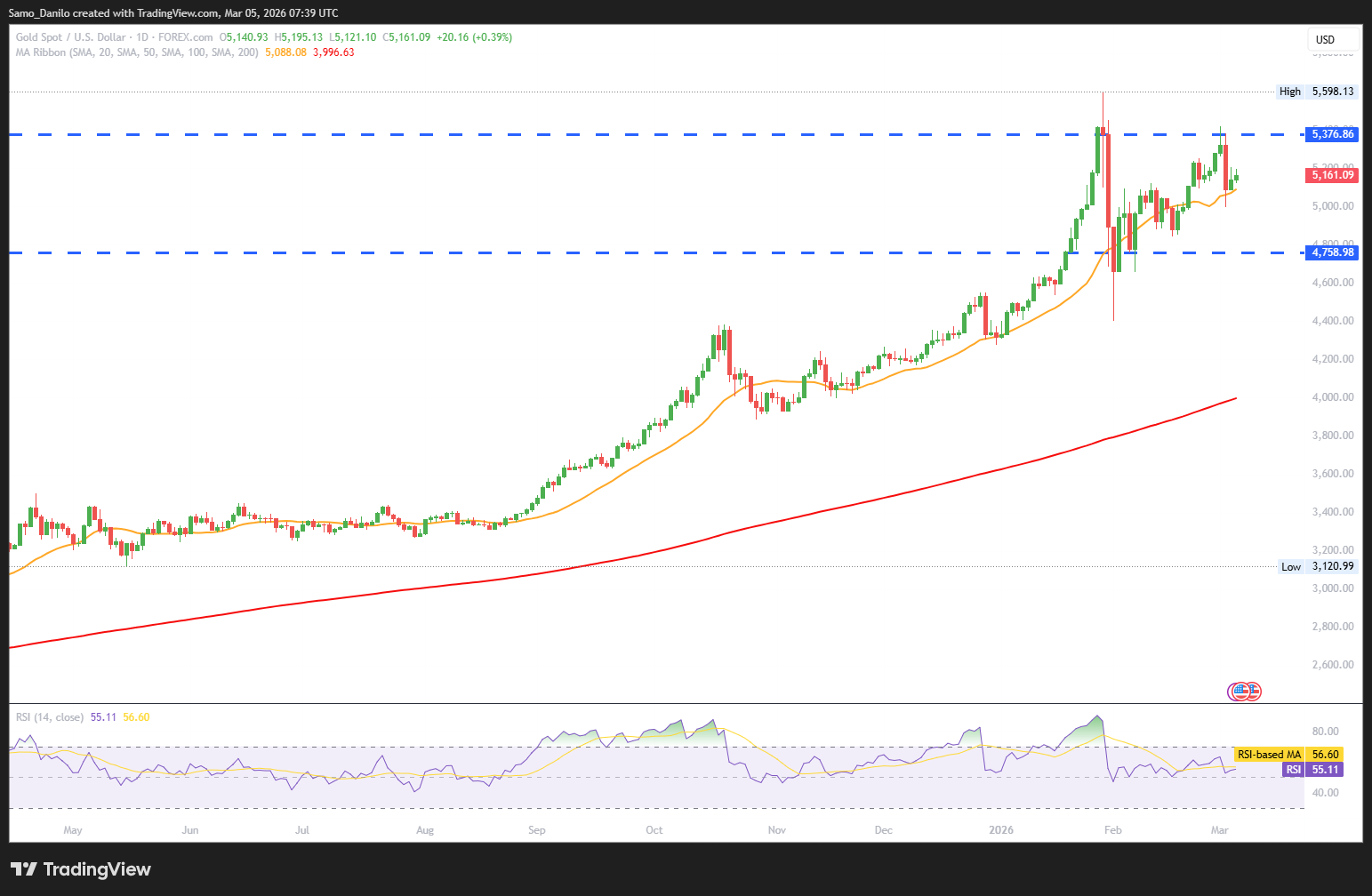
| SMA (20) | Rising | | |
| RSI (14) | Rising | | |
| MACD (12, 26, 9) | Slightly Rising | |
Closing statement: Gold remains supported by safe-haven demand amid escalating geopolitical tensions and growing global uncertainty. Upcoming US labor market data and Federal Reserve commentary will be key drivers for XAU/USD in determining whether the rally can extend further.
CRUDE OIL
- Crude Oil Price: The West Texas Intermediate crude oil price continues its bullish momentum for the third consecutive session, trading around $76.00 per barrel during the European session on Thursday. Supply concerns linked to geopolitical tensions in the Middle East are keeping upward pressure on oil prices.
- US signals: US Defense Secretary Pete Hegseth stated that the United States will take all the time necessary to ensure success in the conflict, adding that more military forces are arriving and further operational waves are expected. These remarks reinforce fears of prolonged instability in a region critical for global energy supply.
- Iran negotiations: According to a report by The New York Times, cited by Reuters, Iran’s Ministry of Intelligence reportedly signaled to the Central Intelligence Agency a willingness to explore negotiations to end the war. However, Tehran later denied the report, leaving the outlook for the conflict and its economic consequences highly uncertain.
- Strategic reserve: Recent weekly inventory data indicated that the United States Department of Energy made no purchases for the Strategic Petroleum Reserve last week. Nevertheless, authorities may consider releasing reserves if oil price pressures continue to intensify.
- Restricted exports: Amid tightening global fuel markets, China has reportedly instructed domestic energy companies to suspend new fuel export contracts and attempt to cancel existing shipments. The move reflects growing concerns over supply disruptions caused by the Middle East conflict and the effective freezing of traffic through a key global oil chokepoint.
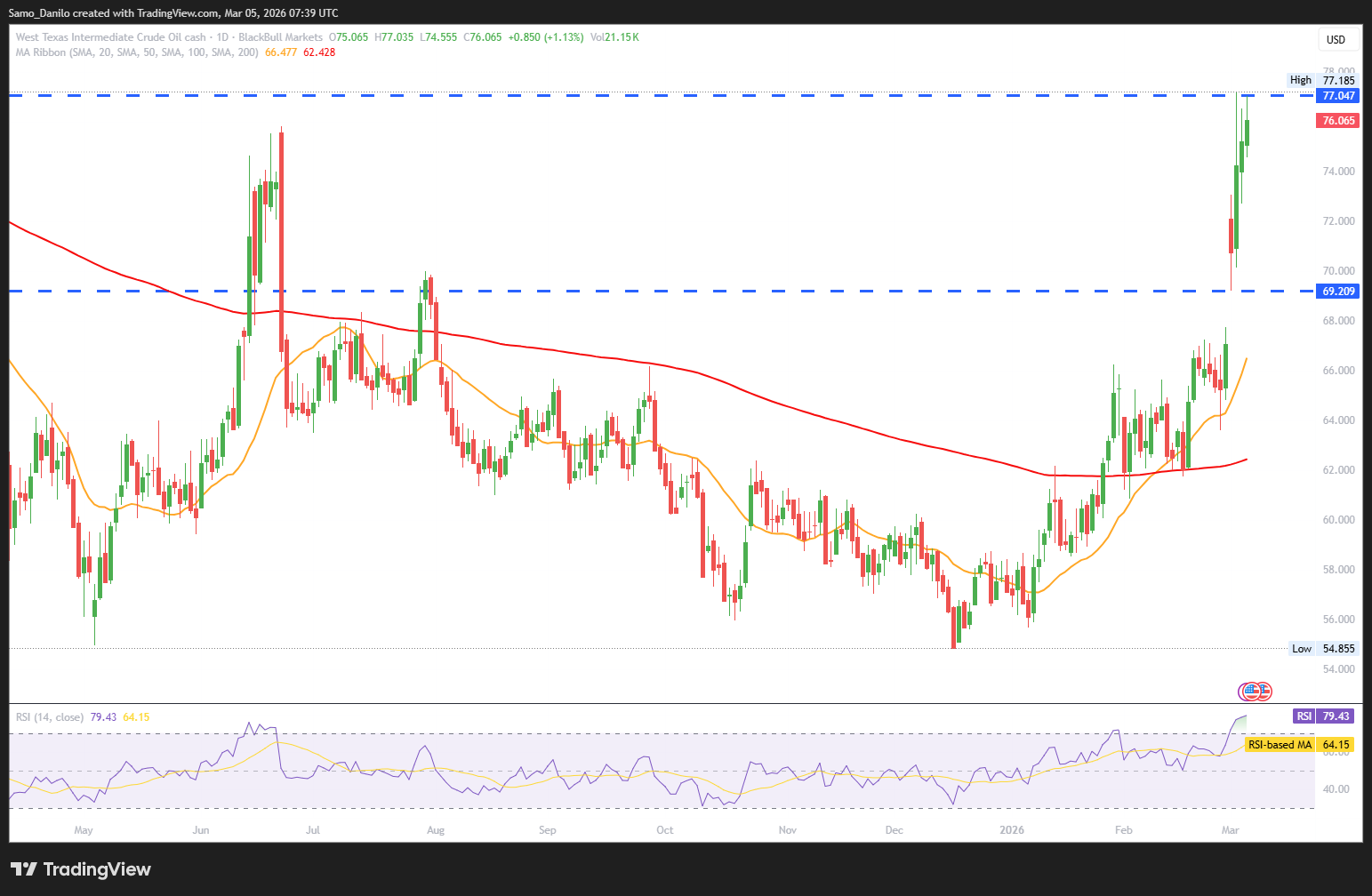
| SMA (20) | Rising | | |
| RSI (14) | Rising | | |
| MACD (12, 26, 9) | Rising | | |
Closing statement: Crude oil prices remain supported by geopolitical risk, potential supply disruptions, and tightening global fuel markets. Developments surrounding the Middle East conflict and potential policy responses from major energy consumers will likely remain the key drivers for oil prices in the near term.
DAX
- DAX Price: Germany’s benchmark DAX is expected to move lower again toward the 24,000-point level after a brief recovery in the previous session. The index is currently trading around 24,160 points as persistent geopolitical tensions linked to the conflict involving Iran continue to weigh on investor sentiment.
- Eurozone labor: The unemployment rate in the Eurozone fell to a record low of 6.1% in January from 6.3% in December, with the number of unemployed declining by roughly 184,000. The improvement was largely driven by stronger labor market conditions in Italy, Spain, and France, signaling continued resilience in employment across the region.
- ECB signals: François Villeroy de Galhau, a policymaker at the European Central Bank, stated that he currently sees no reason to raise interest rates. However, he noted that the ongoing conflict could push inflation higher while simultaneously weighing on economic growth.
- China targets: China opened its National People's Congress with a 2026 growth target of 4.5-5%. The government also signaled increased spending on defense and research, underscoring a long-term strategic shift toward technology-driven economic expansion.
- Tech giants: In the United States, President Donald Trump joined major technology companies including Amazon, Google, Microsoft, and Meta Platforms to sign the “Ratepayer Protection” pledge. The initiative aims to prevent rapidly growing electricity demand from AI infrastructure from pushing household power prices higher, which already increased by roughly 6% in 2025.
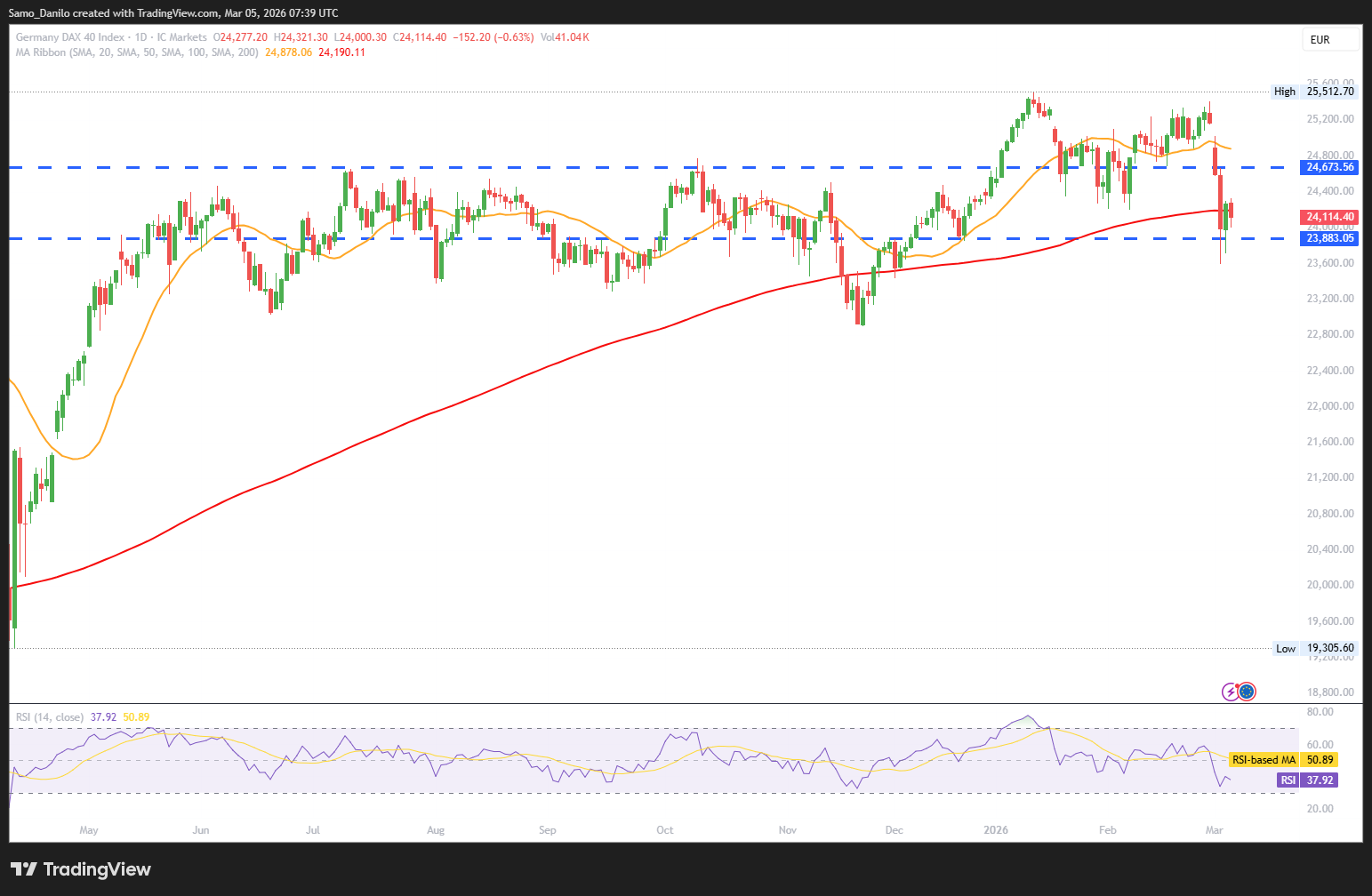
| SMA (20) | Slightly Rising | |
|
| RSI (14) | Falling | | |
| MACD (12, 26, 9) | Falling | | |
Closing statement: The DAX remains under pressure as geopolitical risks and global macro uncertainty overshadow otherwise resilient Eurozone labor data. Market sentiment will likely stay sensitive to developments in the Middle East and signals from major central banks regarding future monetary policy.