
EURUSD
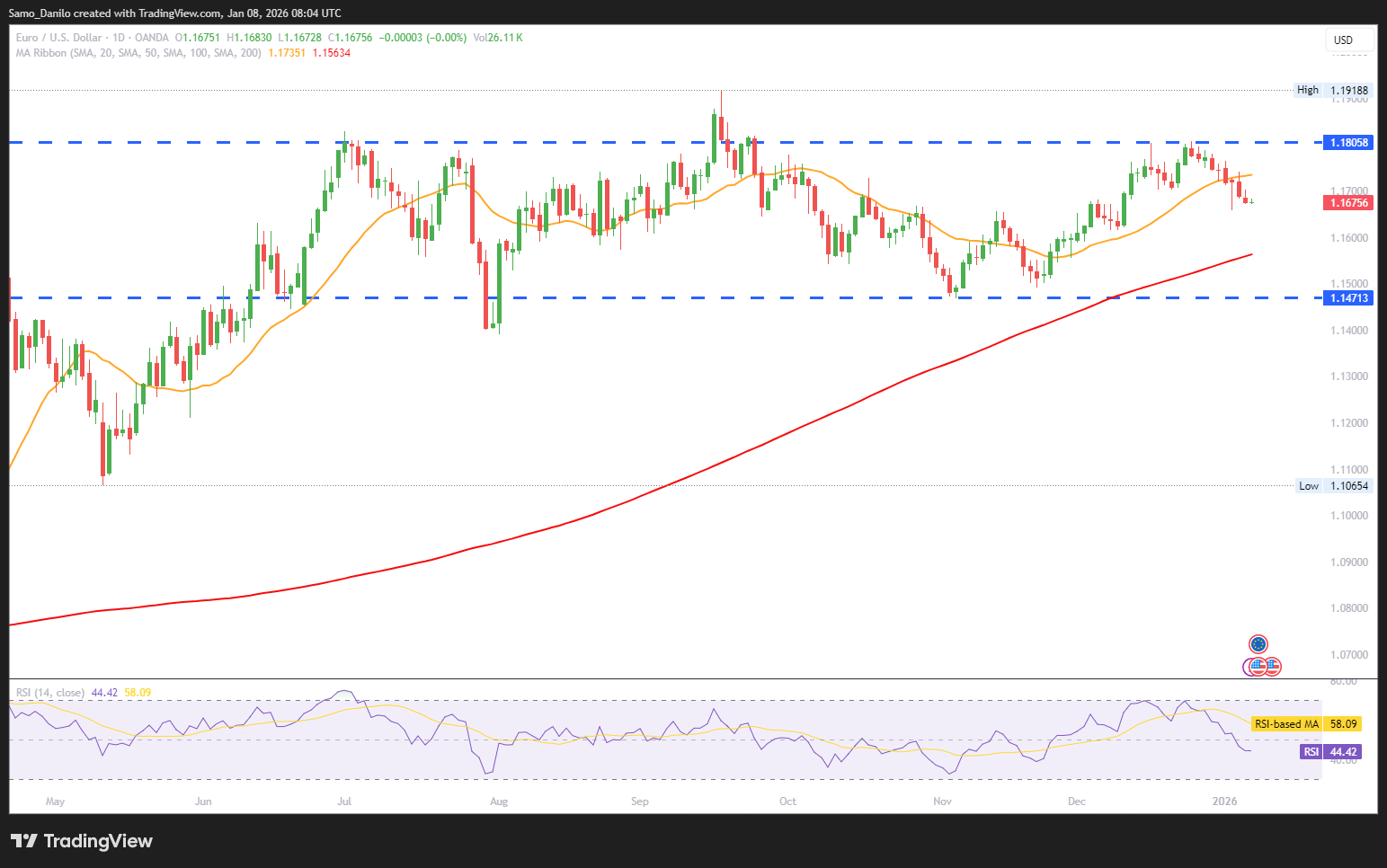
- EUR/USD Price: EUR/USD stabilizes after four consecutive losing sessions, hovering near 1.1680 during European trading hours on Thursday.
- Inflation Cooling: Eurozone headline HICP eased to 2.0% y/y, while core inflation slowed to 2.3%, both aligning with expectations and slightly below prior readings.
- Policy Outlook: The softer inflation print is unlikely to shift ECB expectations materially, as price growth remains close to the central bank’s 2% target.
- Growth Signal: Italy’s euroCOIN indicator points to stronger Q4 growth, suggesting 0.5% q/q GDP expansion, well above ECB and market forecasts.
- Data Watch: Markets turn attention to upcoming Eurozone Business Climate figures and the Unemployment Rate for fresh directional cues.
| SMA (20) | Slightly Rising |  |
|
| RSI (14) | Falling |  | |
| MACD (12, 26, 9) | Slightly Rising | |
Closing statement: Overall, the EUR/USD appears poised for consolidation in the near term, with limited downside momentum as soft inflation data meets firmer growth signals. Unless incoming Eurozone labor or business sentiment data surprise significantly, the pair is likely to remain range-bound around 1.1650–1.1750, with a mild upside bias should economic resilience sustain market confidence in the euro.
GBPUSD
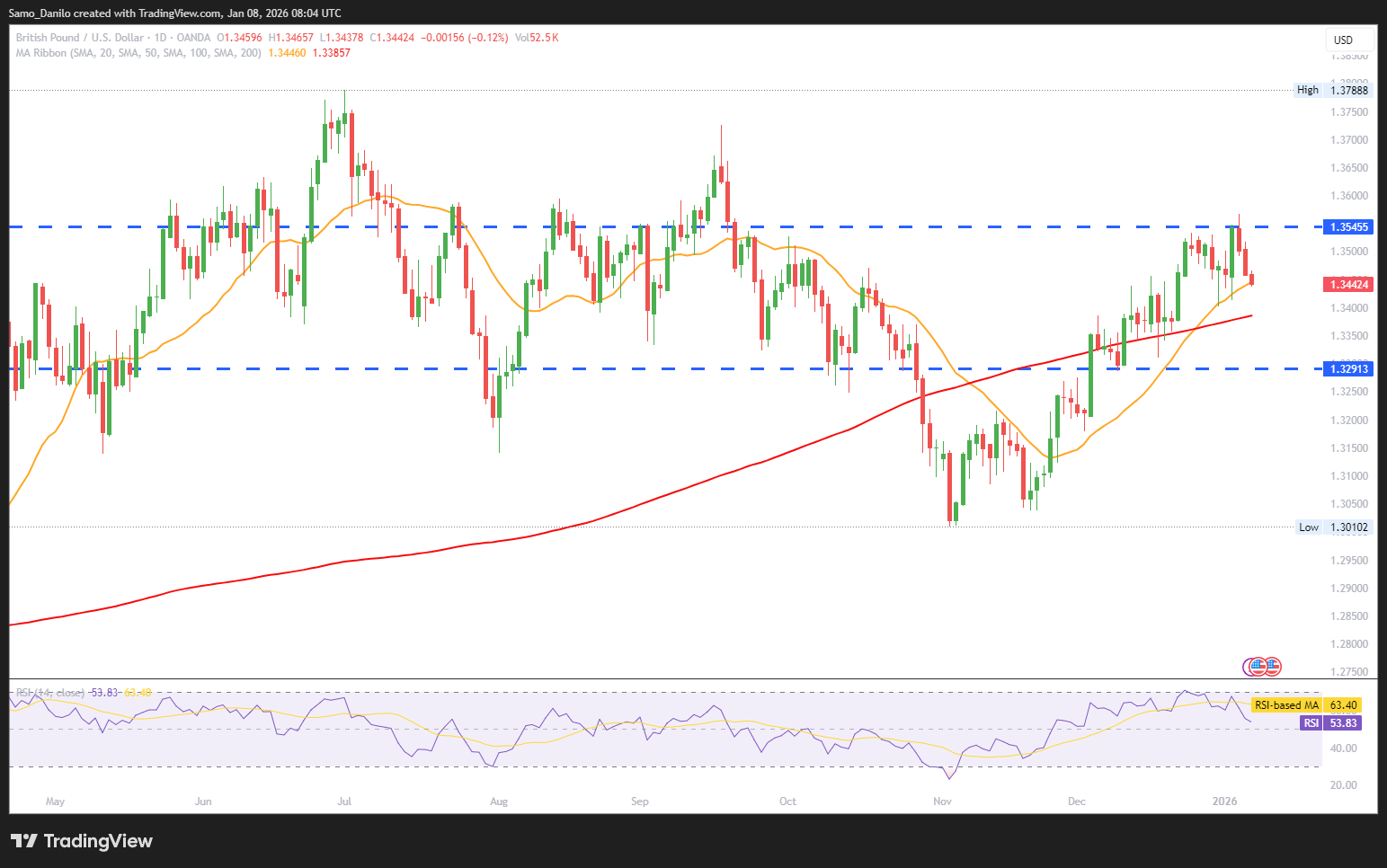
- GBP/USD Price: GBP/USD is trading flat near 1.3450 during early European hours on Thursday, showing limited directional conviction.
- Risk Driven: Sterling remains primarily influenced by global risk sentiment and expectations surrounding the Bank of England’s policy path in 2026.
- US Services: US ISM Services PMI surprised to the upside in December, rising to 54.4, supported by stronger new orders and employment components.
- Jobs Report: The ADP report showed 41K private-sector job gains, slightly below consensus but broadly consistent with a cooling US labor market.
- Political Noise: President Trump’s decision to withdraw from multiple UN-related organizations adds geopolitical uncertainty but had limited immediate FX impact.
| SMA (20) | Rising | | |
| RSI (14) | Falling | | |
| MACD (12, 26, 9) | Rising | | |
Closing statement: GBP/USD is likely to remain range-bound in the near term as traders balance resilient US data against BoE easing expectations. A sustained break above 1.3500 could open room for further upside, while a deterioration in risk sentiment may expose the pair to a pullback toward 1.3350–1.3300.
XAUUSD
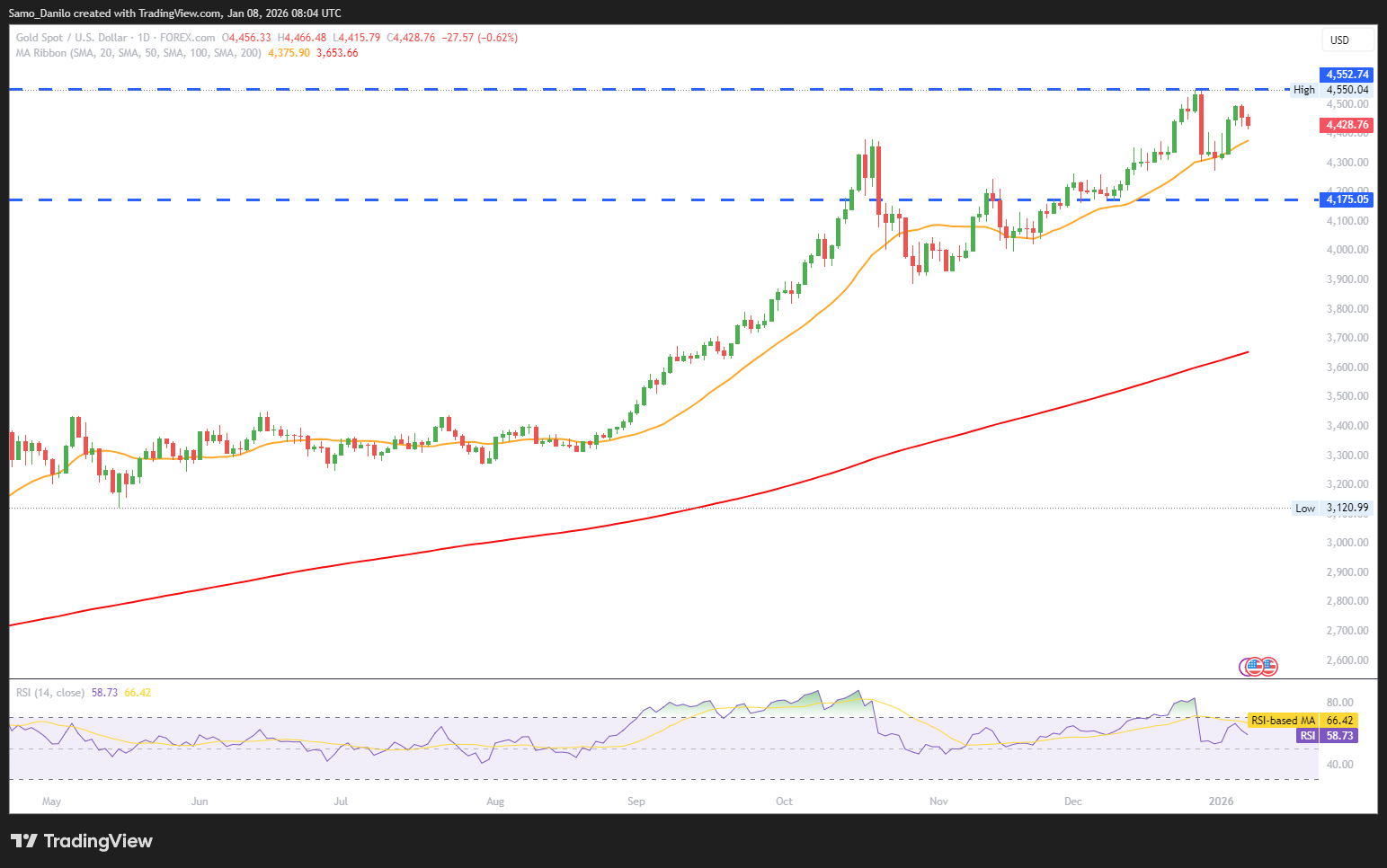
- XAU/USD Price: Gold is under selling pressure for a second consecutive session, sliding back toward $4,430 during European trading. The move reflects short-term profit-taking after recent record highs rather than a structural shift in trend.
- Policy Signals: President Trump’s proposal to restrict Wall Street firms from buying single-family homes adds political noise but has limited direct impact on gold. However, such interventionist rhetoric reinforces broader concerns over market distortions and policy unpredictability.
- Labor Cooling: The JOLTS report showed job openings falling to 7.1 million, with the openings-to-unemployed ratio dropping to 0.91, the weakest since March 2021. This reinforces the narrative of a gradually cooling US labor market, which is typically supportive for gold over the medium term.
- Market Regulation: Turkey’s introduction of a Precious Metal Tracking System tightens oversight across the gold supply chain. While largely structural, the move underscores growing global scrutiny and regulation of physical gold markets.
- China Tensions: China’s reported pause on Nvidia H200 chip orders highlights escalating US-China tech tensions. Such developments support gold’s safe-haven appeal, even if the immediate price reaction remains muted.
| SMA (20) | Rising | | |
| RSI (14) | Slightly Rising | |
|
| MACD (12, 26, 9) | Slightly Rising | |
Closing statement: Gold appears to be undergoing a healthy consolidation following strong gains, with downside so far remaining contained. As long as prices hold above the $4,400 zone, the broader bullish bias remains intact, while renewed geopolitical or US labor weakness could trigger another leg higher toward recent highs.
CRUDE OIL
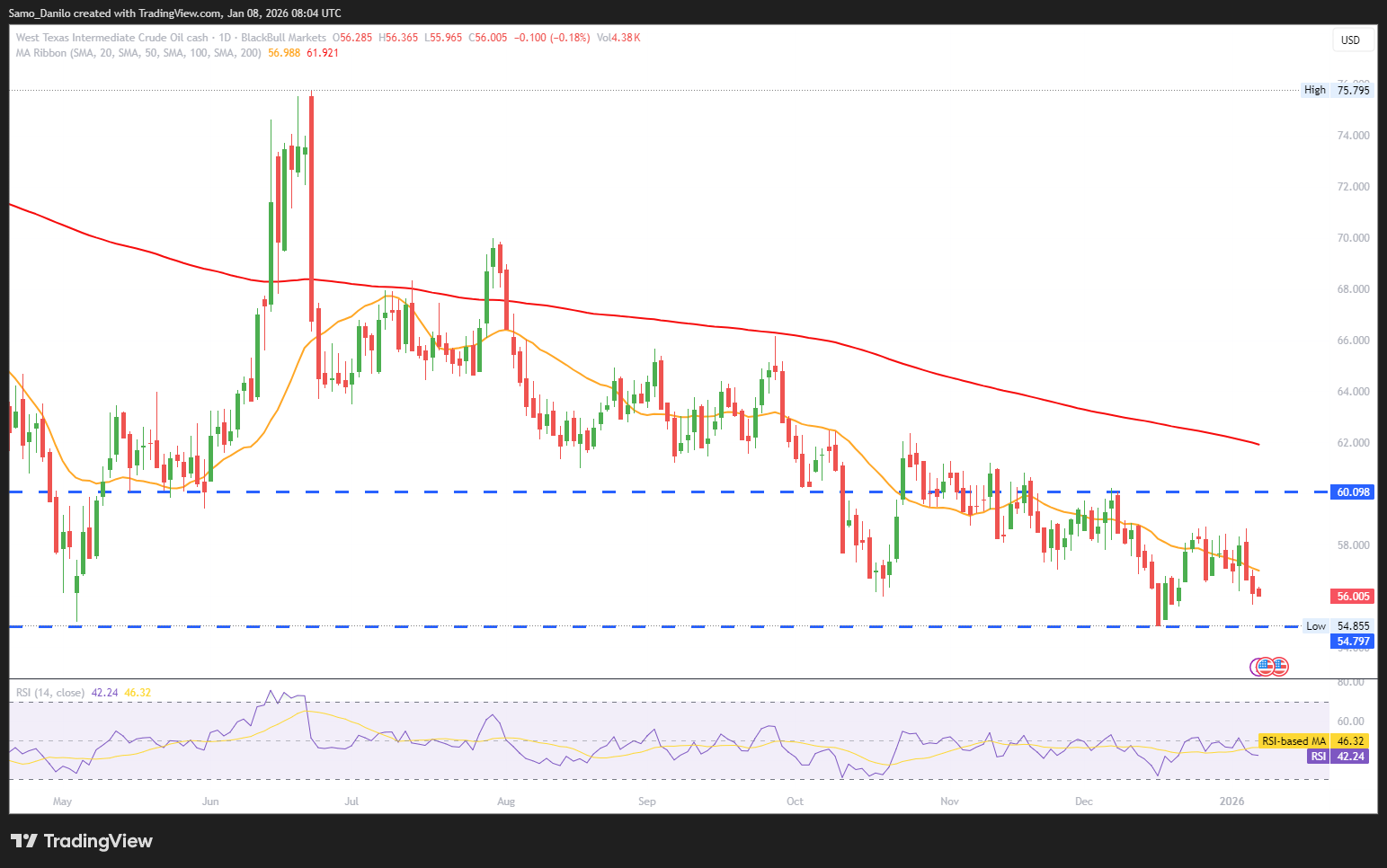
- Crude Oil Price: WTI trades softer around $56.05 in early European hours, reflecting persistent supply-side concerns and a fragile demand outlook despite some supportive inventory data.
- Inventory Draw: US crude inventories fell by 3.83 million barrels, well above expectations and the prior week’s draw. This sharper-than-forecast decline may help cap near-term downside by signaling tighter prompt supply conditions.
- OPEC Discipline: Four OPEC+ members pledged deeper compensation cuts totaling 829,000 bpd by June 2026. While supportive on paper, markets remain cautious given the broader backdrop of oversupply and historical compliance issues.
- Venezuela Supply: News that Venezuela could hand over up to 50 million barrels to the US weighed on crude prices. Even though Venezuelan production capacity is structurally constrained, the headline reinforces fears of incremental supply hitting the market.
- Equity Divergence: Energy equities reacted unevenly, with Exxon falling on supply concerns while Valero gained on refining margins. This divergence highlights that downstream players may benefit even as upstream prices remain pressured.
| SMA (20) | Slightly Falling | |
| RSI (14) | Slightly Falling | |
| MACD (12, 26, 9) | Slightly Falling | |
Closing statement: WTI remains caught between supportive inventory draws and rising supply risks. As long as prices stay below the $57–58 zone, downside risks persist toward the mid-$55 area, though deeper OPEC+ cuts and tighter US stocks could stabilize prices and trigger short-term rebounds if demand sentiment improves.
DAX
- DAX Price: The DAX is trading slightly lower around 25,130, pausing after printing fresh all-time highs near 25,150, suggesting near-term consolidation rather than a trend reversal.
- Orders Rebound: German Factory Orders surged 5.6% MoM in November, sharply beating expectations for a decline. The data point to improving momentum in manufacturing and offer fundamental support to the index.
- Labor Weakness: Despite stronger orders, Germany’s labor market remains under pressure, with job openings falling to 619,000 and the unemployment rate rising to 6.3% in 2025, highlighting lingering structural weakness.
- Euro Jobs: Eurozone unemployment is expected to hold at 6.4%, signaling a stable but unexciting labor market. A steady print would reinforce the narrative of economic resilience without overheating.
- Geopolitical Risk: Renewed tensions over Greenland add a layer of geopolitical uncertainty, though markets have so far treated the issue as a background risk rather than an immediate threat to European equities.
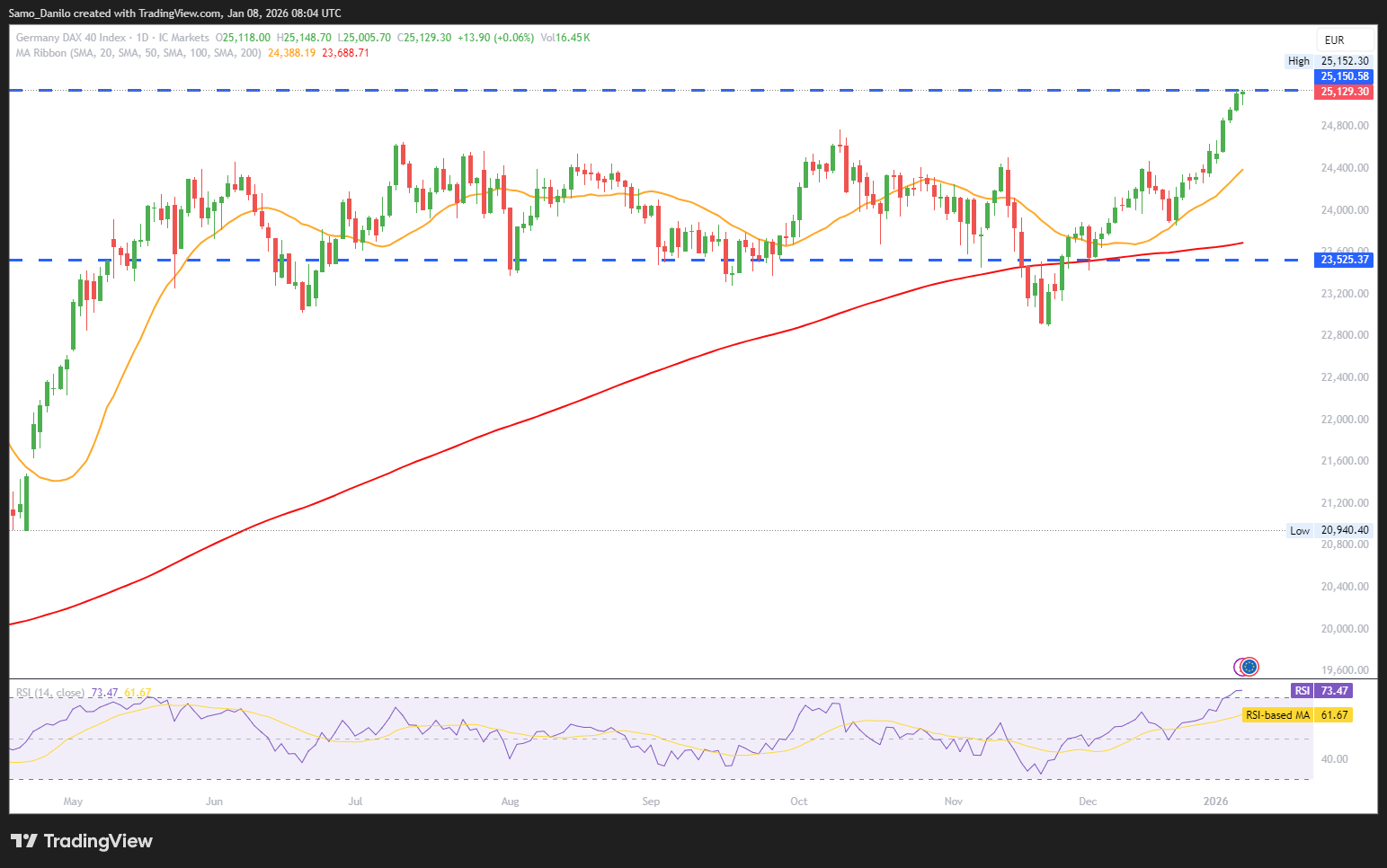
| SMA (20) | Rising | | |
| RSI (14) | Rising | | |
| MACD (12, 26, 9) | Rising | | |
Closing statement: The DAX appears to be entering a healthy consolidation phase after record highs. As long as it holds above the 25,000 psychological level, the broader bullish trend remains intact, with scope for renewed upside if macro data continue to surprise positively and geopolitical risks stay contained.