
EURUSD
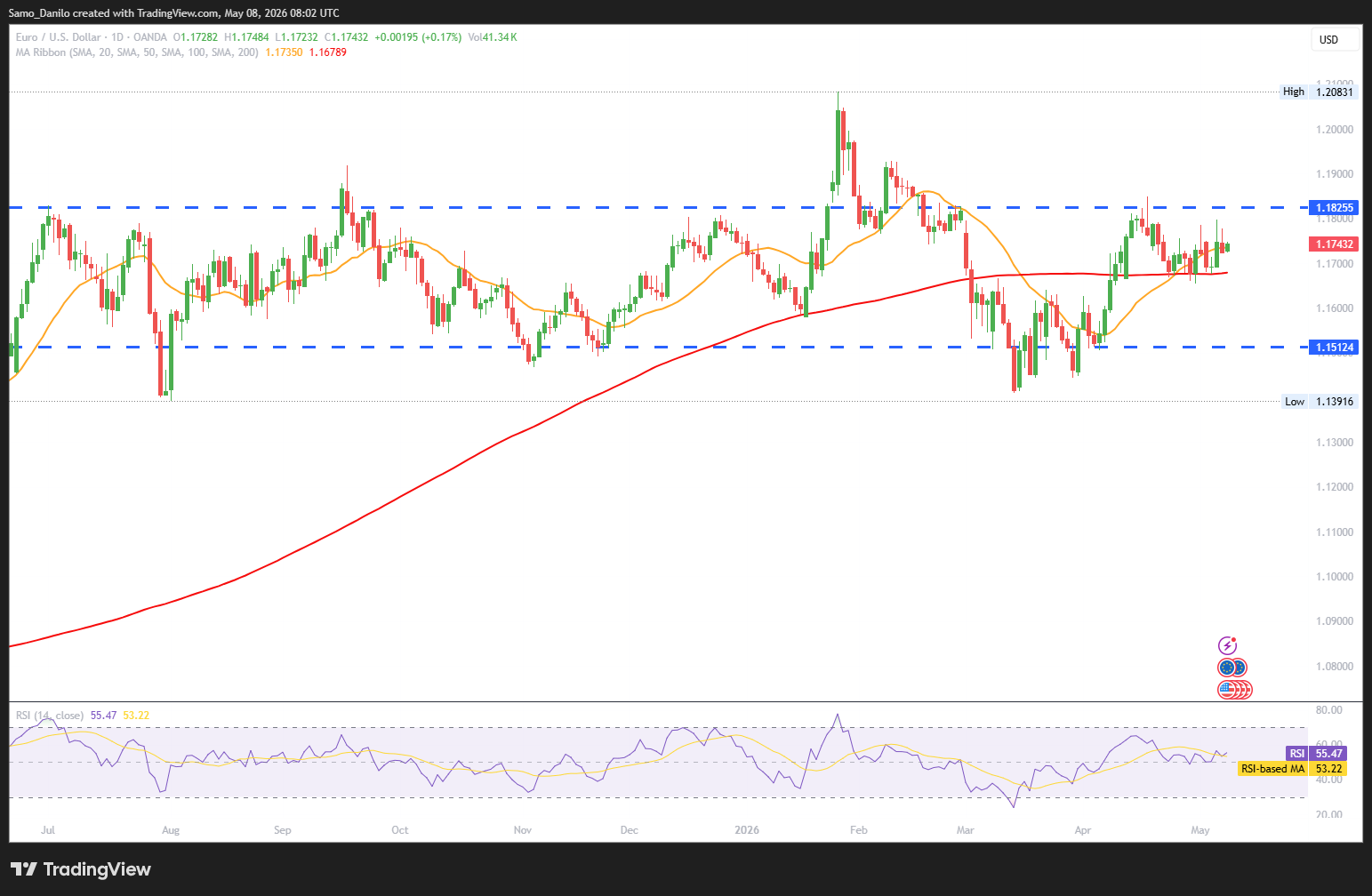
- EUR/USD Price: EUR/USD is trading with a slight positive bias around the 1.1740 level, stabilizing after the previous session’s decline. The pair appears to be consolidating as traders await fresh catalysts.
- Strait of Hormuz: Donald Trump and his administration are awaiting a response from Iran regarding a proposal to reopen the Strait of Hormuz and end the conflict. Market sentiment remains highly sensitive to developments in these negotiations.
- Eurozone data: Eurozone retail sales declined by 0.1% in March following a larger drop in February, reflecting pressure from higher fuel costs and deteriorating consumer sentiment. The data suggests that household demand across the region remains fragile.
- IMF report: The International Monetary Fund warned that Luxembourg’s economic slowdown may be becoming structural after several years of underperformance relative to the broader eurozone. This adds to concerns about uneven economic conditions within the region.
- Labor data: Investors are focused on the upcoming US Nonfarm Payrolls report, with expectations for 62,000 new jobs and a stable unemployment rate of 4.3%. The release could significantly influence Federal Reserve expectations and short-term USD direction.
| SMA (20) | Rising |  | |
| RSI (14) | Rising | | |
| MACD (12, 26, 9) | Slightly Rising | |
Closing statement: EUR/USD is stabilizing amid cautious market sentiment, though weak eurozone consumer data limits upside potential. The near-term outlook remains neutral, with US labor market data likely to determine the pair’s next directional move.
GBPUSD
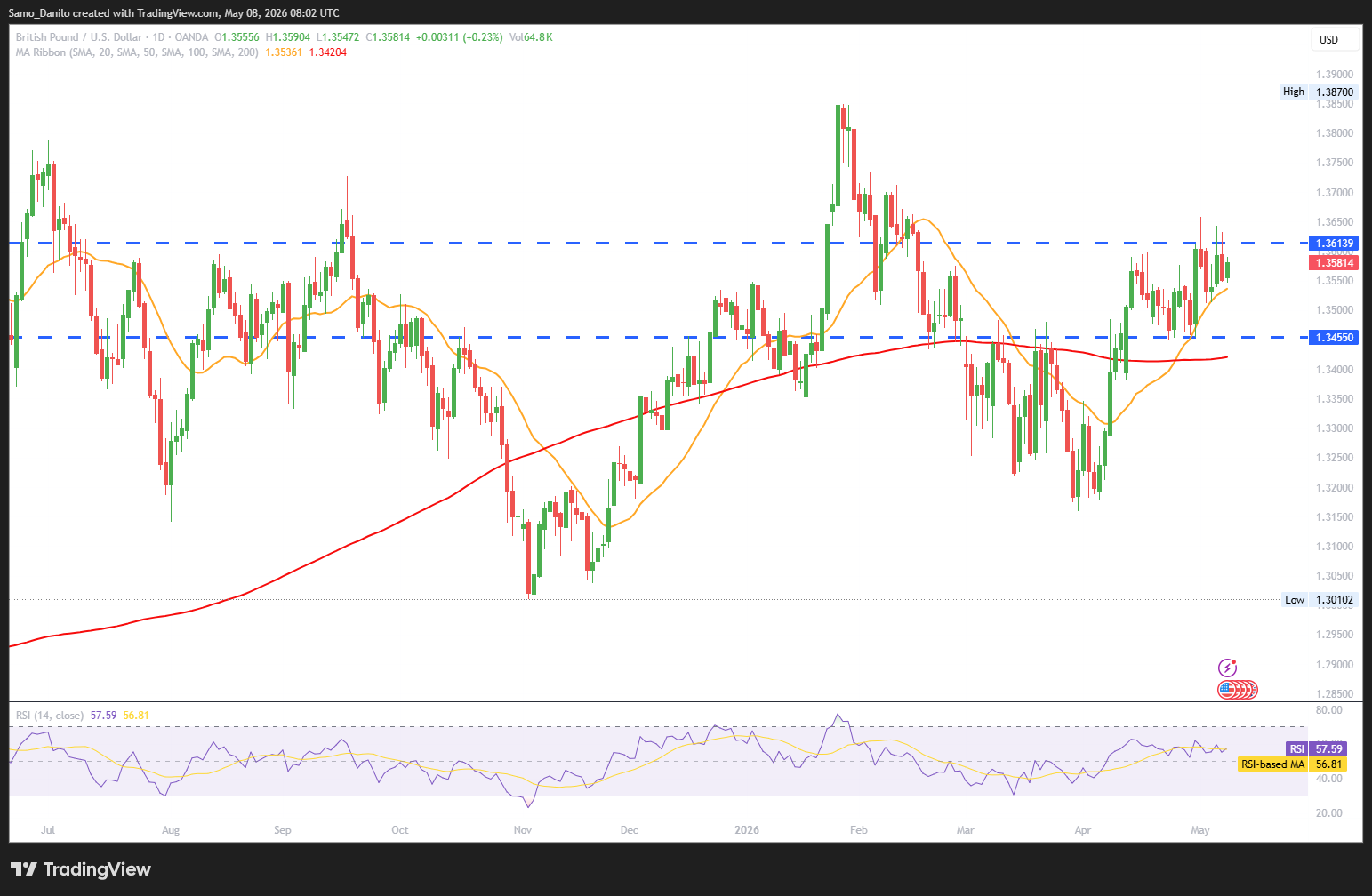
- GBP/USD Price: GBP/USD is posting moderate gains around the 1.3580 level during European trading. The pair is benefiting from relative resilience in the Pound despite ongoing domestic and geopolitical concerns.
- UK government: UK PM Keir Starmer is reportedly attempting to resolve disputes over the UK defence budget ahead of expected weak election results for the Labour Party. Political uncertainty may weigh on investor confidence toward UK assets.
- BoE tone: Andrew Bailey warned that persistent energy-driven inflation could require “forceful tightening.” This reinforces expectations that the Bank of England may keep monetary policy restrictive for longer.
- Construction sector: The latest report from Royal Institution of Chartered Surveyors showed UK construction activity falling sharply in the first quarter of 2026. Escalating supply chain disruptions linked to the Iran conflict are increasing pressure on the sector.
- British steel: New research from Oxford Economics highlighted that British Steel supports £9.8 billion in economic activity and approximately 142,000 jobs across the UK. This underscores the sector’s importance to the broader British economy.
| SMA (20) | Rising | | |
| RSI (14) | Rising | | |
| MACD (12, 26, 9) | Rising | | |
Closing statement: GBP/USD is holding firm as hawkish BoE expectations support the Pound, though political uncertainty and weakening domestic activity remain concerns. The near-term outlook is cautiously positive, with inflation and geopolitical developments continuing to shape direction.
XAUUSD
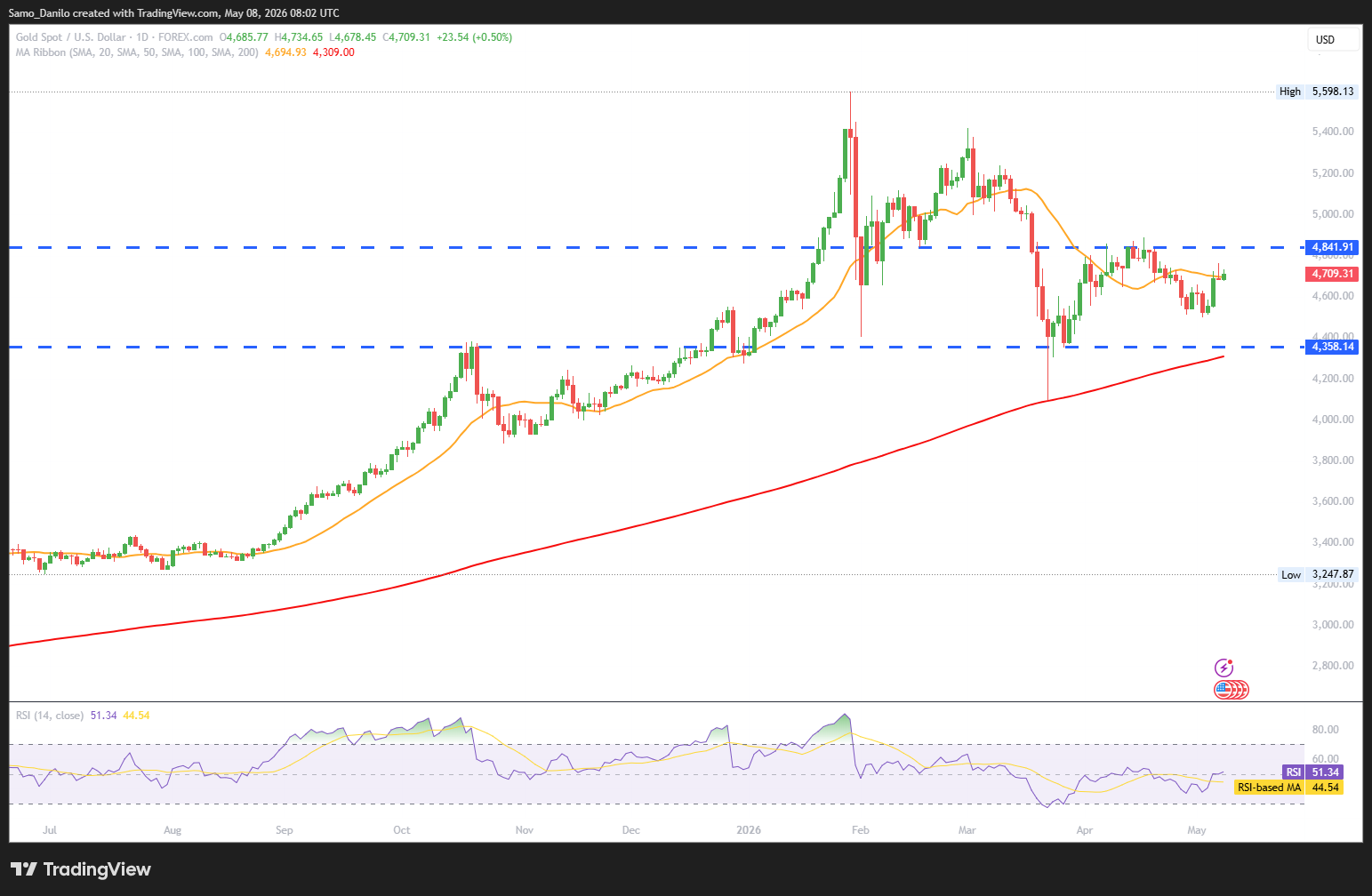
- XAU/USD Price: Gold has regained upward momentum after the previous session’s pullback from a two-week high, climbing toward the $4,712 area. This indicates that buyers remain active on dips despite recent volatility.
- US-Iran: United States Central Command confirmed strikes on Iranian military facilities linked to attacks in the Strait of Hormuz. The renewed military action is keeping geopolitical tensions elevated.
- Ceasefire situation: Iran accused the United States of violating the ceasefire, while Donald Trump insisted the ceasefire remains intact. Conflicting narratives continue to fuel uncertainty in financial markets.
- Gold demand: Gold demand increased 2% year-over-year in the first quarter, reaching 1,231 tonnes. Combined with sharply higher prices, total demand value surged 74% to a record $193 billion, highlighting strong investor and institutional interest.
- Rate cut: Persistent inflation concerns and continued economic growth have led investors to delay expectations for Federal Reserve rate cuts until late 2027 or early 2028. Higher-for-longer rate expectations could limit gold’s upside potential over time.
| SMA (20) | Neutral | ||
| RSI (14) | Rising | | |
| MACD (12, 26, 9) | Slightly Falling |  |
Closing statement: Gold remains supported by geopolitical tensions and strong physical and investment demand, though delayed Fed easing expectations present a headwind. The near-term outlook is moderately bullish, with safe-haven demand likely to remain elevated amid ongoing uncertainty.
CRUDE OIL
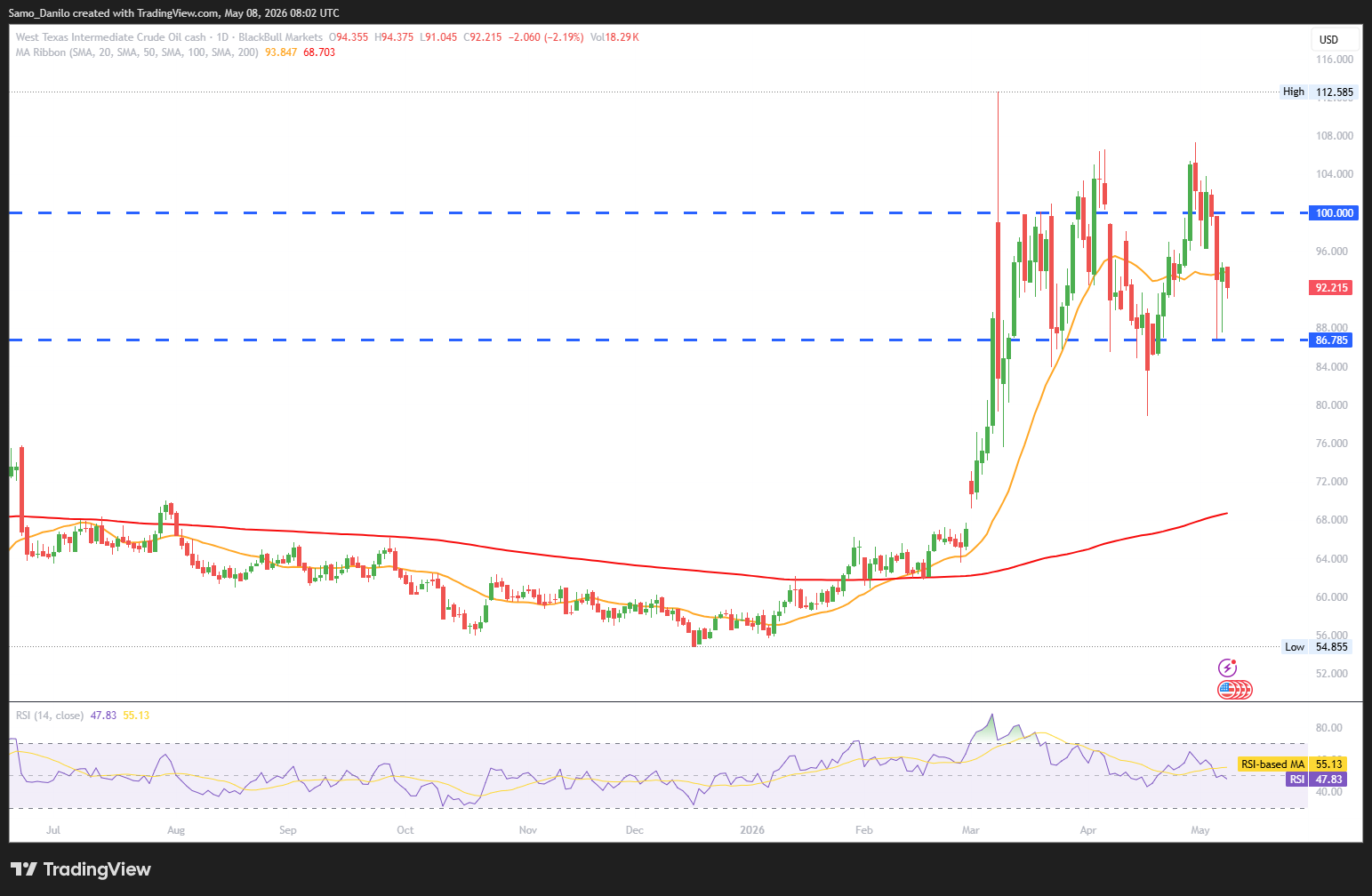
- Crude Oil Price: WTI crude is trading around $92.00 during the European session, maintaining relatively strong levels despite recent volatility. The market continues to price in geopolitical risk and supply uncertainty.
- Hormuz proposal: The US President Donald Trump administration has been waiting for Iran to respond to its proposal to reopen the Strait of Hormuz and end the war.
- Ceasefire violations: According to The Guardian, Iran accused the United States of violating the ceasefire through attacks on ships and civilian areas near the Strait of Hormuz. Continued accusations from both sides are sustaining fears of further supply disruptions.
- US inventory: The Energy Information Administration reported that US crude stockpiles fell by 2.314 million barrels in the latest week. Although smaller than the previous week’s decline, the continued drawdown points to relatively firm demand conditions.
- Legal dispute: HY Energy filed lawsuits against JPMorgan Chase and Citigroup over blocked payments linked to Iranian oil transactions. The case underscores growing financial and legal complications surrounding sanctions enforcement.
| SMA (20) | Slightly Rising | |
| RSI (14) | Slightly Falling | |
| MACD (12, 26, 9) | Slightly Rising | |
Closing statement: Crude oil remains supported by geopolitical tensions and ongoing supply concerns, while inventory declines reinforce market tightness. The near-term outlook is cautiously bullish, though any meaningful diplomatic breakthrough could trigger increased downside pressure on prices.
DAX
- DAX 40 Price: The DAX 40 is trading around 24,475 points on Friday as investors react to disappointing German economic data. Weak industrial activity continues to raise concerns about the strength of Europe’s largest economy.
- Industrial output: According to Destatis, Germany’s Industrial Output fell by 0.7% month-over-month in March, significantly below expectations for a 0.5% increase. The weaker-than-expected data signals ongoing pressure on the manufacturing sector and broader economic slowdown risks.
- Commerzbank plans: Commerzbank CEO Bettina Orlopp is set to present her refined strategy to boost the bank's profitability over the coming years. This is expected to include further job cuts.
- Rheinmetall news: Rheinmetall shares remain under pressure after multiple analyst downgrades pushed the stock toward the key €1,300 psychological level. The sharp decline reflects growing concerns over valuation and the sustainability of recent strong gains in defense stocks.
- Infineon news: The United States International Trade Commission upheld a ruling that Chinese company Innoscience infringed on an Infineon Technologies gallium nitride (GaN) patent. The decision includes import and sales bans against Innoscience products, strengthening Infineon’s competitive position in advanced semiconductor technology.
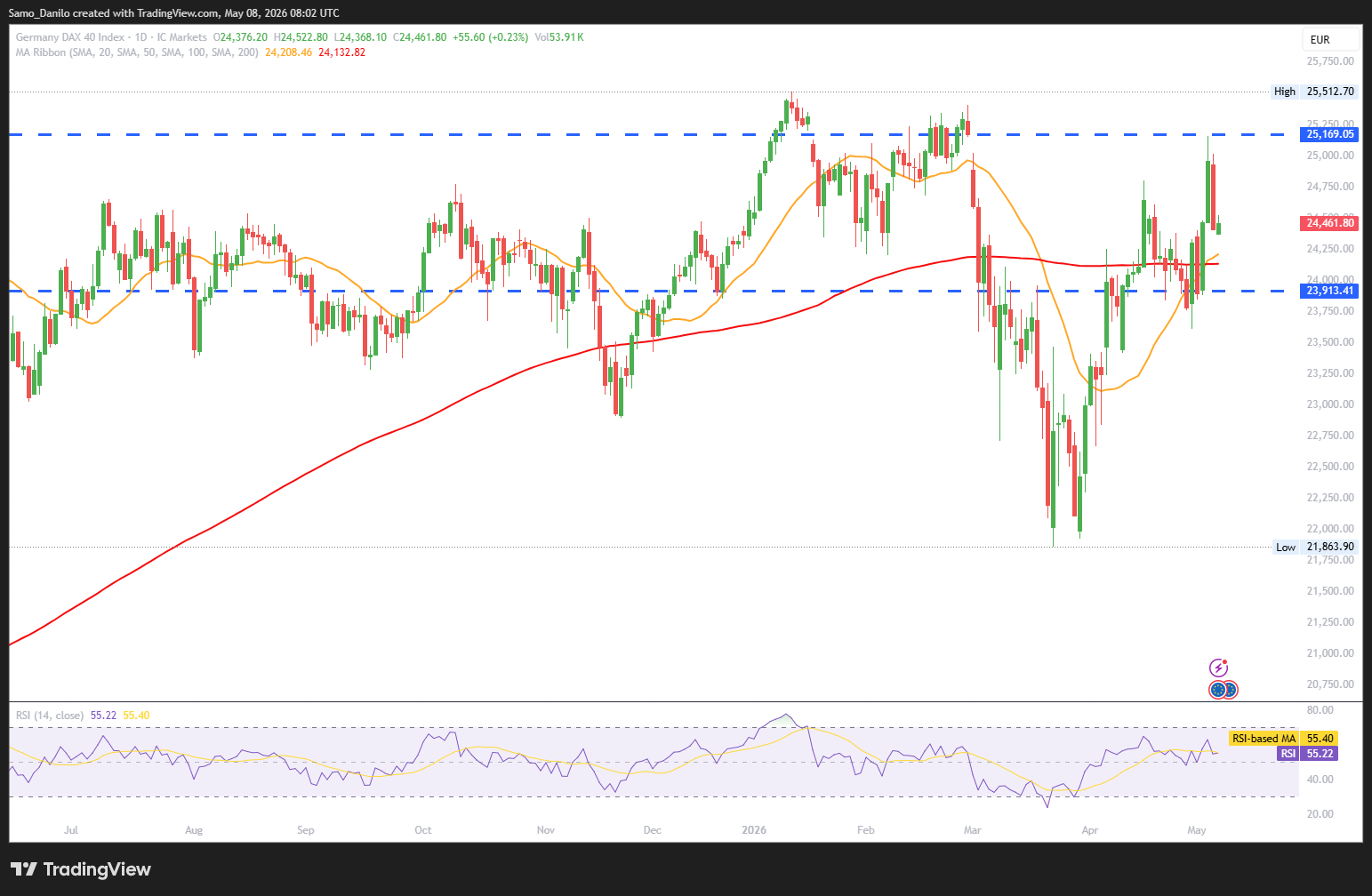
| SMA (20) | Rising | | |
| RSI (14) | Rising | | |
| MACD (12, 26, 9) | Rising | | |
Closing statement: The DAX 40 remains pressured by weak German industrial data and cautious investor sentiment, although positive corporate developments in technology may provide selective support. The short-term outlook remains mixed, with macroeconomic weakness offsetting company-specific opportunities.