
EURUSD
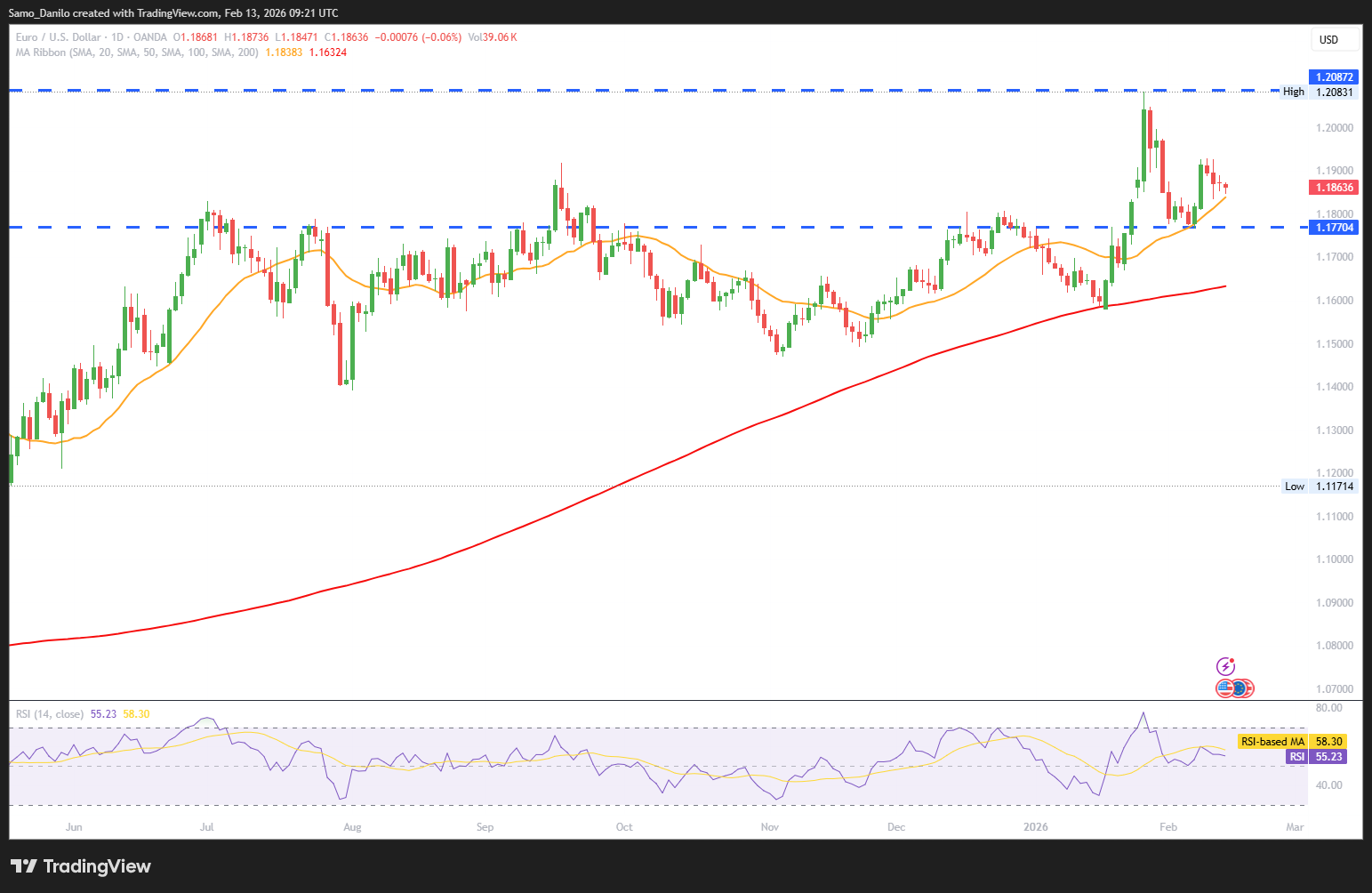
- EUR/USD Price: The pair remains in negative territory for a fourth consecutive session, trading near 1.1850 during European hours on Friday, as the US Dollar continues to find modest support.
- ECB rate: On the euro side, markets are increasingly pricing that the European Central Bank will hold its benchmark rate at 2.0% throughout 2026, with the possibility of rate hikes pushed into next year. This shift in expectations could help limit deeper EUR losses.
- Eurozone GDP: Q4 Eurozone GDP, due later today, is expected to show 0.3% q/q and 1.3% y/y growth. Any downside surprise would likely undermine the euro and reinforce the current bearish bias.
- Labor market: National data show strong job gains in Spain, offset by slight declines in employment in France and Germany. In aggregate, euro area employment is expected to rise by 0.1% q/q, also scheduled for release today.
- US fiscal outlook: In the US, the Congressional Budget Office updated its long-term projections, showing that President Donald Trump’s policy changes could add USD 4.7 trillion to the federal deficit over 10 years, partially offset by USD 3.0 trillion in tariff revenues. The outlook reinforces concerns about US fiscal sustainability but has yet to materially weaken the USD.
| SMA (20) | Rising |  | |
| RSI (14) | Slightly Rising | |
|
| MACD (12, 26, 9) | Slightly Rising | |
Closing statement: EUR/USD remains technically fragile, with traders cautious ahead of key Eurozone growth and employment data. While steadier ECB rate expectations could help stabilize the euro, any disappointment in today’s releases may keep the pair under pressure below the 1.19 handle, leaving risks tilted to the downside in the near term.
GBPUSD
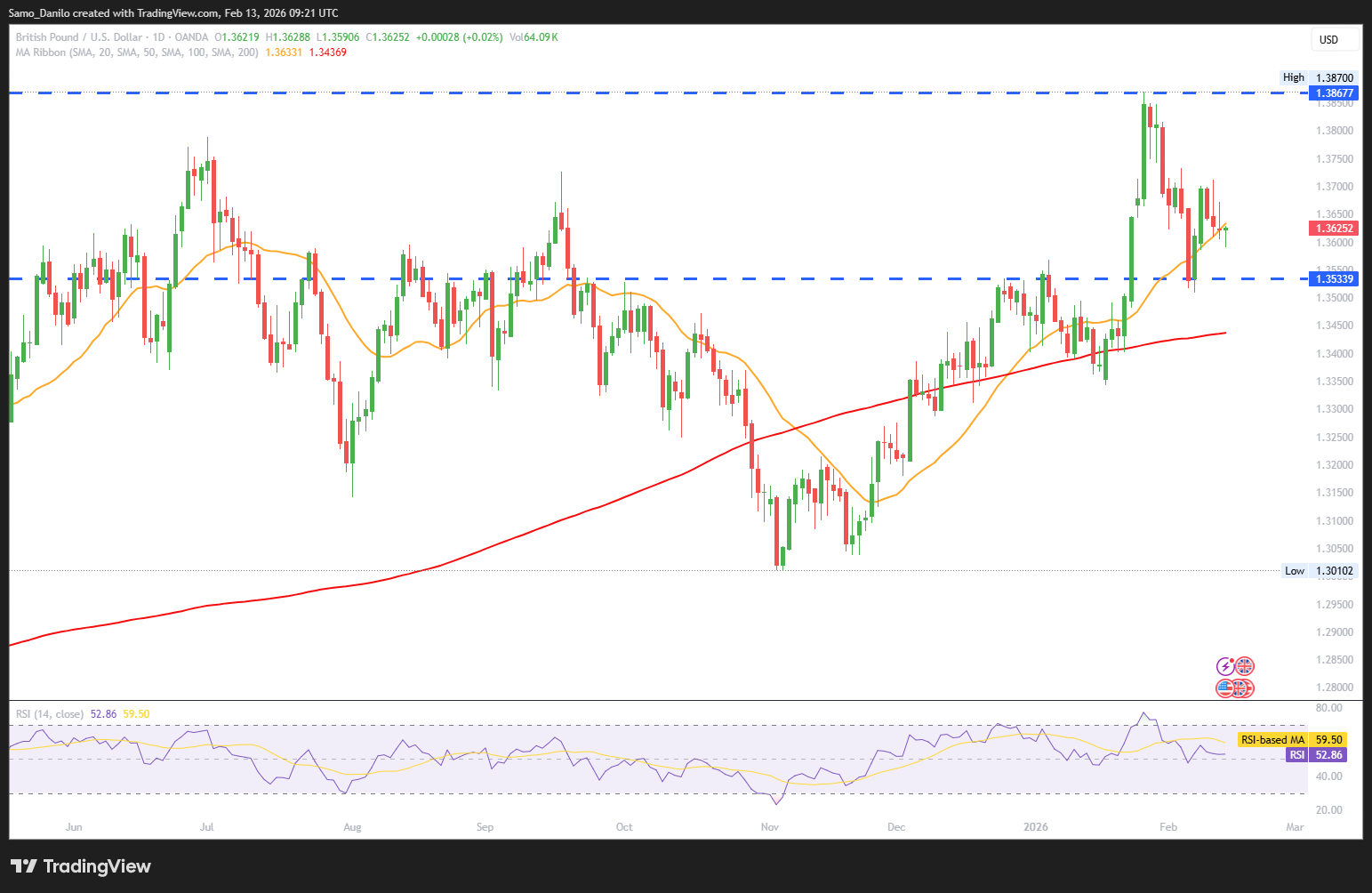
- GBP/USD Price: The pair holds moderate losses near 1.3600 during the European session on Friday, though downside momentum remains limited as sellers lack strong conviction.
- Political risks: UK Prime Minister Keir Starmer received backing from his cabinet and Labour MPs after a turbulent period linked to the fallout from the Jeffrey Epstein files and the resignation of a senior aide. The support helps stabilize sentiment around the pound, at least temporarily.
- Business investments: UK business investment fell nearly 3%, highlighting ongoing caution amid economic and political uncertainty. Growth was driven by manufacturing, while services stagnated and construction contracted, pointing to an uneven recovery.
- BoE signals: Bank of England Deputy Governor Sarah Breeden said an interest rate cut could come within the next couple of meetings if inflation continues to ease and no fresh economic shocks emerge, reinforcing expectations of policy loosening this year.
- US CPI: Markets now turn to the delayed US January CPI report, due later today. The data could be pivotal for USD direction, with a softer print potentially capping further GBP/USD downside.
| SMA (20) | Rising | | |
| RSI (14) | Slightly Rising | |
|
| MACD (12, 26, 9) | Slightly Rising | |
Closing statement: GBP/USD remains range-bound with a mild bearish bias, as soft UK investment data and dovish BoE signals offset easing political risks. Direction from here will likely hinge on US inflation data, with a weaker CPI print offering scope for a rebound, while a surprise to the upside could drag the pair more decisively below 1.36.
XAUUSD
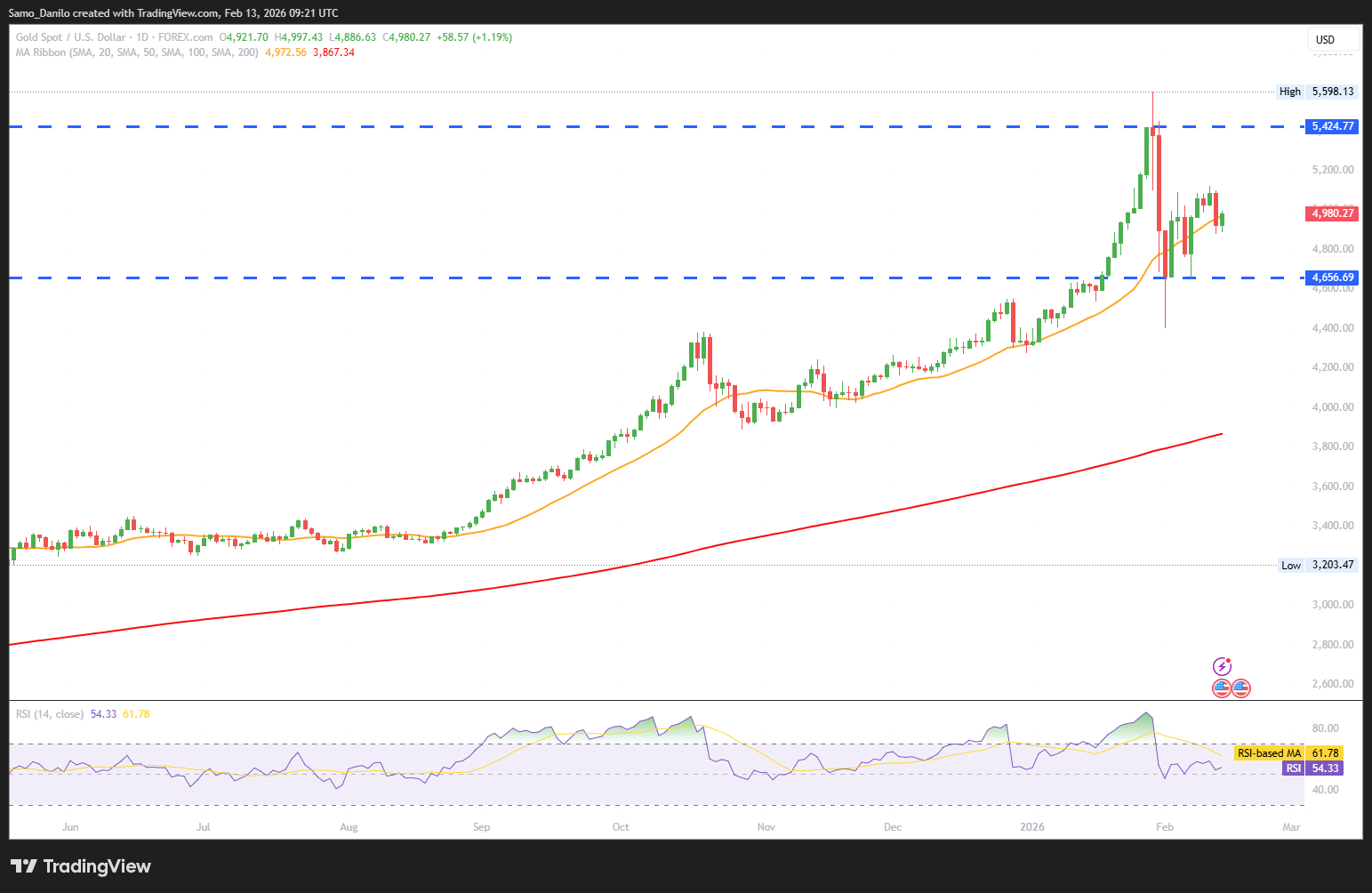
- XAU/USD Price: Gold regains positive traction during the European session on Friday, recovering part of Thursday’s heavy losses to around the $4,970 area, which marks the weekly low. The bounce suggests dip-buying interest, though upside follow-through remains tentative.
- NFP data: A strong January Nonfarm Payrolls (NFP) report adds another supportive data point for the Federal Reserve. The upside surprise in employment eases recent concerns that the US labor market was cooling too rapidly, reducing the urgency for near-term rate cuts, a headwind for non-yielding gold.
- US–Taiwan trade: The United States and Taiwan finalized a trade agreement that cuts Taiwanese tariffs on US goods and commits Taiwan to nearly USD 85 billion in US purchases over four years. While the US maintains a 15% tariff on Taiwanese imports, the deal, pending parliamentary approval, supports risk appetite and supply-chain stability in high-tech sectors, slightly weighing on safe-haven demand.
- Jobless claims: The US Department of Labor reported that initial jobless claims fell to 227K for the week ending February 7. While marginally above expectations, the decline from the prior week reinforces the view of a resilient labor market.
- US–China tech: The administration of Donald Trump has paused several key tech restrictions on China ahead of an April summit with Xi Jinping. The move improves broader risk sentiment, which could cap aggressive upside moves in gold in the near term.
| SMA (20) | Rising | | |
| RSI (14) | Slightly Rising | |
|
| MACD (12, 26, 9) | Slightly Rising | |
Closing statement: Gold is staging a corrective rebound, but strong US labor data and improving risk sentiment limit bullish conviction. While dips continue to attract buyers, sustained gains may require clearer signals of Fed easing or renewed geopolitical stress. For now, XAU/USD appears biased toward range trading, with resistance overhead and solid support near recent lows.
CRUDE OIL
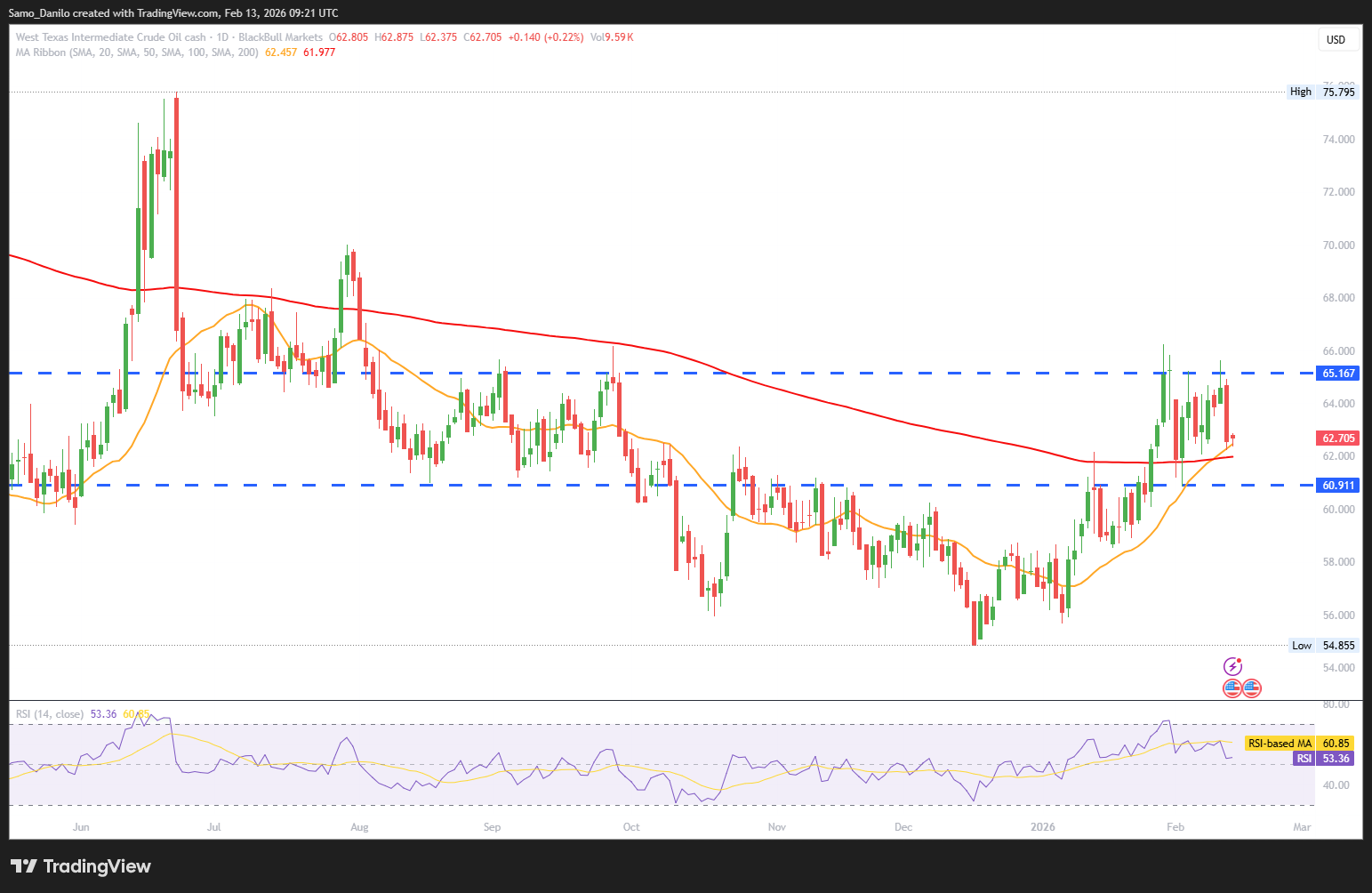
- Crude Oil Price: WTI slides to around $62.50 during the European session on Thursday, giving back part of the rally as market focus shifts to fundamental supply/demand dynamics.
- Global demand: The International Energy Agency (IEA) cut its 2026 global oil demand growth forecast to about 850,000 barrels per day, versus a higher estimate previously. Despite temporary supply outages earlier in the year, the agency still forecasts a sizable global oil surplus in 2026 with supply outpacing demand significantly.
- Market tightness: January’s supply disruptions, including storms that knocked out over 1 million bpd in North America and outages in Kazakhstan, Russia and Venezuela, briefly tightened the market, but those barrels are now returning to the system, reducing the earlier pressure on prices.
- Political noise: Donald Trump rejected claims that private US oil executives influence Venezuela policy, a debate that highlights the complex interplay between politics and crude market expectations, though direct pricing impact remains limited.
- Norwegian investment: In Norway, the latest Q1 oil investment survey shows continued spending growth — albeit modest, indicating producers aren’t yet pulling back capital, which could help sustain longer-term supply capacity.
| SMA (20) | Rising | | |
| RSI (14) | Slightly Rising | |
|
| MACD (12, 26, 9) | Rising | | |
Closing statement: Crude oil is in a consolidation phase after recent gains, with pressures mounting from weaker demand forecasts and ongoing oversupply signals. Prices are likely to remain range-bound near the low-$60s, with resistance still intact and downside risk tied to confirmed stock builds and further supply returns. Unless there’s a surprise cut in OPEC+ output or fresh geopolitical disruption, the bias leans toward limited upside and possible drift lower in the near term.
DAX
- DAX Price: The German DAX edges marginally lower, hovering around 24,850 points, as buyers and sellers remain cautious after recent volatility.
- Manufacturing sentiment: Expectations of higher German government spending, a modest uptick in private household consumption, and a smaller-than-feared drag from US tariffs could help lift sentiment in the manufacturing sector in the near term.
- Auto sector: Shifts in EU market share highlight BYD as the strongest gainer (+0.8 pp), outpacing European peers such as Volkswagen (+0.3 pp). While the move reflects rapid expansion, part of the gain stems from BYD’s low starting base.
- China numbers: In China, new home prices fell 0.4% m/m and 3.1% y/y in January, the sharpest annual decline in seven months. Persistent weakness in smaller cities continues to weigh on global cyclical sentiment, including export-exposed German sectors.
- Geopolitical headlines: Attention turns to the Munich Security Conference, which begins today and could generate market-moving commentary on security, defense, and geopolitical risks over the weekend.
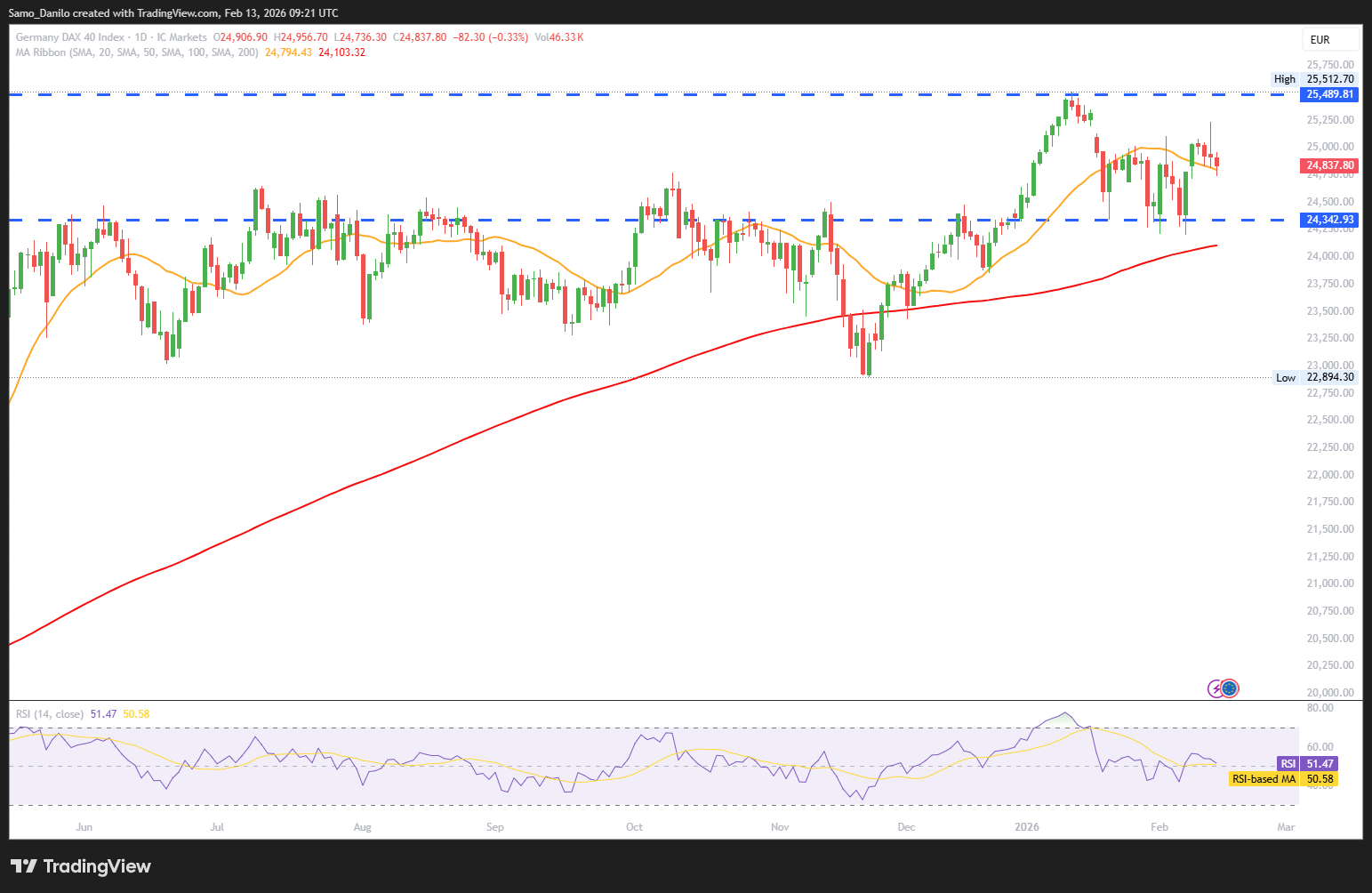
| SMA (20) | Slightly Rising | |
| RSI (14) | Slightly Rising | |
| MACD (12, 26, 9) | Slightly Rising | |
Closing statement: The DAX remains range-bound with a cautious downside bias, pressured by global growth concerns and China’s ongoing property slump. However, improving domestic sentiment drivers and fiscal support could help limit deeper losses, keeping the index supported as long as geopolitical rhetoric does not escalate sharply.