
EURUSD
- EUR/USD Price: EUR/USD traded in a narrow range during Wednesday’s early European session, consolidating after the previous day’s sharp losses. The pair remains pressured below the 1.1750 level as markets continue to assess monetary policy expectations and geopolitical developments.
- ECB’s Villeroy: François Villeroy de Galhau reiterated his cautious stance on interest rates, stating that the European Central Bank still requires more evidence before fully justifying additional tightening. Earlier this month, he emphasized that policymakers lacked a “critical mass of data” for an immediate policy shift.
- ECB Rate: Financial markets are pricing in roughly a 92% probability of a June ECB rate hike. ECB officials have indicated that only a significant improvement in the Middle East conflict and lower energy prices would likely prevent the central bank from tightening policy further.
- Bundesbank warning: Bundesbank President Joachim Nagel stated that the likelihood of higher borrowing costs due to the Iran conflict is increasing. Persistently elevated energy prices continue to raise concerns that inflation pressures could remain stronger for longer across the Eurozone.
- Eurozone data: Investors are now awaiting the release of Eurozone first-quarter GDP and Employment Change figures later in the session. The data could provide fresh insight into the region’s economic resilience and influence expectations regarding future ECB policy decisions.
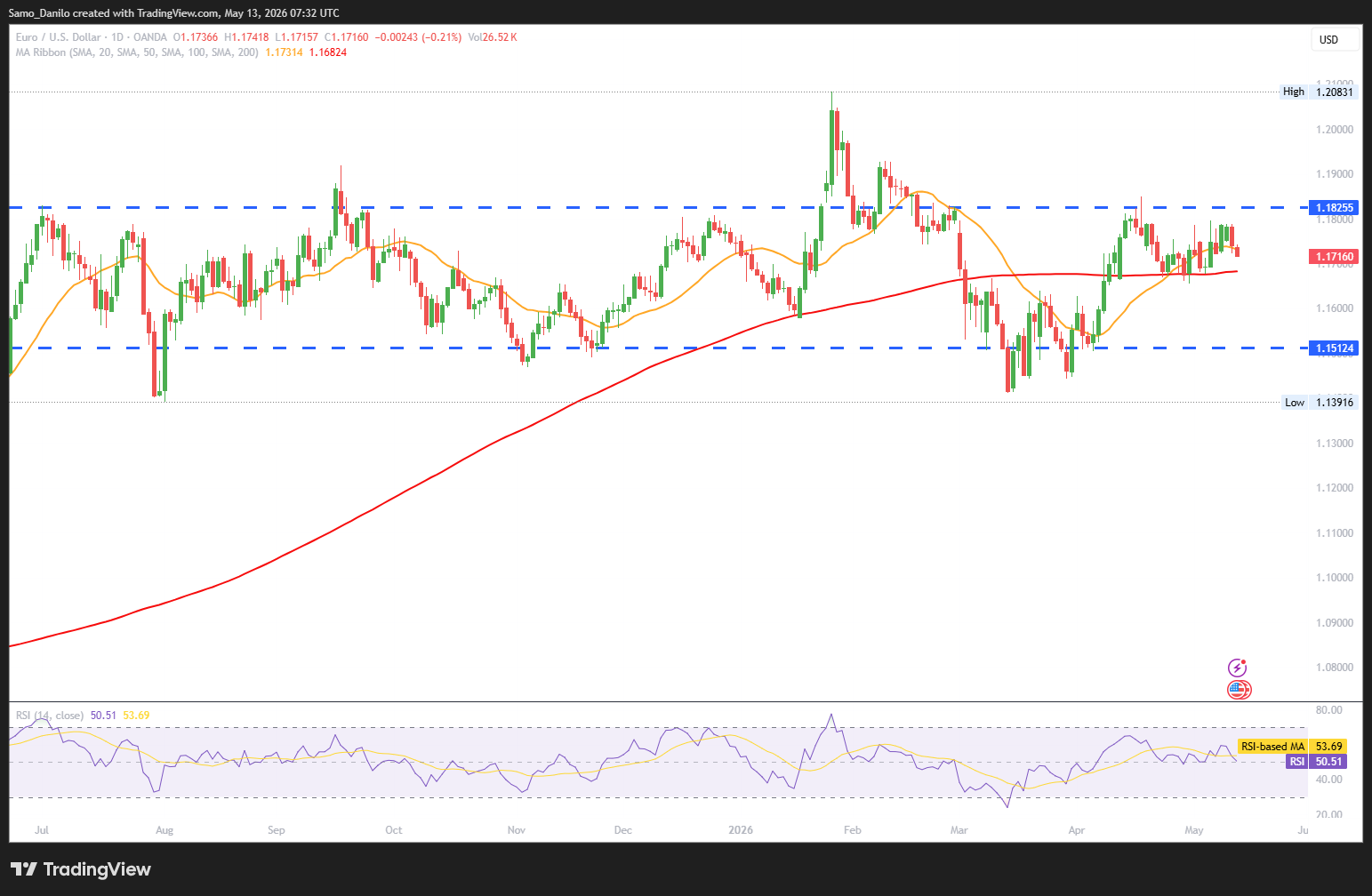
| SMA (20) | Slightly Rising |  |
| RSI (14) | Slightly Falling |  |
| MACD (12, 26, 9) | Slightly Rising | |
Closing statement: EUR/USD remains under pressure as traders weigh rising ECB rate hike expectations against ongoing geopolitical uncertainty and strong US Dollar demand. Upcoming Eurozone economic data and developments in energy markets will likely determine the pair’s next directional move.
GBPUSD
- GBP/USD Price: GBP/USD struggled to build on the previous session’s rebound from the 1.3500 psychological level and remained under pressure heading into Wednesday’s European session. Ongoing political uncertainty in the UK and stronger US inflation data continue to weigh on the pair.
- Political crisis: UK PM Keir Starmer is facing mounting pressure after more than 80 Labour MPs reportedly called for his resignation following heavy local election losses. The deepening political instability is negatively impacting confidence in the British Pound.
- UK Bond market: UK government bonds sold off sharply across the yield curve, with the 30-year gilt yield briefly reaching 5.81%, its highest level since 1998. Investors fear that a potential leadership transition could lead to looser fiscal policy and increased government borrowing.
- US Inflation: US Consumer Price Index data showed annual inflation rising to 3.8% in April, slightly above market expectations of 3.7%. Energy prices remained the primary contributor to inflation pressures, although the pace of energy inflation slowed compared to the previous month.
- Trump-Xi meeting: Investors are turning cautious ahead of the upcoming meeting between Donald Trump and Xi Jinping. Traders are waiting for signals regarding trade relations, geopolitical tensions, and broader global economic cooperation.
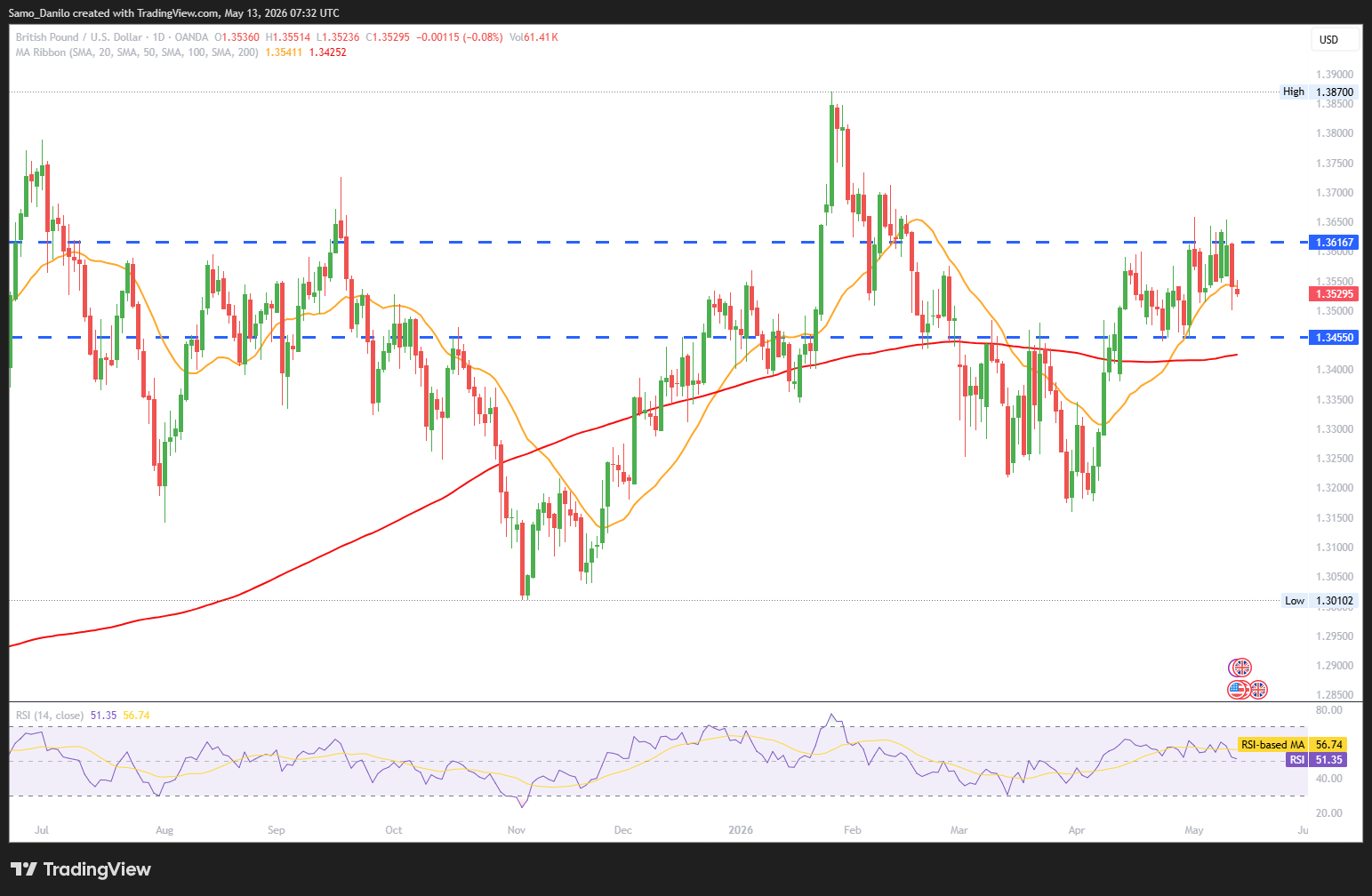
| SMA (20) | Rising | | |
| RSI (14) | Slightly Falling | |
|
| MACD (12, 26, 9) | Rising | | |
Closing statement: GBP/USD remains pressured by UK political instability, rising gilt yields, and stronger-than-expected US inflation data. Near-term direction will likely depend on political developments in Britain and the outcome of the Trump-Xi meeting.
XAUUSD
- XAU/USD Price: Gold remained under pressure during Wednesday’s European session, holding below the recent three-week high of $4,774. The metal continues to consolidate as traders balance geopolitical risks against expectations for tighter US monetary policy.
- Fed governor: Kevin Warsh was confirmed by the US Senate to a 14-year term as a governor of the Federal Reserve. Markets are also awaiting a vote on his four-year term as Fed Chair, positioning him to potentially succeed Jerome Powell.
- Indian tariffs: Department of Revenue of India announced a significant increase in import tariffs on gold and silver to 15% under the Customs Act. Higher import duties from one of the world’s largest gold-consuming nations could influence physical demand dynamics.
- Middle East: US President Donald Trump stated that the ceasefire with Iran was “on life support,” while Tehran rejected the latest US proposal to end the conflict. Persistent tensions surrounding Iran’s nuclear program and the Strait of Hormuz continue to support safe-haven interest in gold.
- US inflation: Investors are now focused on the upcoming US Producer Price Index (PPI) release later in the North American session. The data could provide fresh signals regarding inflation trends and influence expectations for future Federal Reserve policy moves.
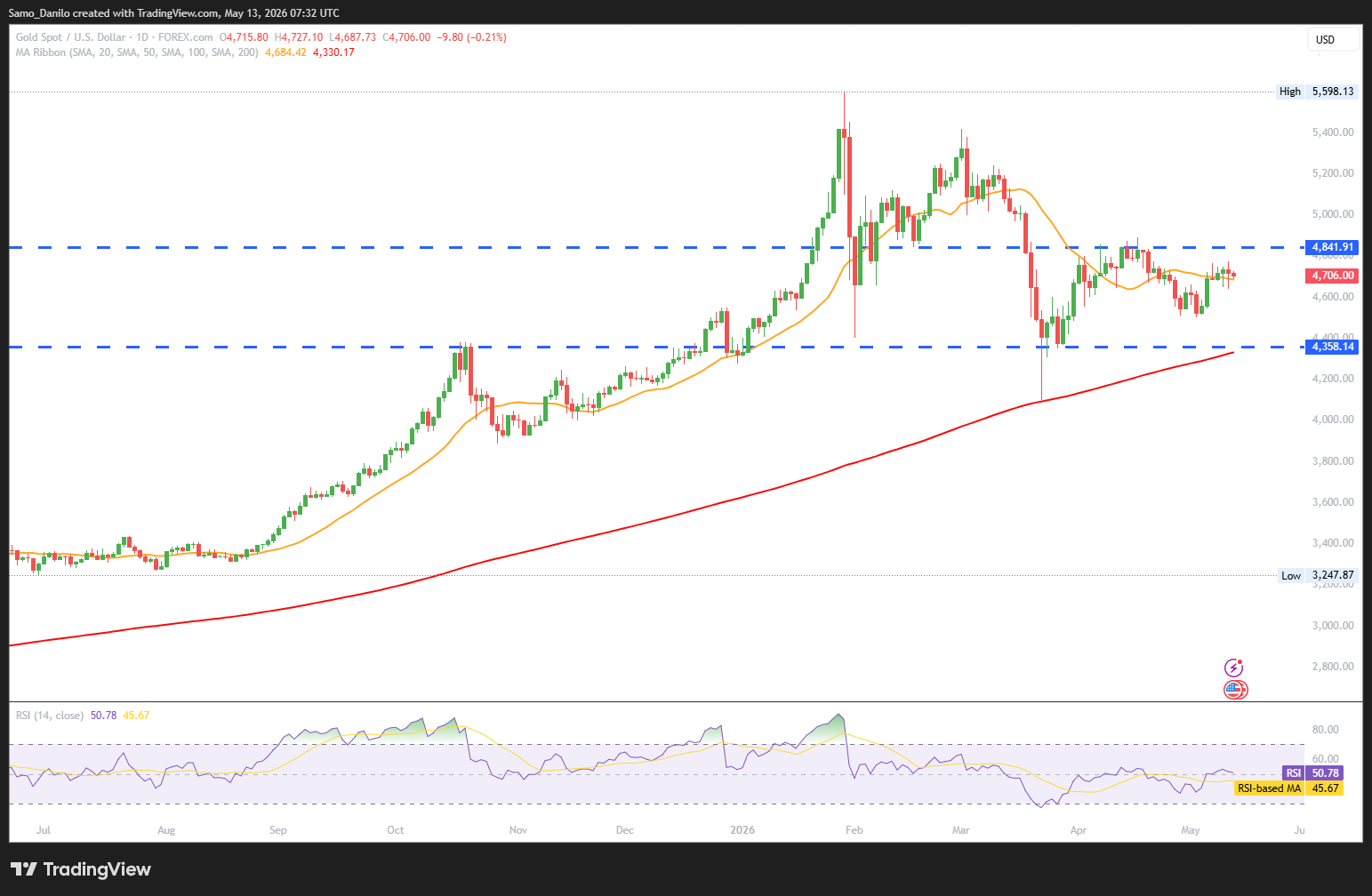
| SMA (20) | Slightly Falling | |
| RSI (14) | Slightly Rising | |
| MACD (12, 26, 9) | Slightly Falling | |
Closing statement: Gold remains supported by geopolitical uncertainty and safe-haven demand, though expectations for tighter US monetary policy are limiting upside momentum. The next major catalyst for XAU/USD will likely come from US inflation data and further developments surrounding the Iran conflict.
CRUDE OIL
- Crude Oil Price: West Texas Intermediate (WTI) crude oil declined around 1.5% during Wednesday’s European session, trading near the $97.00 level. The pullback comes after recent strong gains, though markets remain highly sensitive to geopolitical developments in the Middle East.
- Chinese tanker: Bloomberg reported that a Chinese VLCC tanker is attempting to transit through the Strait of Hormuz, according to ship-tracking data. The development comes at a sensitive moment as Donald Trump prepares for talks in Beijing with Xi Jinping, where maritime trade and energy security are expected to be key topics.
- EIA reports: The Energy Information Administration announced a new quarterly report tracking global strategic petroleum reserves and energy flows through major shipping choke points, including the Strait of Hormuz. The initiative reflects growing concerns over supply chain vulnerabilities and global energy security.
- BoC outlook: The Bank of Canada stated that Middle East geopolitical tensions and US trade risks now represent the largest threats to the Canadian economy. While elevated oil prices are benefiting exports and government revenues, they are also increasing inflationary pressures and the risk of higher interest rates.
- API report: The American Petroleum Institute estimated that US crude oil inventories fell by 2.188 million barrels in the week ending May 8. The continued drawdown in stockpiles signals resilient demand and relatively tight supply conditions in the oil market.
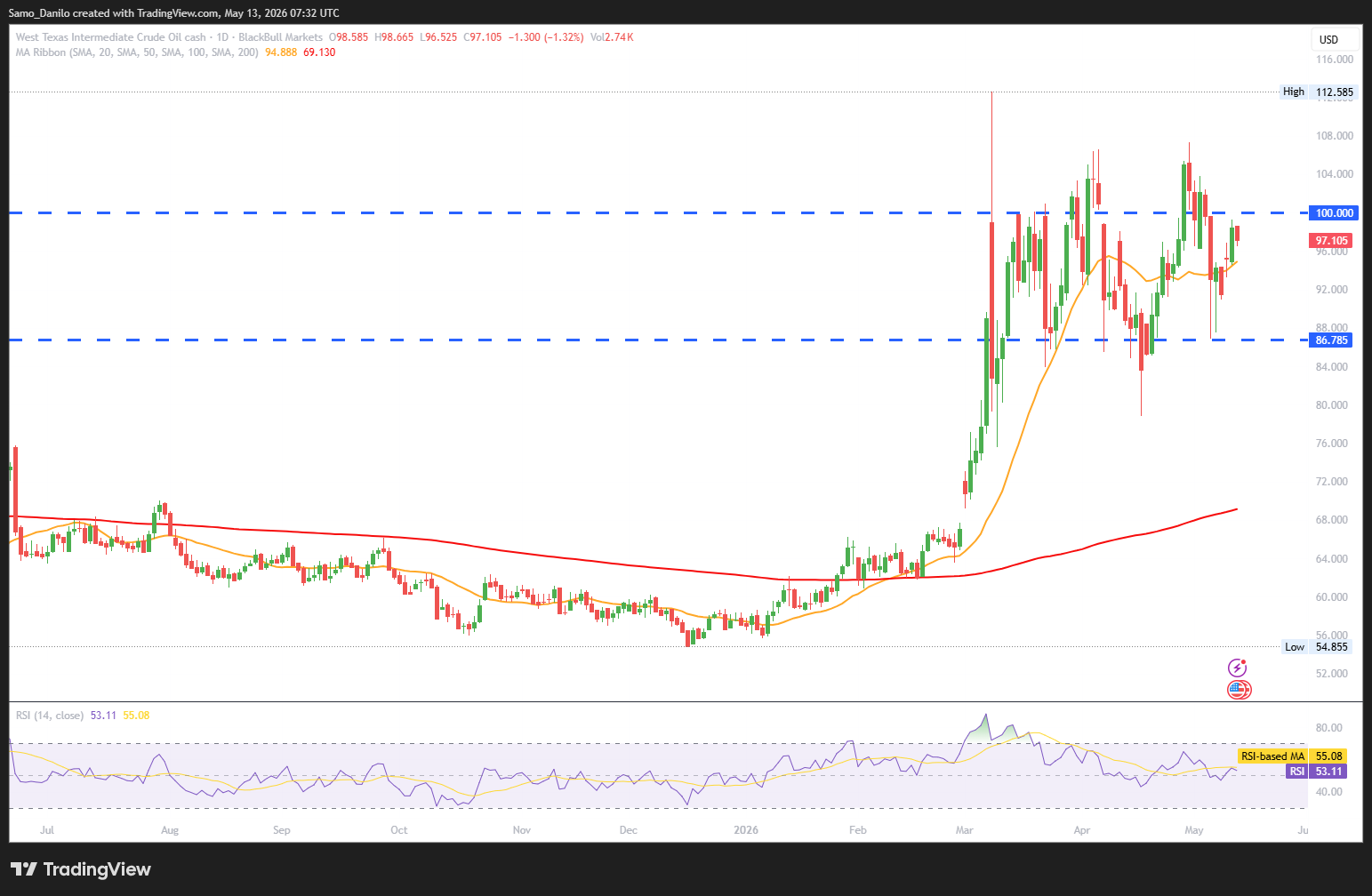
| SMA (20) | Slightly Rising | |
| RSI (14) | Slightly Rising | |
| MACD (12, 26, 9) | Slightly Rising | |
Closing statement: WTI remains supported by ongoing supply concerns and geopolitical uncertainty surrounding the Strait of Hormuz, despite Wednesday’s pullback. Traders will continue monitoring inventory trends, US-China diplomatic talks, and Middle East developments for further direction in oil prices.
DAX
- DAX 40 Price: The DAX remained under pressure during Wednesday’s session, trading around 24,100 points. Investors continue to assess the impact of geopolitical tensions, inflationary pressures, and corporate earnings across Europe.
- ZEW Survey: Germany’s May ZEW survey showed current conditions at -77.8, matching expectations but marking the weakest reading since December. The deterioration in business sentiment reflects the negative economic impact stemming from the US-Iran conflict and rising energy-related uncertainty.
- Wholesale prices: Germany’s wholesale prices increased by 6.3% year-over-year in April, according to data from the federal statistics office. The sharp rise highlights ongoing inflationary pressures within the German economy, largely driven by higher energy and commodity costs.
- Eurozone data: Investors are focused on the Eurozone’s second estimate of first-quarter GDP growth, alongside employment growth figures expected at 0.1% quarter-over-quarter. The data could provide further insight into the region’s economic resilience amid rising geopolitical risks.
- Earnings season: Quarterly earnings reports remain a major driver of market volatility. Investors are closely watching updates from major German companies including Deutsche Telekom, E.ON, RWE, Merck, Allianz, and Siemens.
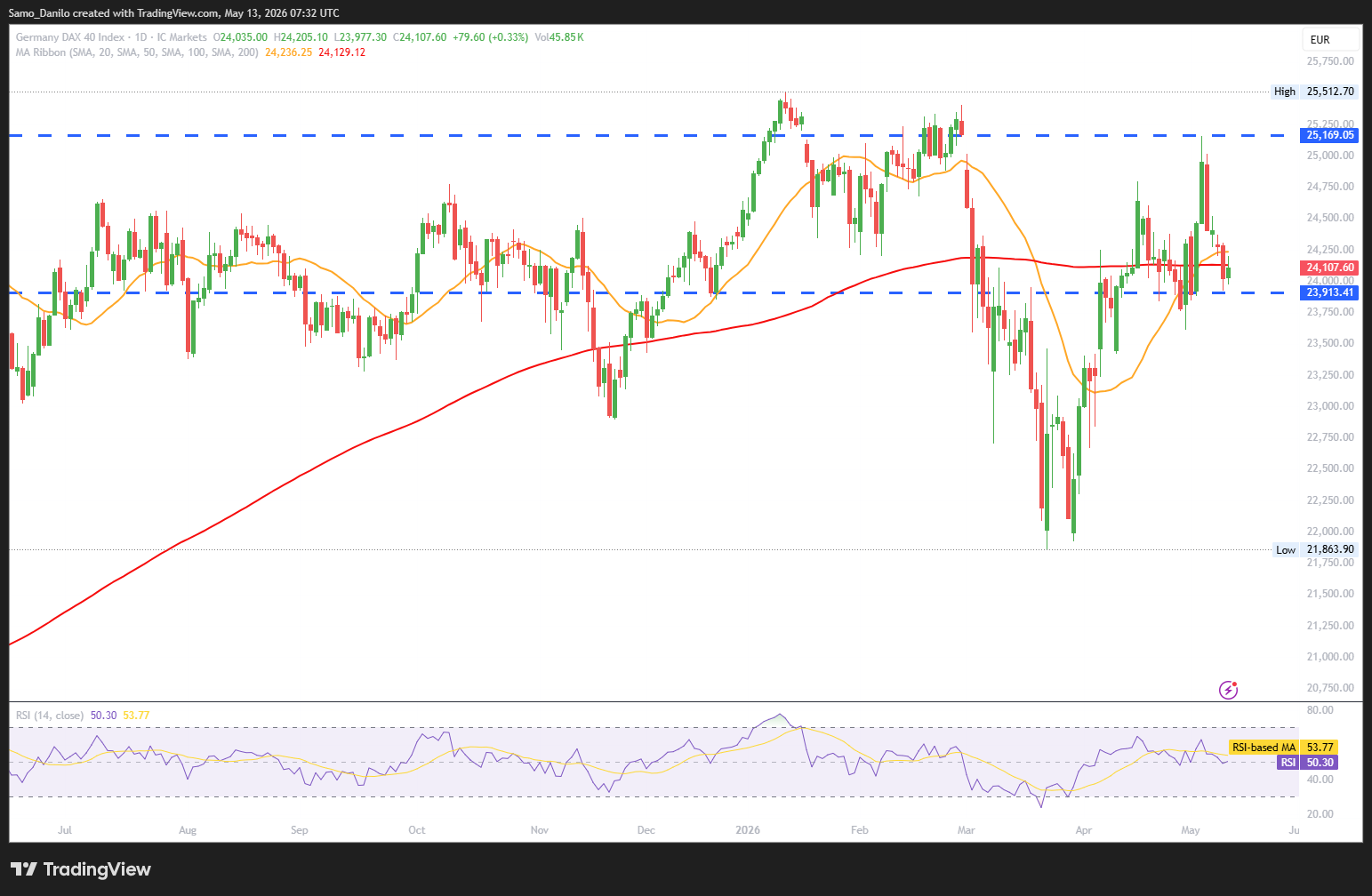
| SMA (20) | Rising | | |
| RSI (14) | Slightly Falling | |
|
| MACD (12, 26, 9) | Rising | | |
Closing statement: The DAX remains pressured by weakening business sentiment, rising inflation, and geopolitical uncertainty tied to the Middle East conflict. Upcoming Eurozone economic data and corporate earnings reports will likely play a key role in determining the index’s near-term direction.