
EURUSD
- EUR/USD Price: EUR/USD continued its downward movement during Friday’s European session, trading below the 1.1650 level. The pair remains under pressure as the US Dollar strengthens on resilient US economic data and persistent expectations of tighter monetary conditions.
- Retail sales: US Retail Sales rose by 0.5% month-over-month in April, matching market expectations, though slowing from the strong 1.6% increase recorded in March. On a yearly basis, sales grew 4.9%, significantly above forecasts of 3.3%, highlighting continued strength in US consumer spending despite elevated inflation and geopolitical uncertainty.
- Middle East: The Euro may find some support as optimism surrounding a long-term US-Iran peace agreement continues to fade. Ongoing tensions surrounding the Strait of Hormuz and persistent energy supply concerns are contributing to elevated inflation risks across the Eurozone, potentially supporting expectations for tighter ECB policy.
- ECB tightening: Money markets are strongly pricing in a June interest rate hike from the European Central Bank, with nearly three additional rate increases expected by the end of 2026. The shift reflects growing concerns that energy-driven inflation could remain elevated for longer.
- ECB’s Kazaks: ECB official Martins Kazaks stated on Thursday that the ECB may need to raise borrowing costs if rising crude oil prices begin feeding into broader inflation expectations. His comments further strengthened the market’s view that the ECB is leaning toward additional tightening.
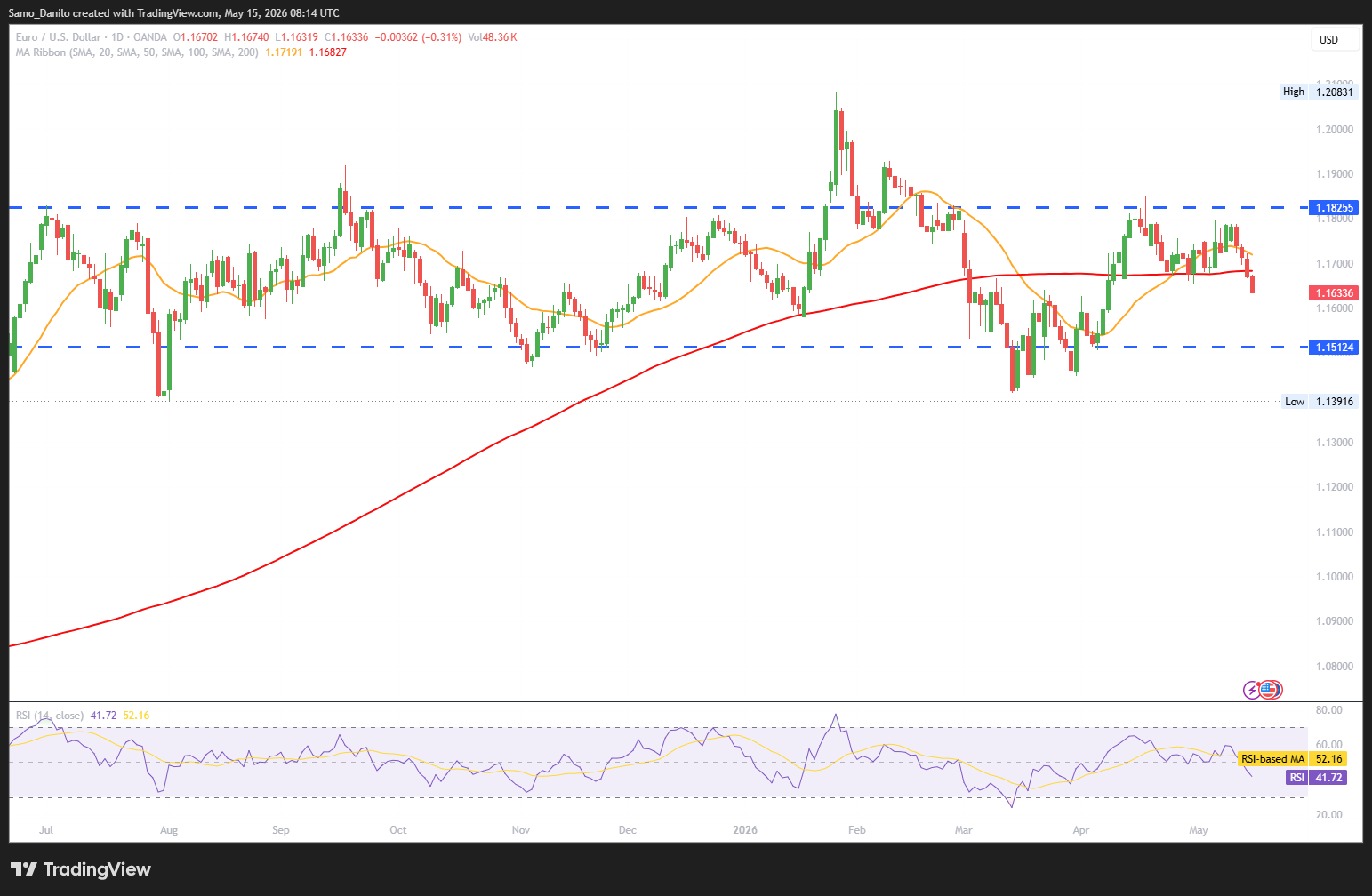
| SMA (20) | Slightly Rising |  |
|
| RSI (14) | Falling |  | |
| MACD (12, 26, 9) | Slightly Falling | |
Closing statement: EUR/USD remains under pressure due to broad US Dollar strength and resilient US economic data. However, expectations of aggressive ECB tightening and persistent energy-related inflation risks in Europe could help limit deeper losses in the near term.
GBPUSD
- GBP/USD Price: GBP/USD faced heavy selling pressure during Friday’s European session, dropping toward the 1.3365 area. The pair weakened as the US Dollar continued gaining strength following strong US inflation data and growing political instability in the United Kingdom.
- Political turmoil: Commerzbank’s Michael Pfister pointed to escalating political tensions in the UK, with increasing resignations and speculation surrounding government leadership adding pressure on Keir Starmer. Political uncertainty continues to weigh heavily on investor confidence toward the British Pound.
- Resignation in government: In the latest development, Britain's Health Minister Wes Streeting resigned from the British government on Thursday, citing major disagreements over public health policy and budget management. His departure adds to concerns about political fragmentation and instability within the ruling administration.
- US-China: Donald Trump and Xi Jinping both indicated that trade relations between the US and China could improve going forward. The two leaders also emphasized the importance of keeping the Strait of Hormuz open, helping ease some market fears surrounding global trade and energy supply disruptions.
- US inflation: Hotter-than-expected US Consumer Price Index (CPI) and Producer Price Index (PPI) data released this week have reinforced expectations that the Federal Reserve may maintain tighter monetary policy for longer. Rising expectations for higher US interest rates continue to support the US Dollar against major currencies.
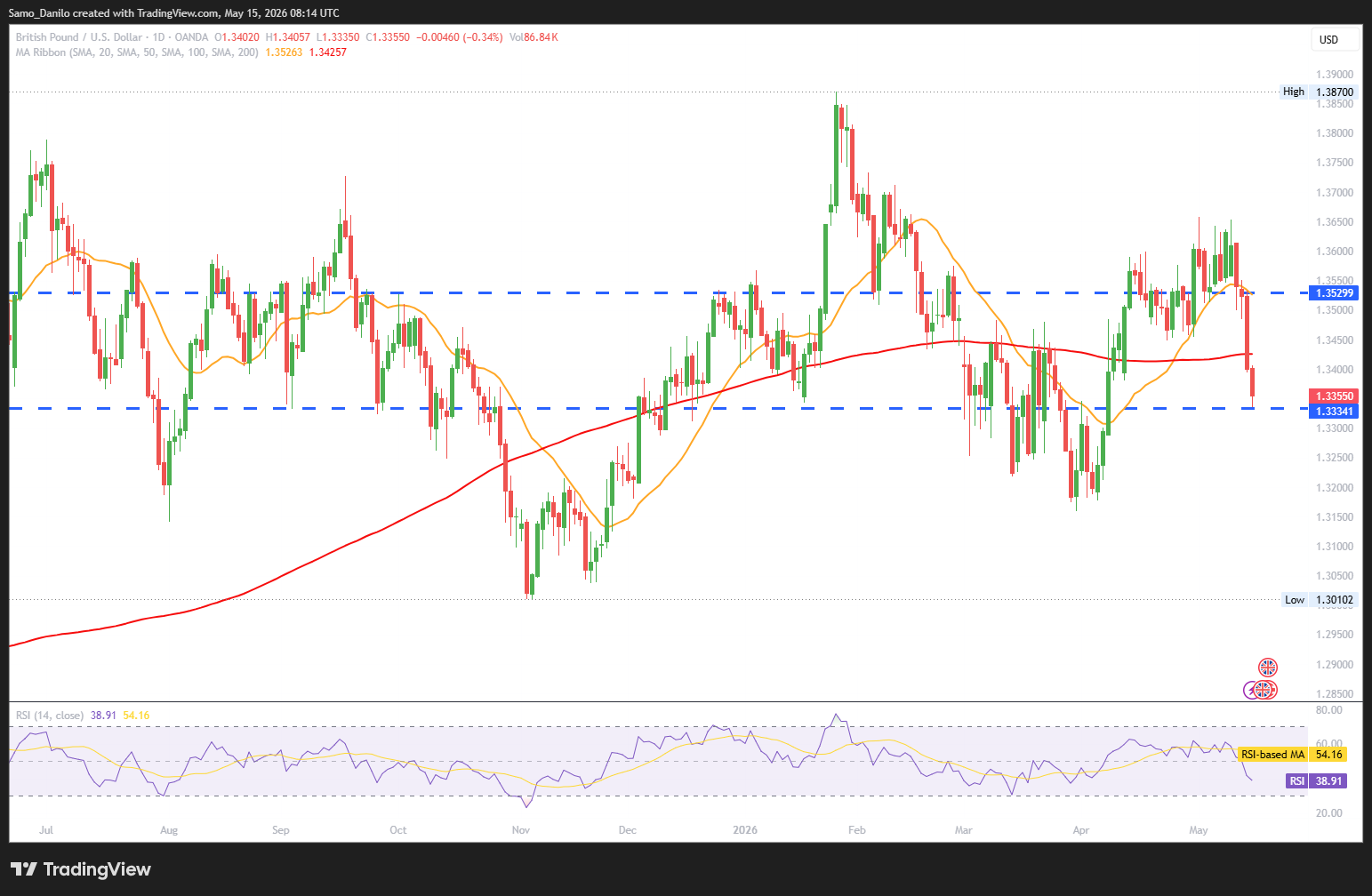
| SMA (20) | Slightly Rising | |
|
| RSI (14) | Falling | | |
| MACD (12, 26, 9) | Slightly Falling | |
Closing statement: GBP/USD remains under significant pressure as UK political instability combines with stronger US inflation data and a more hawkish Federal Reserve outlook. Unless political confidence improves in the UK, the Pound may continue struggling against the resilient US Dollar.
XAUUSD
- XAU/USD Price: Gold prices continued weakening on Friday, extending the pullback from this month’s peak and marking the fourth consecutive day of losses. XAU/USD traded around the $4,570 area as persistent US Dollar strength reduced demand for the non-yielding precious metal.
- Fed leadership: The US Dollar strengthened following leadership developments within the Federal Reserve. The resignation of Stephen Miran cleared the way for Kevin Warsh to assume leadership of the central bank, reinforcing expectations for a potentially more hawkish monetary policy stance.
- Fed's WIlliams: New York Fed President John Williams stated that there is currently no immediate need to adjust interest rate policy despite uncertainty created by the Middle East conflict.
- Fed's Schmid: Kansas City Fed President Jeffrey Schmid emphasized that inflation remains the largest threat to the US economy, although he noted that economic activity and labor market conditions remain resilient.
- Indian Gold: India’s gold market experienced record discounts of up to $207 per ounce after the government increased import duties on gold from 6% to 15%. The sudden rise in tariffs forced dealers to offer aggressive discounts to offset weakening domestic demand and higher import costs.
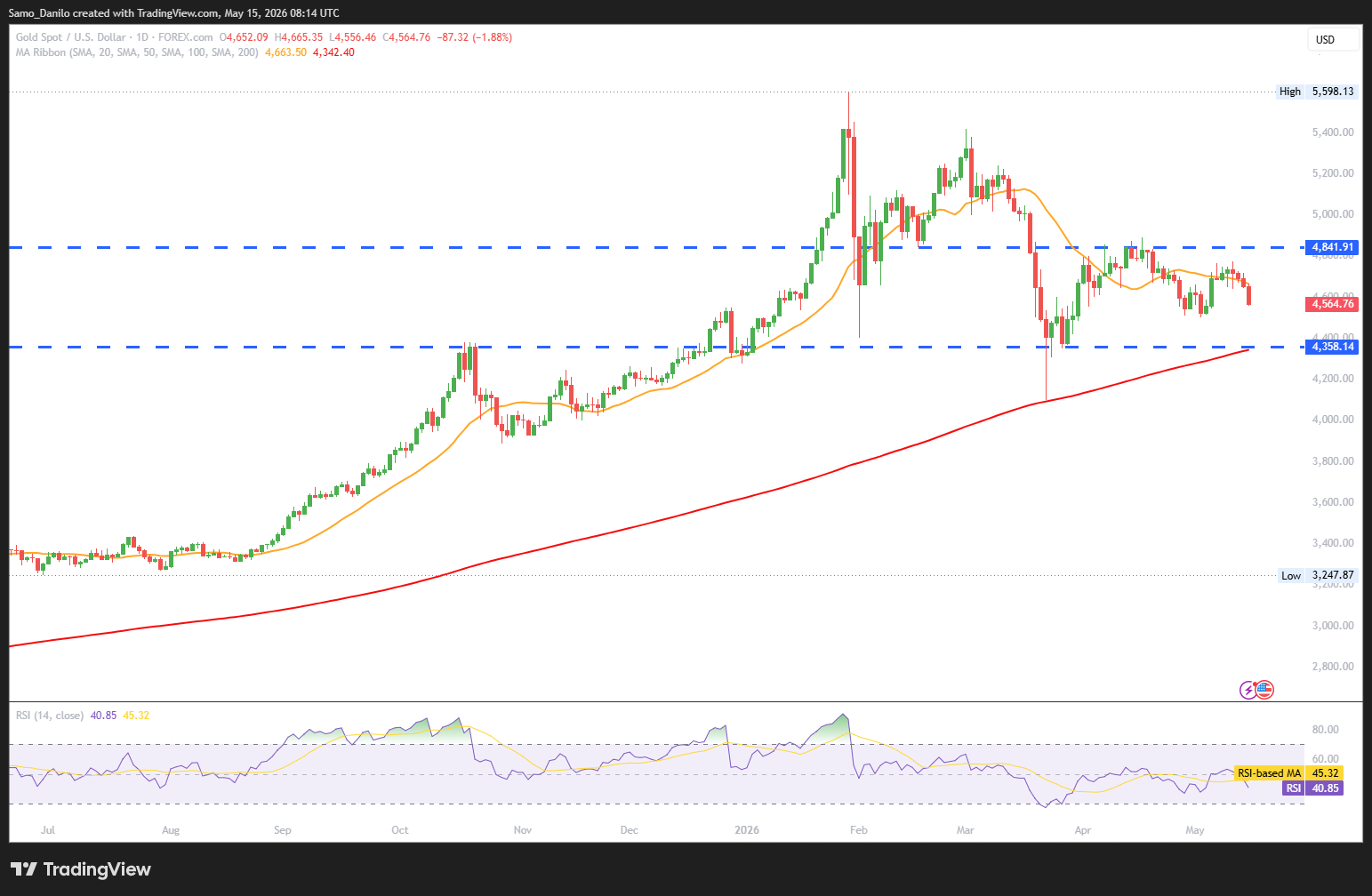
| SMA (20) | Slightly Falling | |
| RSI (14) | Slightly Falling | |
| MACD (12, 26, 9) | Slightly Falling | |
Closing statement: Gold remains under pressure from rising US Dollar strength and persistent inflation concerns that support higher-for-longer Federal Reserve policy expectations. However, geopolitical uncertainty and ongoing Middle East tensions could still provide underlying support for safe-haven demand in the medium term.
CRUDE OIL
- Crude Oil Price: West Texas Intermediate (WTI) crude oil continued its upward momentum for a second consecutive session, trading around $98.20 during Friday’s European hours. Oil prices remain supported by escalating geopolitical tensions and growing concerns over disruptions to global energy supply routes.
- Trump pressure: US President Donald Trump stated in a Thursday interview that his administration’s patience with Iran is wearing thin and urged Tehran to finalize a deal. The comments reinforced fears that tensions in the Middle East could intensify further if negotiations fail to progress.
- Strait of Hormuz: Reports that Iranian personnel seized a commercial vessel near the United Arab Emirates heightened concerns about shipping security in the Strait of Hormuz. The strategic waterway remains critical for global oil flows, and any disruption continues to add a significant geopolitical risk premium to crude prices.
- Maritime traffic: Iran is reportedly giving priority passage through the Strait of Hormuz to vessels cooperating with its naval authorities, particularly Chinese-owned ships and members of the so-called Iranian “ghost fleet.” This selective transit policy has contributed to a growing backlog of stranded commercial vessels attempting to leave the Persian Gulf.
- India's fuel: Indian state refiners increased gasoline and diesel prices by approximately $0.031 per liter due to tightening crude oil availability. The move marks India’s first fuel price increase in four years and highlights how rising global energy prices are beginning to impact major oil-importing economies.
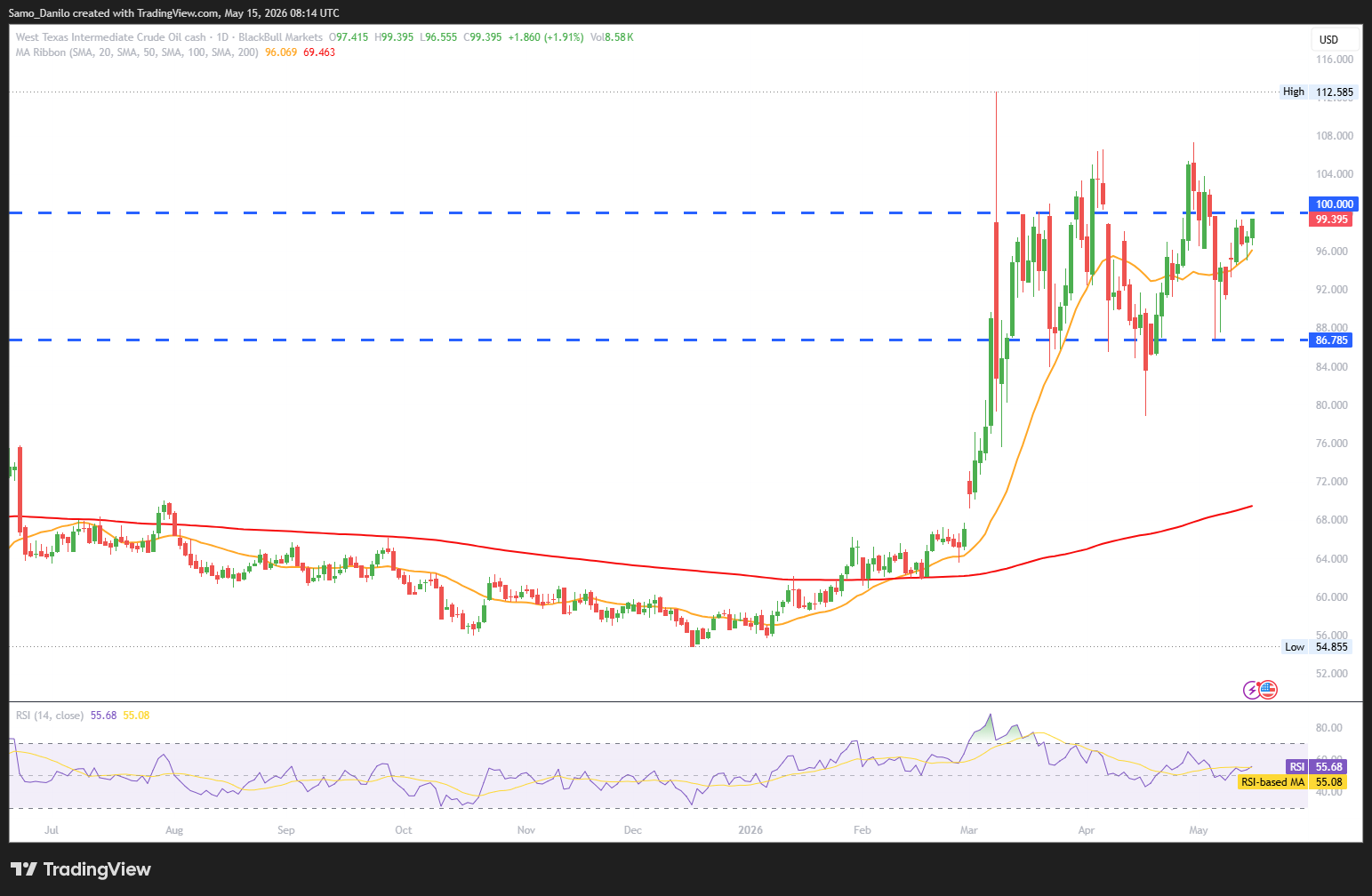
| SMA (20) | Slightly Rising | |
| RSI (14) | Slightly Rising | |
| MACD (12, 26, 9) | Slightly Rising | |
Closing statement: WTI crude oil remains strongly supported by escalating geopolitical risks, tighter shipping conditions in the Strait of Hormuz, and increasing signs of supply strain across global markets. However, persistent high prices could eventually begin weighing on global demand and economic growth expectations.
DAX
- DAX 40 Price: The DAX traded around the 24,125-point level during Friday’s session. German equities remained relatively cautious as investors balanced improving US-China relations with ongoing geopolitical and macroeconomic risks.
- US-China: Donald Trump and Xi Jinping helped calm markets following their recent high-level summit. However, Xi warned that mishandling the Taiwan issue could lead to “clashes and even conflicts” between the world’s two largest economies, reminding investors that geopolitical tensions remain a significant long-term risk.
- Trade discussions: USTR Jamieson Greer stated that discussions with China regarding rare-earth materials achieved a “passing grade.” He also said Washington expects China to significantly increase agricultural and energy purchases from the United States, potentially improving trade flows and business sentiment.
- AI optimism: Stephen Innes of SPI Asset Management described current market conditions as an “AI mania” that has turned Wall Street into a “momentum machine.” Ongoing enthusiasm surrounding artificial intelligence continues to support global equity markets, particularly technology and industrial sectors.
- JPMorgan outlook: JPMorgan reaffirmed its “Overweight” rating on RWE with a €65 price target. Analyst Pavan Mahbubani stated that the utility company’s annual earnings are likely to reach the upper end of management guidance.
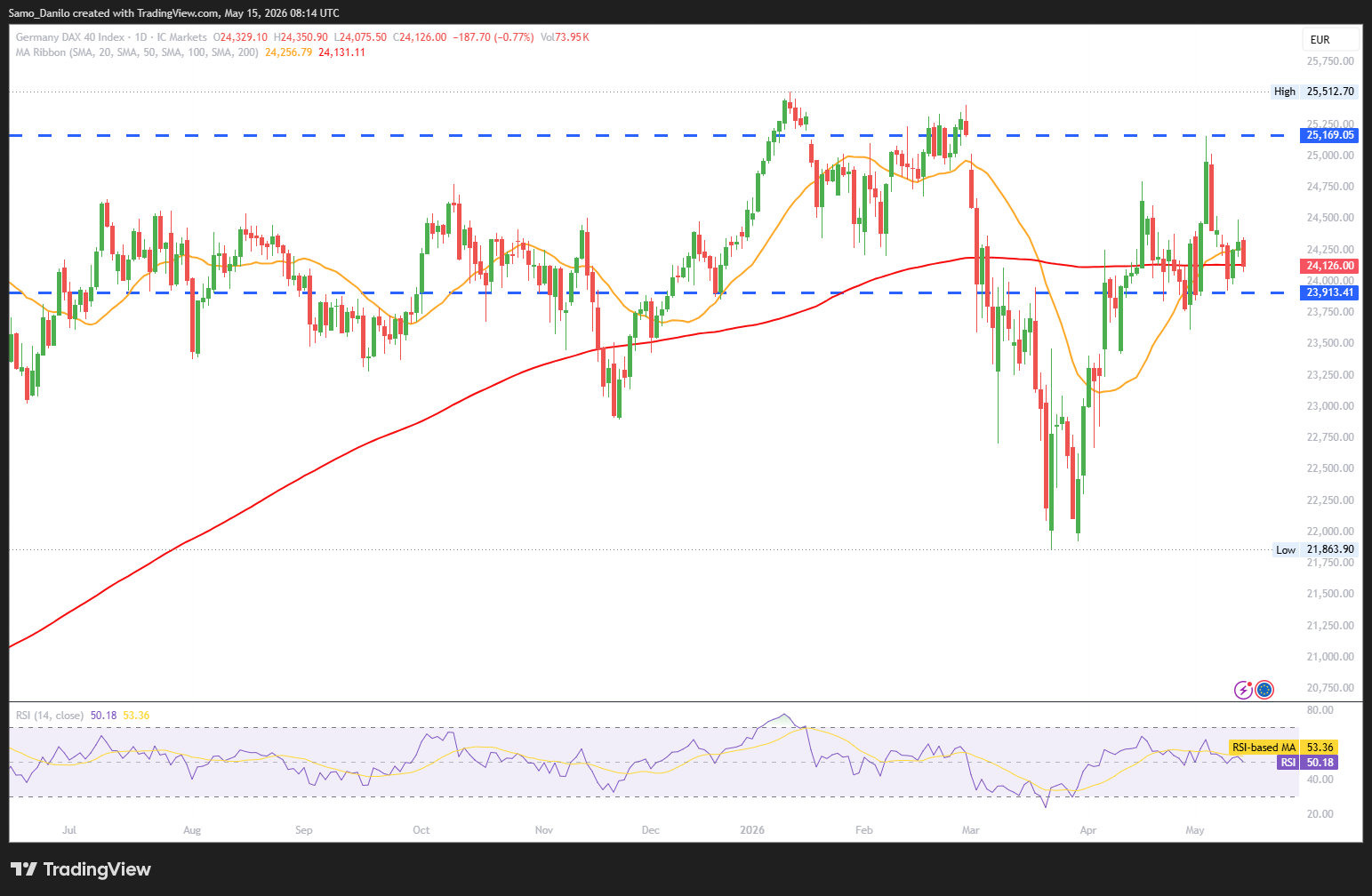
| SMA (20) | Rising | | |
| RSI (14) | Slightly Falling | |
|
| MACD (12, 26, 9) | Slightly Rising | |
Closing statement: The DAX remains supported by easing US-China tensions, strong AI-driven investor optimism, and positive corporate outlooks. However, geopolitical uncertainty surrounding Taiwan and broader global economic risks continue to limit stronger upside momentum for German equities.