
EURUSD
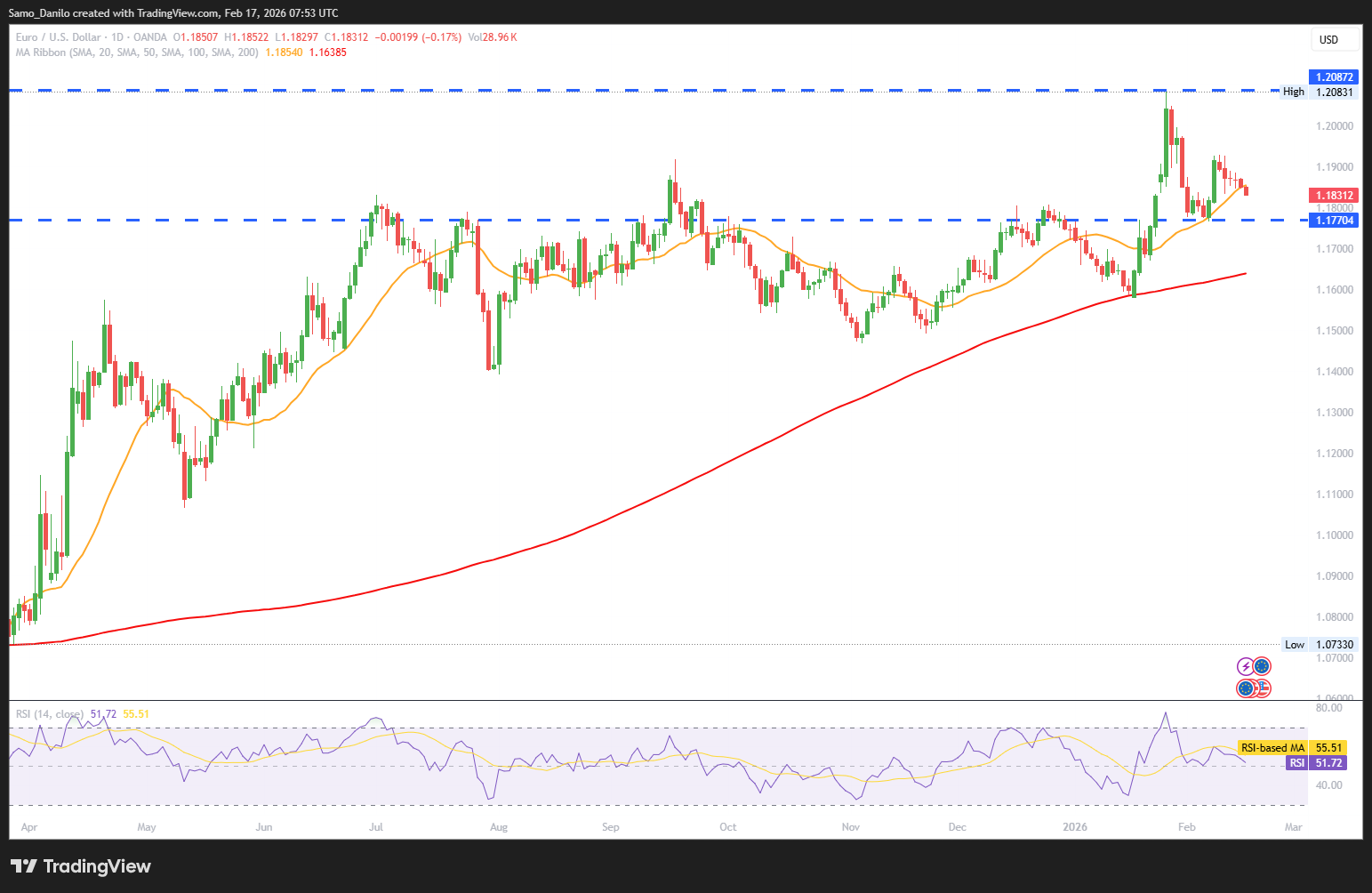
- EUR/USD Price: The pair remains in negative territory for a fifth consecutive session, trading around 1.1850 during the European session on Tuesday, reflecting persistent but moderating downside momentum.
- ECB liquidity: The Euro may find a floor after the European Central Bank announced plans to broaden access to its EUR liquidity backstop for global central banks, a move aimed at reinforcing the euro’s international role and improving offshore EUR funding conditions.
- ECB's Lagarde: At the February meeting, ECB President Christine Lagarde said the euro area inflation outlook is in a “good place,” while cautioning policymakers against overreacting to short-term data volatility, signaling patience rather than urgency on policy shifts.
- Governing Council: The Euro also drew mild support from reports that François Villeroy de Galhau, widely viewed as a policy dove, will step down in June ahead of his term’s scheduled end in October 2027. His departure could marginally tilt the ECB’s balance toward a less accommodative stance.
- Money supply: Euro area money supply growth experienced a deep contraction through 2023 and early 2024, before rebounding sharply and peaking in mid-2025, a trend that may gradually support economic activity and the single currency if sustained.
| SMA (20) | Rising |  | |
| RSI (14) | Slightly Rising | |
|
| MACD (12, 26, 9) | Slightly Rising | |
Closing statement: Despite near-term weakness, structural and institutional factors are turning more supportive for the Euro. ECB liquidity initiatives, shifting Governing Council dynamics, and recovering money supply growth could help limit further EUR/USD downside, even as the pair remains vulnerable to broader USD strength in the short run.
GBPUSD
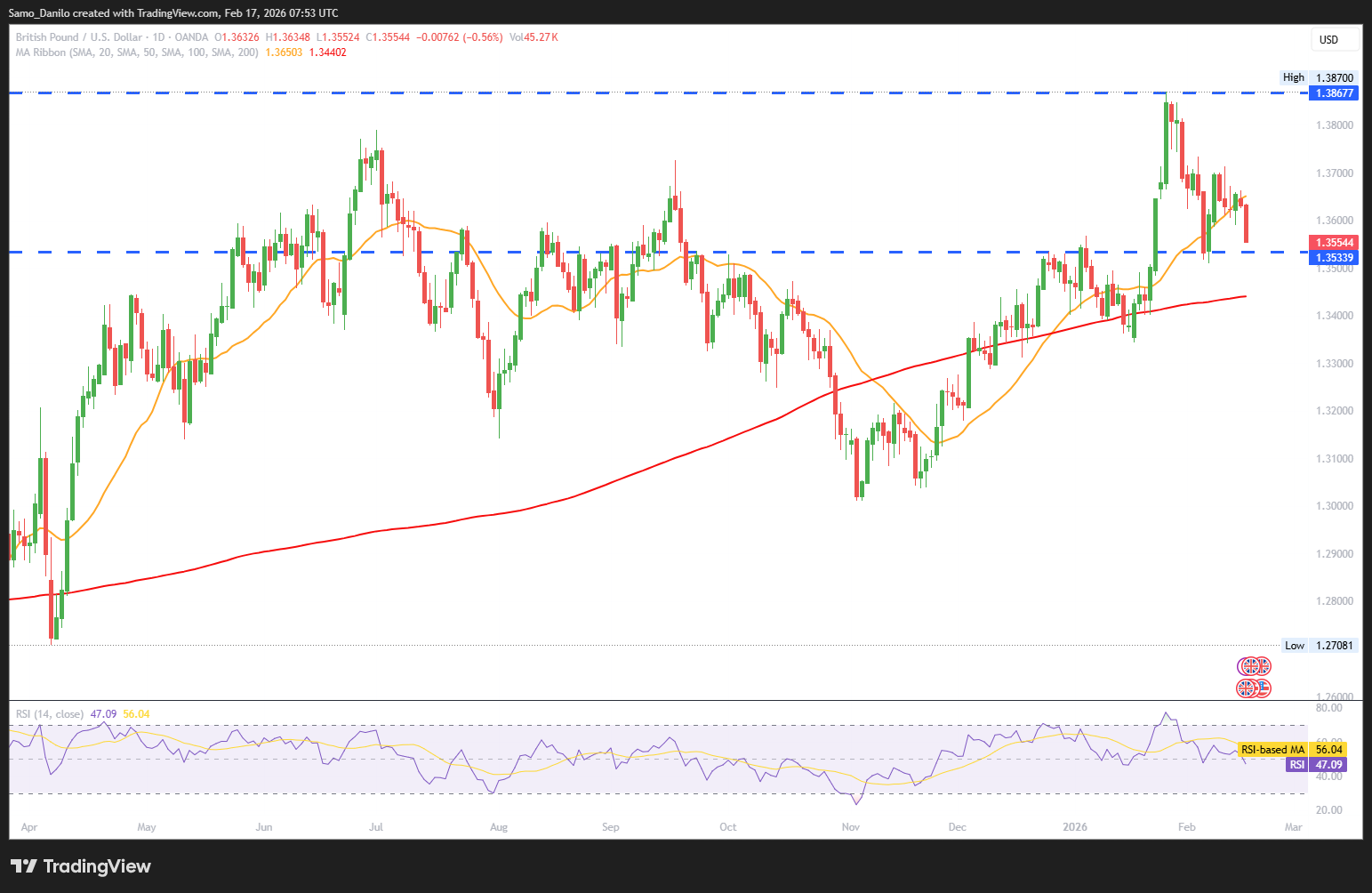
- GBP/USD Price: GBP/USD is facing a fresh wave of selling, slipping below the 1.3600 level during Tuesday’s European session as traders react to a weaker UK labour market backdrop.
- Unemployment numbers: The UK ILO Unemployment Rate rose to 5.2% in the three months to December, above both expectations and the prior 5.1% reading. Employment growth also slowed, with 52K new jobs added, down from 82K in the previous period, signaling softening labour demand.
- Wage growth: Average Earnings Excluding Bonuses, a key gauge of underlying wage pressures, eased to 4.2% YoY, in line with expectations and down from 4.4% previously. Earnings including bonuses slowed more sharply to 4.2%, missing estimates and retreating from 4.6%, reinforcing signs that inflationary wage momentum is fading.
- Benefit claims: The Claimant Count Change rose by 28.6K in January, above forecasts of 22.8K, pointing to increasing stress in the labour market. December’s figure was revised sharply lower to 2.7K from 17.9K, but the latest data still tilts sentiment negative for the pound.
- BoE policy: Following the razor-thin decision by the Bank of England earlier this month to leave interest rates unchanged, incoming UK economic data is now under intense scrutiny. Softer labour and wage data may strengthen the case for rate cuts later this year.
| SMA (20) | Rising | | |
| RSI (14) | Slightly Falling |  |
|
| MACD (12, 26, 9) | Slightly Rising | |
Closing statement: The latest labour market figures reinforce downside risks for GBP/USD, as easing wage growth and rising unemployment weaken the argument for prolonged monetary tightness. Unless upcoming data surprises to the upside, the pound may remain vulnerable, particularly against a resilient US Dollar.
XAUUSD
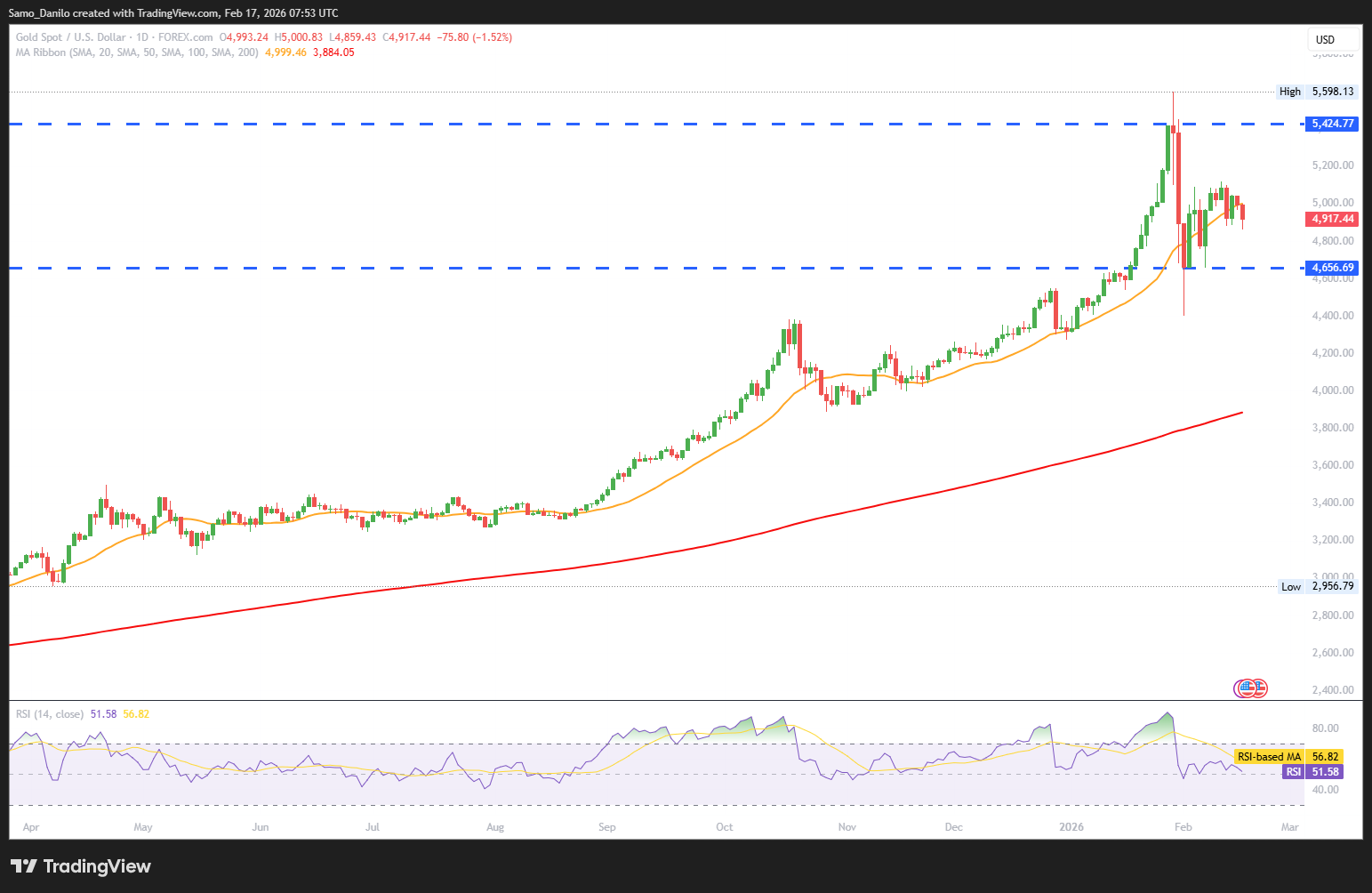
- XAU/USD Price: Gold prices attract follow-through selling for a second consecutive session, sliding to a one-week low near the $4,900 area as the European session gets underway. The downside move suggests fading safe-haven demand amid shifting rate expectations and cautious risk sentiment.
- Fed rate: Expectations for Federal Reserve policy have been pushed back slightly, with markets now pricing two additional 25 bp cuts in June and September, instead of March and June previously. Beyond that, the Fed is expected to hold the terminal rate at 3.00%–3.25% through 2026 and 2027, limiting gold’s appeal as a non-yielding asset.
- Debt concerns: According to Bloomberg, debt investors are increasingly uneasy that major technology firms may continue aggressive borrowing to finance AI development, raising concerns about financial strain and longer-term market stability.
- Geopolitics offer: Iran’s atomic chief indicated Tehran could dilute its highest-enriched uranium in exchange for full sanctions relief, while Donald Trump said he would be “indirectly” involved in the Geneva talks, expressing optimism about a possible deal. Despite this, markets remain cautious and gold has failed to draw sustained haven inflows.
- Russia–Ukraine talks: US-led discussions between Russia and Ukraine are set to begin Tuesday, but traders remain skeptical about any near-term diplomatic breakthrough, keeping geopolitical risk support for gold muted for now.
| SMA (20) | Rising | | |
| RSI (14) | Slightly Rising | |
|
| MACD (12, 26, 9) | Slightly Rising | |
Closing statement: With rate-cut expectations delayed, improving confidence in diplomacy, and no immediate escalation in geopolitical risks, gold remains under pressure below $5,000. Unless risk sentiment deteriorates sharply or US data forces a more dovish Fed repricing, XAU/USD may struggle to regain upside momentum in the near term.
CRUDE OIL
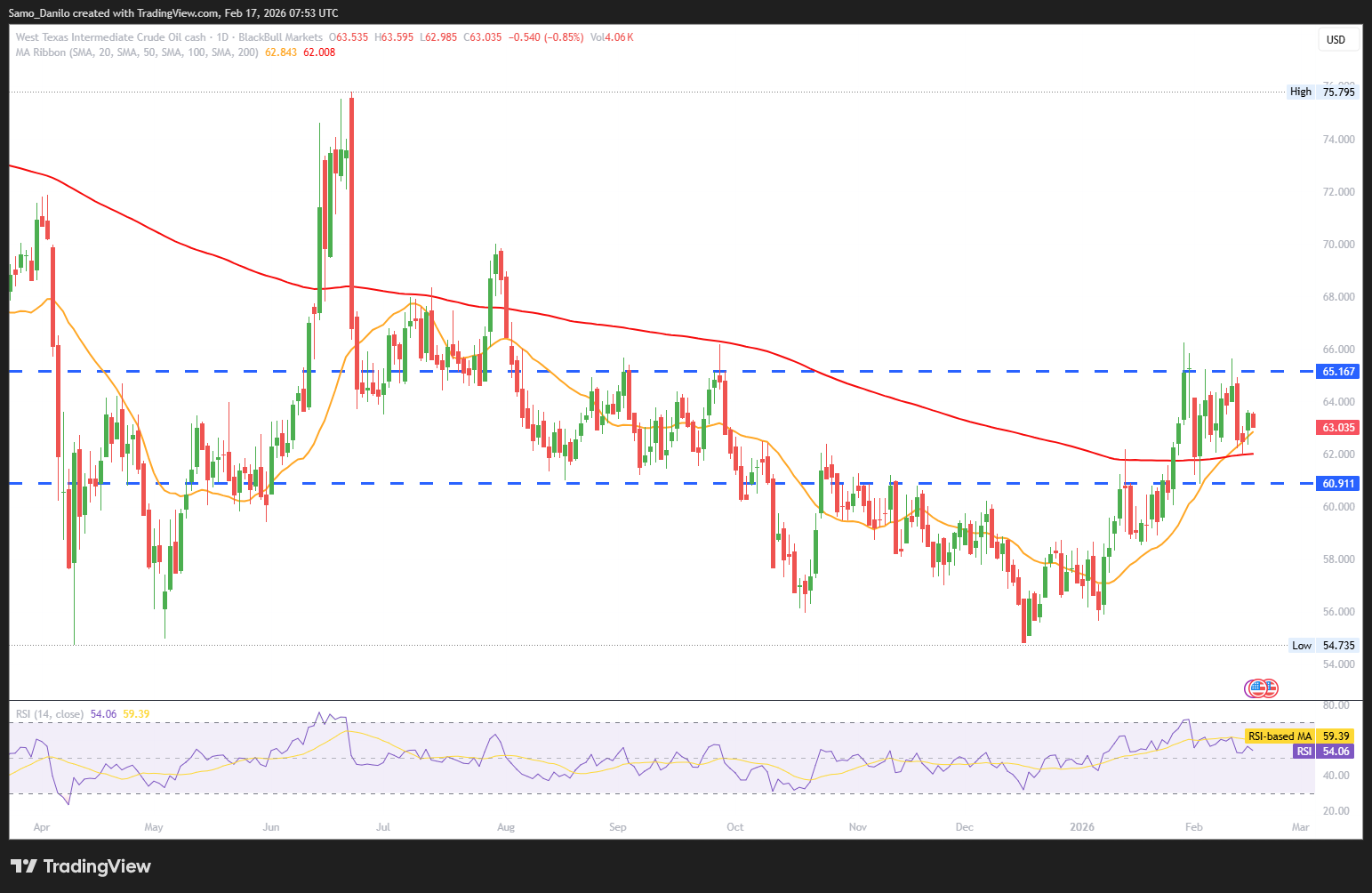
- Crude Oil Price: West Texas Intermediate (WTI) edges modestly lower during European trading on Tuesday, hovering around $63.00, after posting more than 1.5% gains in the previous session. The pullback looks corrective rather than impulsive, with prices consolidating recent upside.
- OPEC+ supply: According to Reuters, OPEC+ is leaning toward resuming output increases from April following a three-month pause, aiming to meet peak summer demand. The prospect of higher supply is acting as a near-term headwind for crude prices.
- Hormuz tensions: Iran conducted naval drills in the Strait of Hormuz after the US deployed an additional aircraft carrier to the region. This comes ahead of talks in Switzerland, where Abbas Araghchi is set to meet US special envoy Steve Witkoff to discuss Iran’s nuclear and missile programs. The situation maintains a geopolitical risk premium in oil markets.
- European supply: Hungary and Slovakia have formally asked Croatia to allow Russian crude transit via the Adriatic pipeline, following the full suspension of flows through Ukraine’s section of the Druzhba pipeline since late January. This highlights ongoing fragility in European crude logistics.
- Citi prediction: Citigroup warned that oil prices could fall toward $60 if Donald Trump succeeds in brokering deals with Iran and Russia, potentially easing sanctions and increasing global supply.
| SMA (20) | Rising | | |
| RSI (14) | Slightly Rising | |
|
| MACD (12, 26, 9) | Slightly Rising | |
Closing statement: WTI remains caught between geopolitical risk support and rising supply expectations. While Middle East tensions and disrupted European flows underpin prices, the likelihood of OPEC+ output increases and potential geopolitical deals could limit upside. A sustained move above recent highs may prove difficult unless supply risks escalate meaningfully.
DAX
- DAX Price: After five consecutive red sessions, the DAX remains slightly lower on Tuesday, trading around 24,735 points. Selling pressure has eased somewhat, but buyers are still struggling to regain control after last week’s drawdown.
- German inflation: Final January CPI in Germany came in at +2.1% y/y, unchanged from the preliminary estimate, according to Destatis. As expected, the market reaction was muted, with the data offering no new signal for ECB policy.
- ECB outlook: Markets continue to assume that the European Central Bank will leave rates unchanged this year, though a gradual dovish repricing has been unfolding since the start of the year. This shift is driven by easing inflation dynamics and policymakers’ growing sensitivity to the exchange rate after the euro pushed above the 1.20 level against the US dollar.
- Auto flows: According to Reuters, tens of thousands of vehicles are being exported from China to Russia via gray-market channels, often bypassing Western and Asian sanctions as well as automakers’ pledges to exit the Russian market. The issue highlights persistent geopolitical distortions affecting global trade and competition.
- ZEW survey: In Germany, attention turns to the February ZEW survey from ZEW. Both the current conditions index and expectations rebounded in January, offering a tentative positive signal for economic momentum. A further improvement could help stabilize sentiment around German equities.
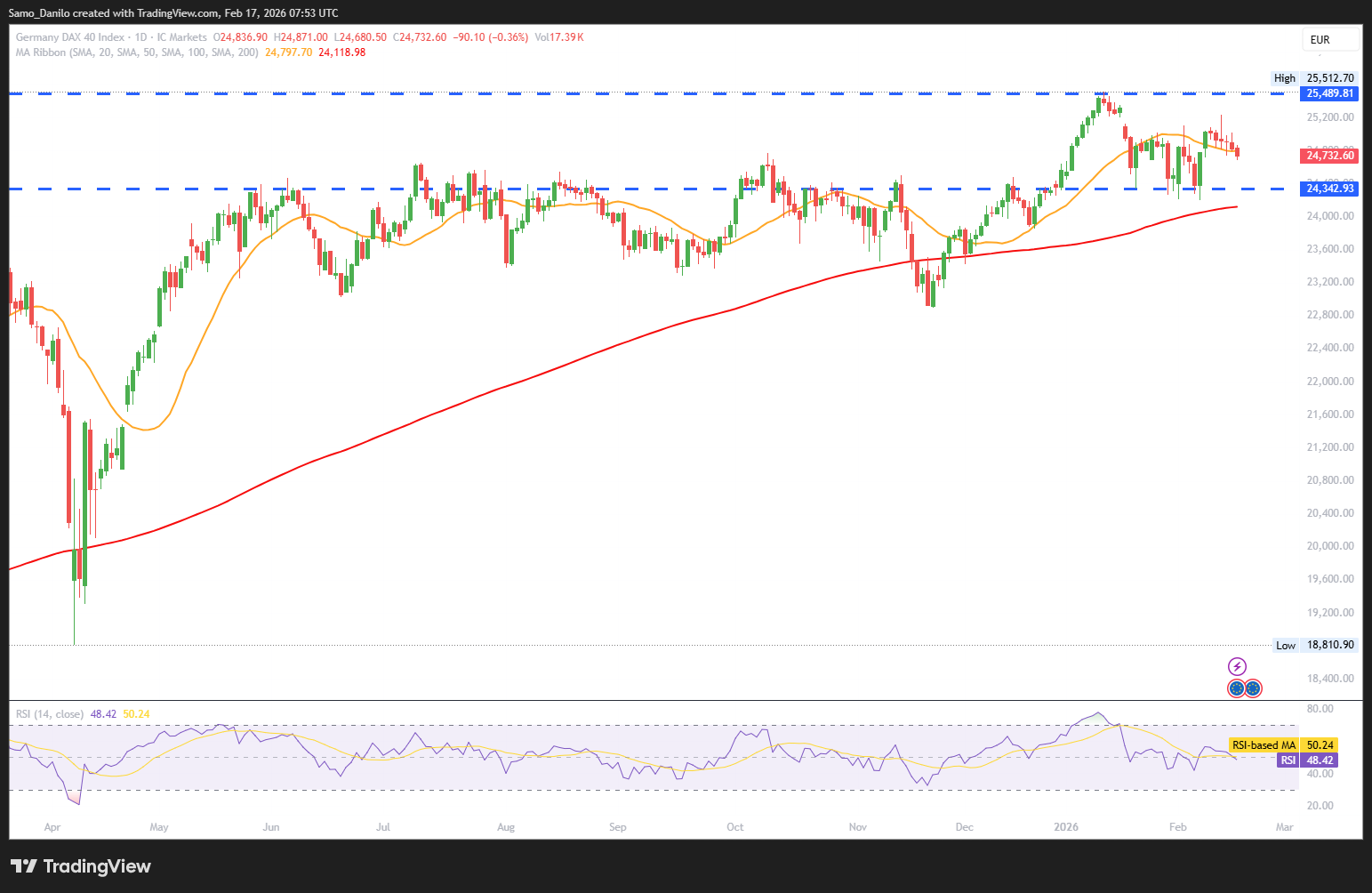
| SMA (20) | Slightly Rising | |
| RSI (14) | Slightly Rising | |
| MACD (12, 26, 9) | Slightly Rising | |
Closing statement: The DAX remains fragile after a prolonged losing streak, with inflation data offering little immediate relief. While expectations of ECB stability and improving sentiment indicators provide some support, the index may need a clear improvement in macro confidence or earnings visibility before a sustained rebound can take hold. For now, the bias remains cautious, with consolidation favored near current levels.