
EURUSD
- EUR/USD Price: EUR/USD is trading marginally higher near the 1.1800 level during the European session, supported by renewed weakness in the US Dollar. The modest advance suggests a cautious bullish bias, driven more by Dollar softness than strong Euro-specific momentum.
- ECB inflation: Christine Lagarde, speaking before the Committee on Economic and Monetary Affairs of the European Parliament, expressed confidence that inflation will stabilize around the 2% target in the near term. Her comments reinforce the ECB’s comfort with the current inflation trajectory and reduce urgency for immediate policy changes.
- German inflation: Flash German Harmonized Index of Consumer Prices is estimated to have risen 0.5% month-on-month, reversing January’s decline. The annual rate climbing to 2.1% points to gradually firming price pressures, offering tentative support to the Euro by easing fears of excessive disinflation.
- Credit conditions: Latest European Central Bank data showed that lending to businesses slowed to its weakest pace since June 2025, while household credit remained stable. This divergence highlights softer corporate investment momentum, which could limit the Euro’s upside despite steady consumer demand.
- US inflation: Investor attention is shifting to upcoming US Producer Price Index data, which could influence expectations for the Federal Reserve’s policy path. Any upside surprise in producer inflation may support the Dollar and challenge EUR/USD’s recent gains.
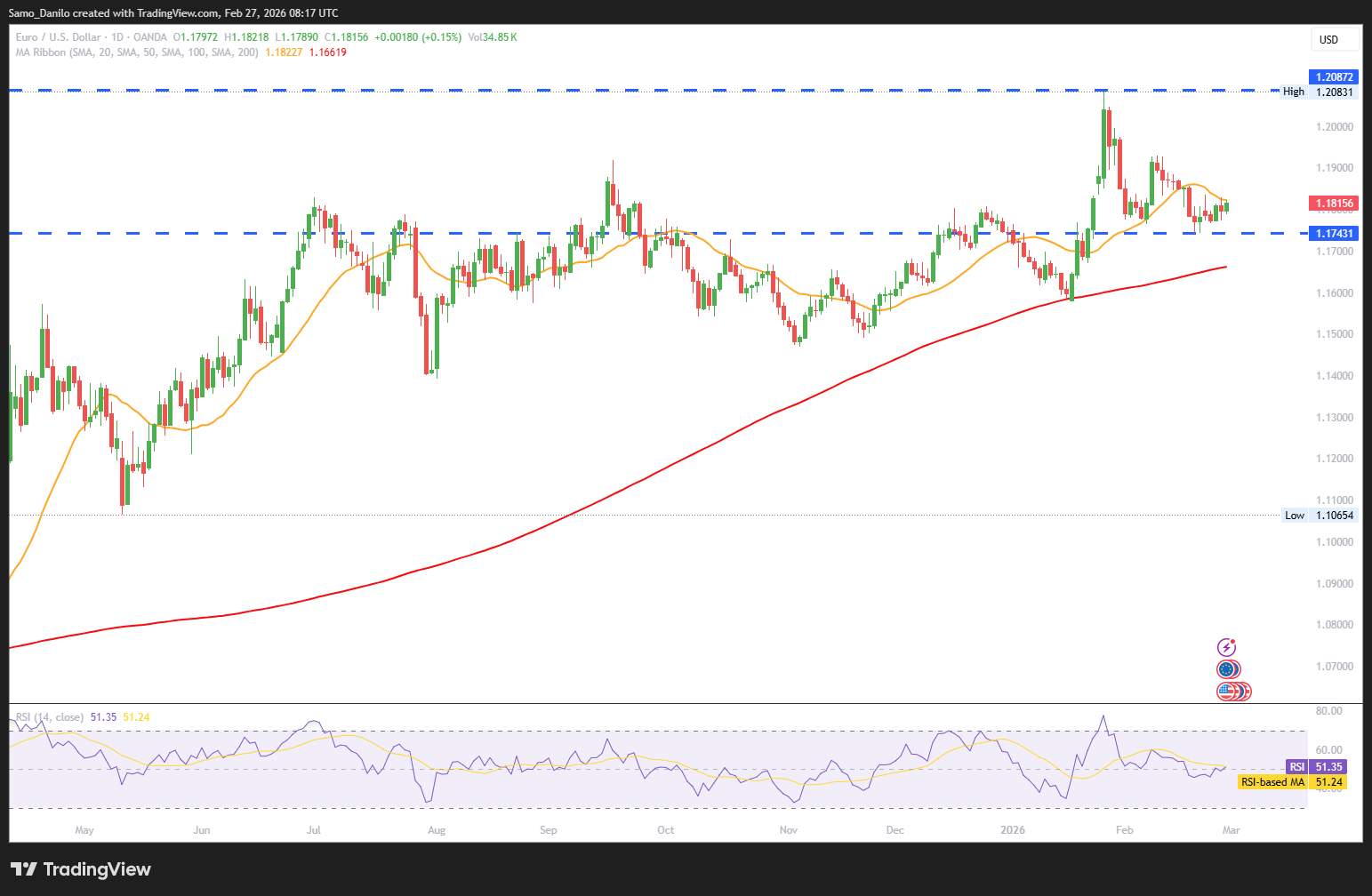
| SMA (20) | Slightly Rising |  |
| RSI (14) | Slightly Rising | |
| MACD (12, 26, 9) | Slightly Rising | |
Closing statement: EUR/USD is modestly supported by Dollar weakness and ECB confidence on inflation, but slowing eurozone credit growth and upcoming US inflation data suggest near-term gains may remain limited and data-dependent.
GBPUSD
- GBP/USD Price: GBP/USD is struggling to extend its modest rebound from the 1.3470 area, the weekly low, and is trading within a narrow range during the European session. This price behavior reflects indecision, with buyers lacking conviction amid mixed political and policy signals.
- Political news: The Green Party secured a surprise victory in the Gorton and Denton by-election, dealing a notable setback to Prime Minister Keir Starmer, as reported by The Guardian. The result, led by Hannah Spencer, introduces fresh political uncertainty that may weigh on investor confidence toward the Pound.
- UK rate cut: Economists from Deutsche Bank, ING, and UBS broadly expect the next UK rate cut to arrive in March or April. These expectations reinforce a dovish outlook for UK monetary policy, limiting Sterling’s ability to sustain rebounds.
- Fiscal communication: Chancellor Rachel Reeves is scheduled to deliver an update on the UK economy next week, according to Bloomberg. The update is intended to calm speculation around recent fiscal developments and could influence medium-term Pound sentiment.
- Limited data: There are no major UK economic releases scheduled for Friday, leaving the Pound sensitive to central bank commentary. Remarks from Huw Pill could shape near-term expectations around interest rates and inject volatility into GBP/USD.
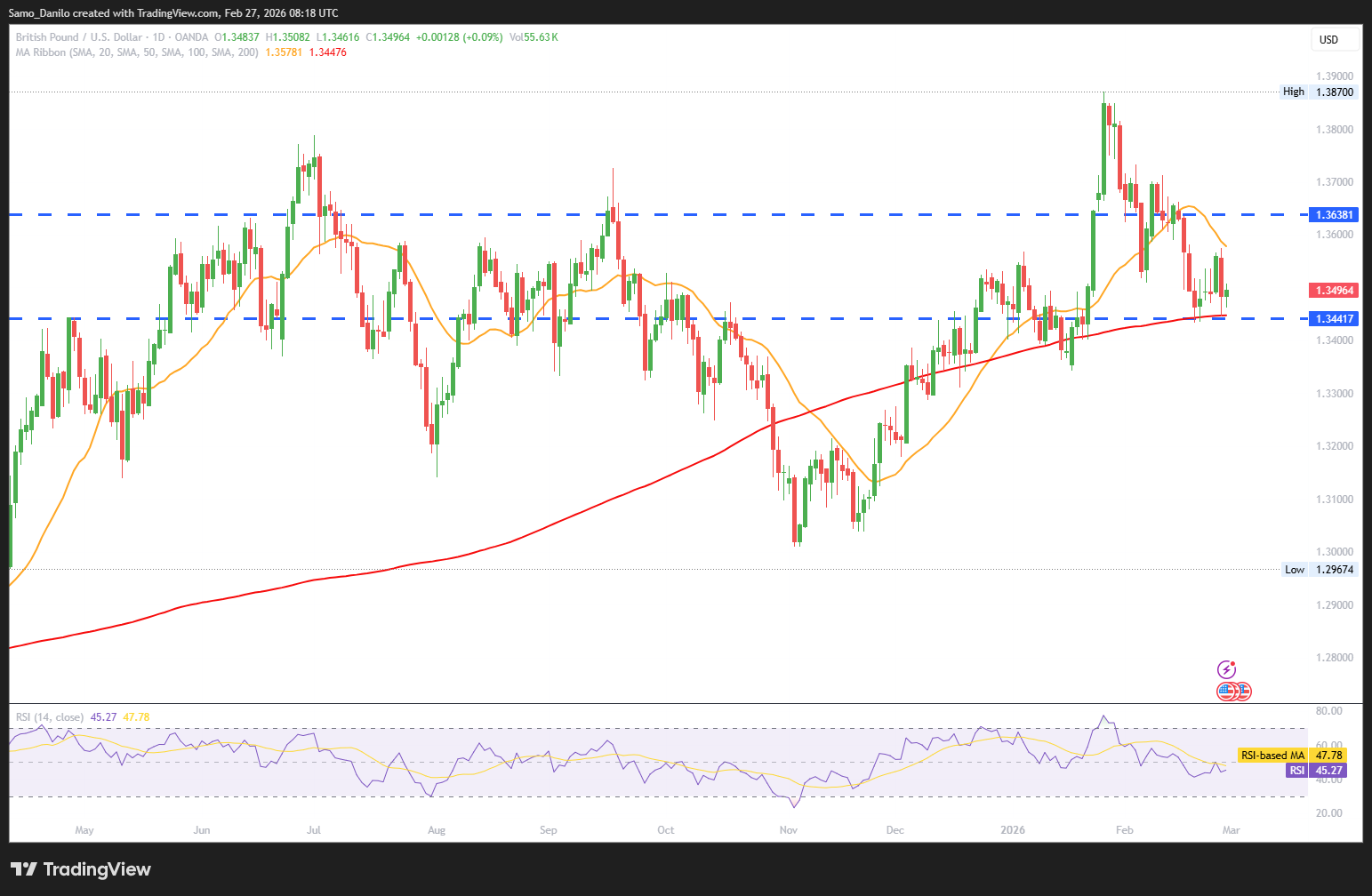
| SMA (20) | Slightly Rising | |
| RSI (14) | Slightly Falling |  |
| MACD (12, 26, 9) | Slightly Falling | |
Closing statement: GBP/USD remains range-bound as political uncertainty and dovish rate expectations offset the recent bounce, with clearer direction likely to emerge from upcoming fiscal updates and Bank of England communication.
XAUUSD
- XAU/USD Price: Gold is extending its positive bias for a third consecutive session, though bulls remain cautious below the $5,200 threshold. The lack of firm acceptance above this level suggests buyers are waiting for a clearer technical confirmation before committing to further upside.
- Yield prices: The US 10-year real yield has fallen sharply from 1.98% to 1.72%, significantly lowering the opportunity cost of holding non-yielding assets. This decline reinforces the recent rebound in gold prices and provides a strong macro tailwind for the metal.
- Diplomatic progress: Oman’s Foreign Minister Badr Albusaidi stated that the United States and Iran will continue nuclear talks after making significant progress in Switzerland, with negotiations moving to Vienna. Diplomatic momentum slightly tempers geopolitical risk premiums, though uncertainty remains elevated.
- EU sanctions: The European Union is coordinating with the G7 on plans to impose a full ban on maritime services for Russian crude oil, according to sanctions envoy David O’Sullivan. Escalating sanctions risks can heighten broader market uncertainty, indirectly supporting safe-haven demand for gold.
- Inflation data: Attention later in the session turns to the US Producer Price Index, a key input for inflation expectations and the US Dollar. The data could influence real yields and near-term gold price direction, especially if it shifts expectations around Federal Reserve policy.
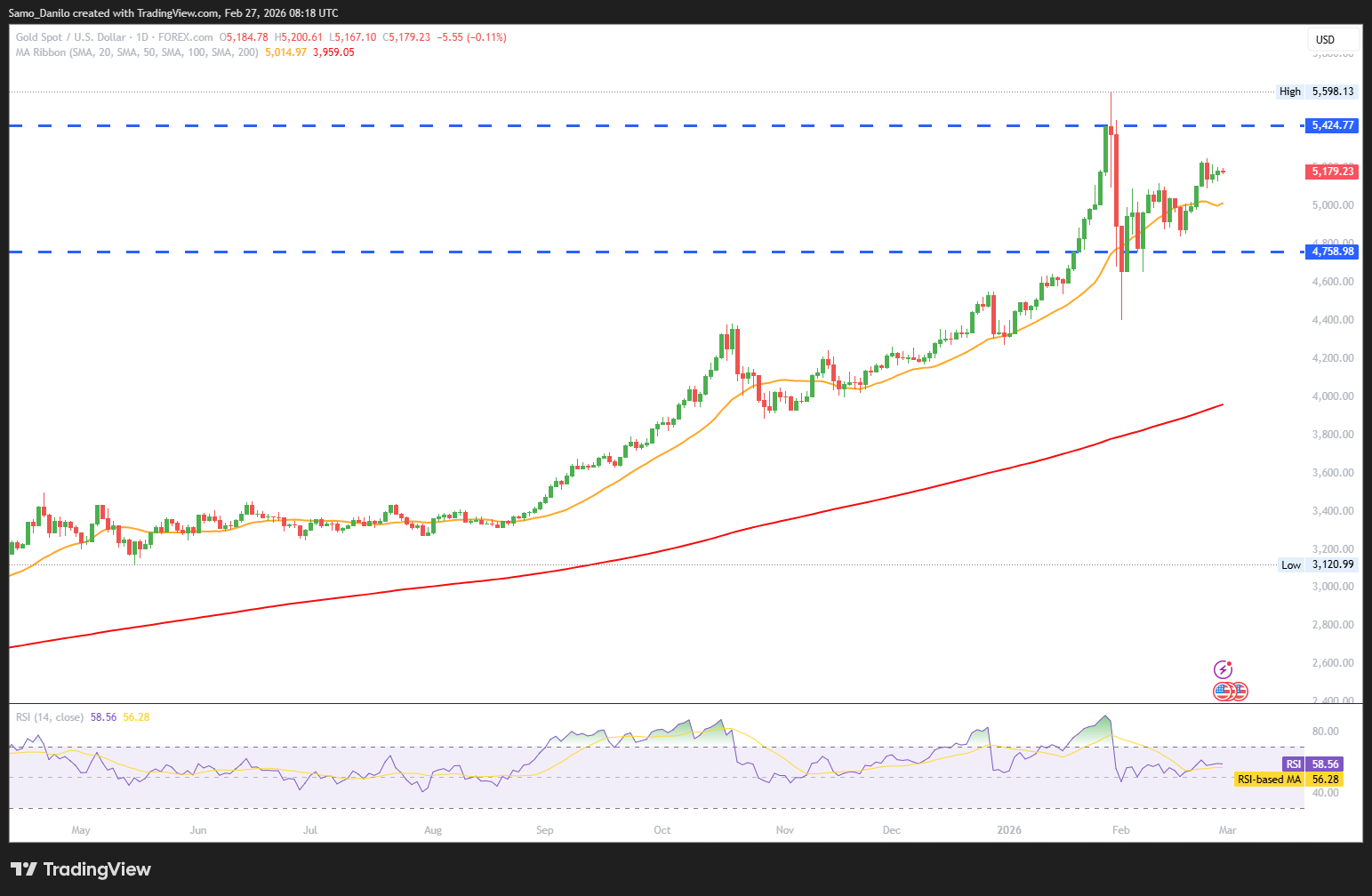
| SMA (20) | Rising | | |
| RSI (14) | Rising | | |
| MACD (12, 26, 9) | Slightly Rising | |
Closing statement: XAU/USD remains supported by falling real yields and lingering geopolitical uncertainty, but a decisive break above $5,200 is needed to unlock further upside, with near-term direction hinging on US inflation data.
CRUDE OIL
- Crude Oil Price: West Texas Intermediate (WTI) is trading near $65.65 during early European hours, holding a subdued tone as bearish supply-side signals continue to outweigh near-term demand optimism.
- US inventories: The latest weekly data from the Energy Information Administration showed a massive 15.989 million barrel increase in US crude stockpiles for the week ending February 20, the largest build in three years. This follows a steep 9.014 million barrel draw the prior week and highlights persistent supply overhang concerns in the US market, exerting downward pressure on prices.
- North Sea: The UK Treasury is reportedly in discussions with North Sea oil and gas producers about scrapping the Energy Profits Levy ahead of its planned 2030 expiry. The levy, which has been extended and raised multiple times, pushed the sector’s headline tax burden to 78%. Any rollback could improve investment incentives and stabilize long-term North Sea output, adding to global supply expectations.
- Offshore leasing: The Bureau of Ocean Energy Management announced plans to prepare a programmatic environmental impact statement for potential offshore oil and gas lease sales across Northern, Central, and Southern California. This move by the Trump administration marks the first formal step under National Environmental Policy Act and signals a more supply-friendly US energy policy stance.
- Russian oil: Russia strongly criticized the European Union’s proposal to permanently ban Russian oil imports. Foreign Ministry spokeswoman Maria Zakharova dismissed the plan as “madness,” underscoring ongoing geopolitical tensions.
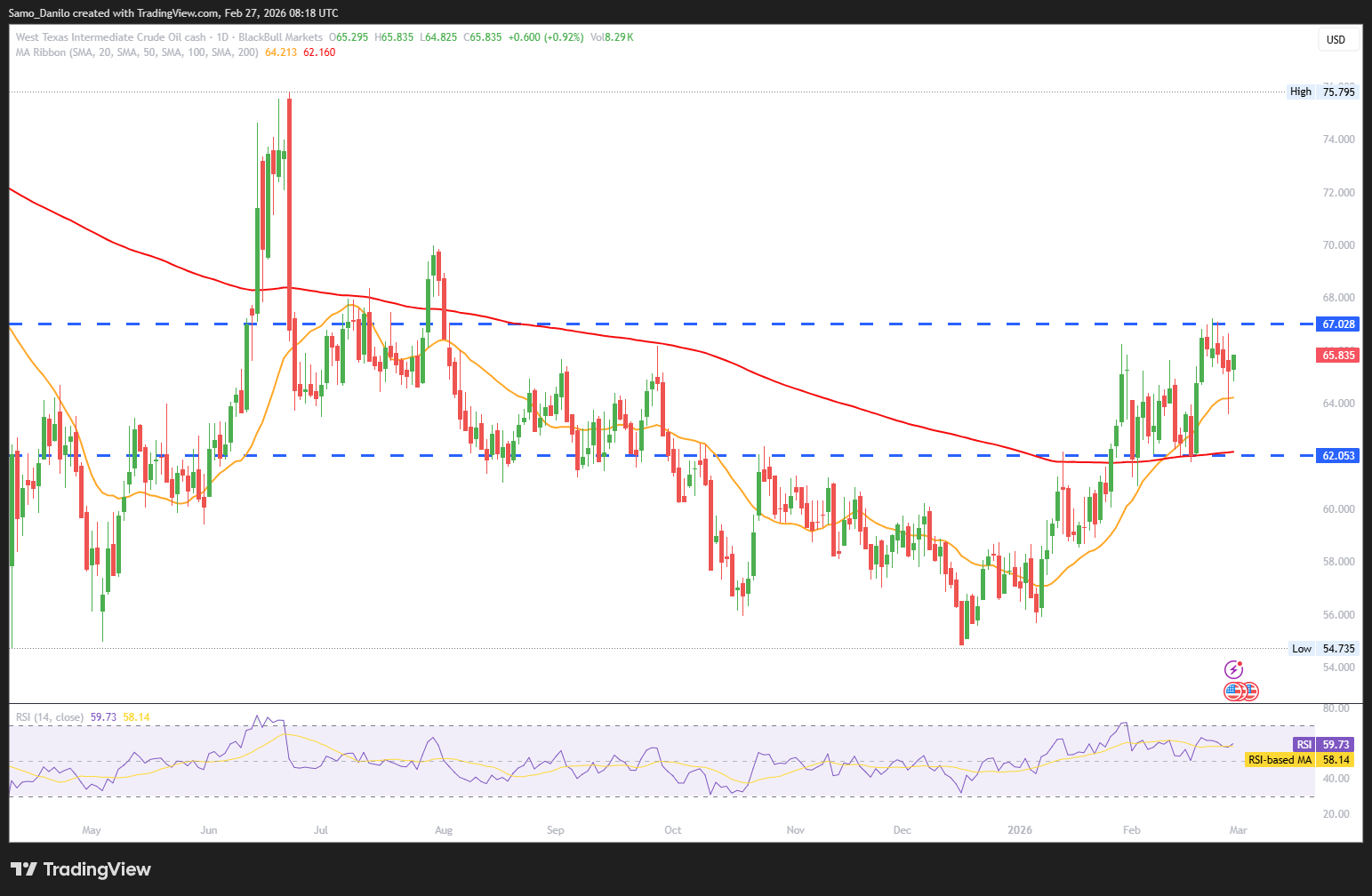
| SMA (20) | Rising | | |
| RSI (14) | Rising | | |
| MACD (12, 26, 9) | Rising | | |
Closing statement: WTI remains pressured by a historic US inventory build and increasingly supply-friendly policy signals from both the US and UK. While geopolitical tensions with Russia and the EU linger, the prevailing narrative is one of ample supply, limiting upside potential in the near term unless demand conditions materially improve.
DAX
- DAX Price: Germany’s DAX is set for a steady start to Friday’s session and continues to hold comfortably above the key 25,000-point level. The index remains supported by resilient corporate earnings, while traders stay cautious ahead of key inflation data from Germany.
- BASF’s outlook: Chemical giant BASF struck a guarded tone for the current year. Looking further ahead, the DAX-listed group is targeting EBITDA (before special items) in a range of €6.2 billion to €7.0 billion for 2026. While the medium-term guidance provides some visibility, the cautious near-term outlook reflects ongoing uncertainty around global demand, energy costs, and the broader industrial cycle.
- Bayer news: Bayer is pushing forward with a major US settlement proposal related to thousands of lawsuits over its glyphosate-based Roundup herbicide. In a more constructive development, the company also reported positive final overall survival results from a Phase III cancer drug trial, potentially strengthening its oncology pipeline and offering a longer-term positive catalyst for the stock.
- Allianz results: Insurance heavyweight Allianz posted a record operating profit of €17.4 billion. Total business volume rose to €186.9 billion in 2024, up from €179.8 billion a year earlier. Internal growth came in at a robust 8.1%, supported by expansion across all business segments, reinforcing Allianz’s role as a key stabilizing force within the DAX.
- Attention now shifts to the preliminary Consumer Price Index (CPI) reading from Germany, due later on Friday. The data will be closely watched for signals on underlying inflation pressures and could shape expectations around future European Central Bank policy easing.
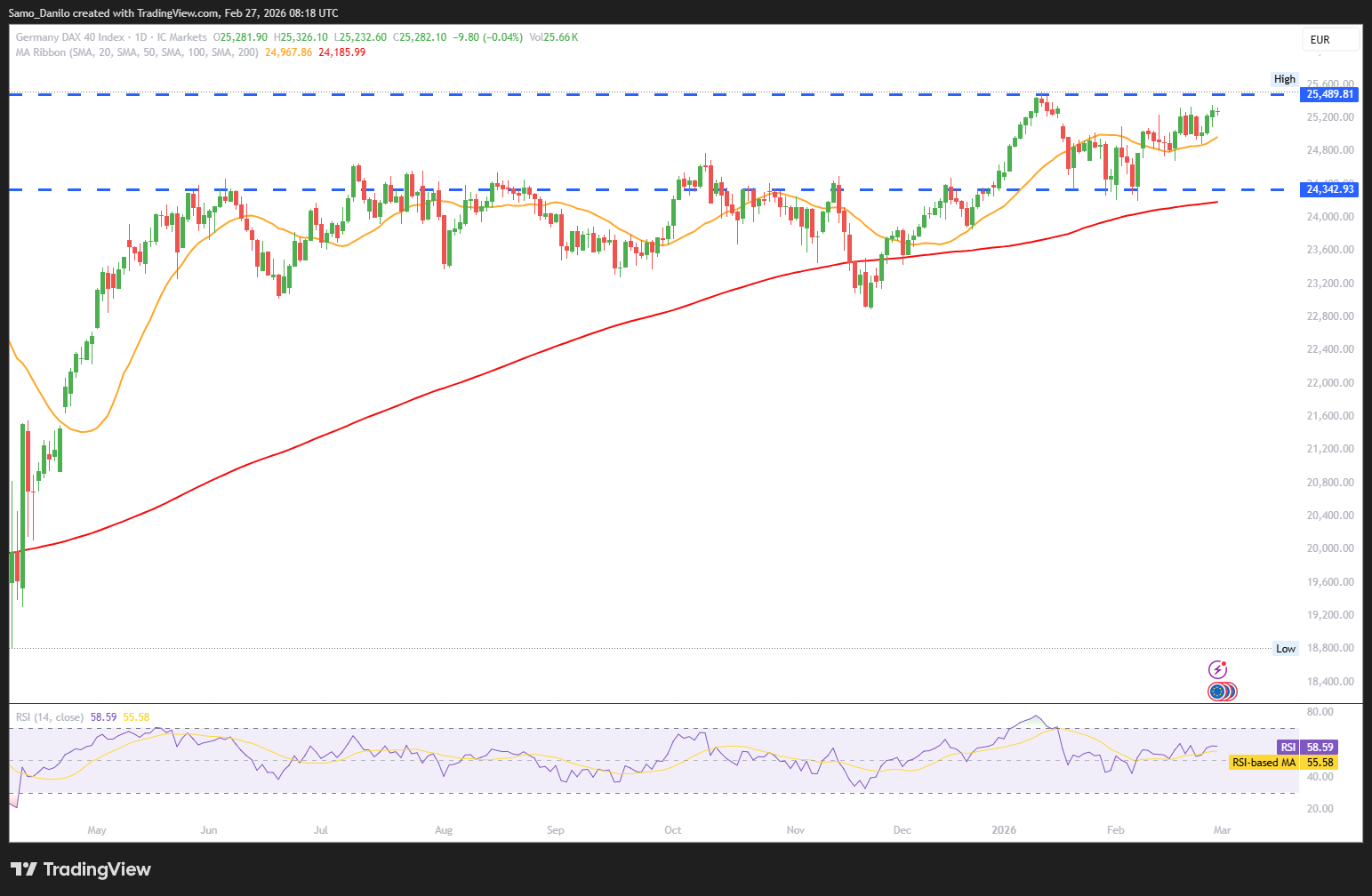
| SMA (20) | Rising | | |
| RSI (14) | Rising | | |
| MACD (12, 26, 9) | Slightly Rising | |
Closing statement: The DAX remains underpinned by strong corporate results, particularly from Allianz, while mixed signals from BASF and Bayer highlight ongoing sector-specific challenges. With the index holding above 25,000, near-term direction is likely to hinge on the German CPI print and its impact on interest rate expectations.