
EURUSD
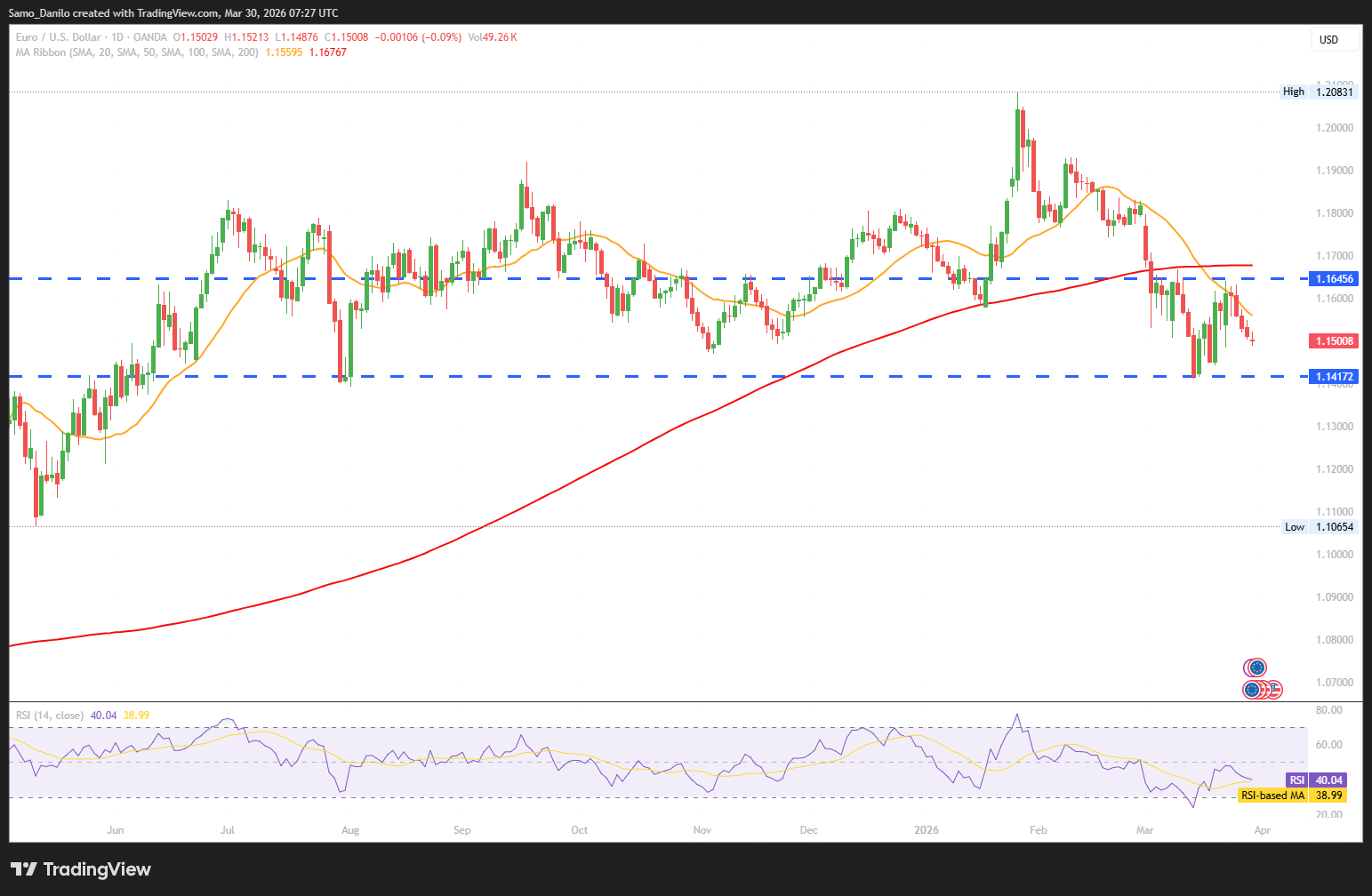
- EUR/USD Price: The EUR/USD has recovered slightly after retesting a one-week low, holding around the 1.1510 mark. This suggests a temporary pause in downside momentum as traders reassess near-term drivers.
- ECB stance: François Villeroy de Galhau signaled that policymakers are ready to act if energy-driven inflation broadens but stressed it is still too early to discuss rate hike timing. This balanced tone reflects caution despite rising market expectations for tightening.
- Geopolitical news: Escalation fears remain elevated as reports indicate the Pentagon is preparing for prolonged operations in Iran. Additional involvement from Iran-backed groups like the Houthis increases uncertainty, supporting safe-haven demand for the USD.
- Global trade: Discussions at the World Trade Organization around reform packages add another layer of macro backdrop. While not an immediate driver, evolving trade frameworks could influence longer-term currency flows.
- Data ahead: Markets are now focused on upcoming German inflation figures, including CPI and HICP. These releases will be crucial in shaping expectations for European Central Bank policy and the euro’s near-term direction.
| SMA (20) | Falling |  | |
| RSI (14) | Falling | | |
| MACD (12, 26, 9) | Falling | | |
Closing statement: EUR/USD is stabilizing, but geopolitical tensions and cautious ECB signaling keep upside limited, with upcoming inflation data likely to determine the next directional move.
GBPUSD
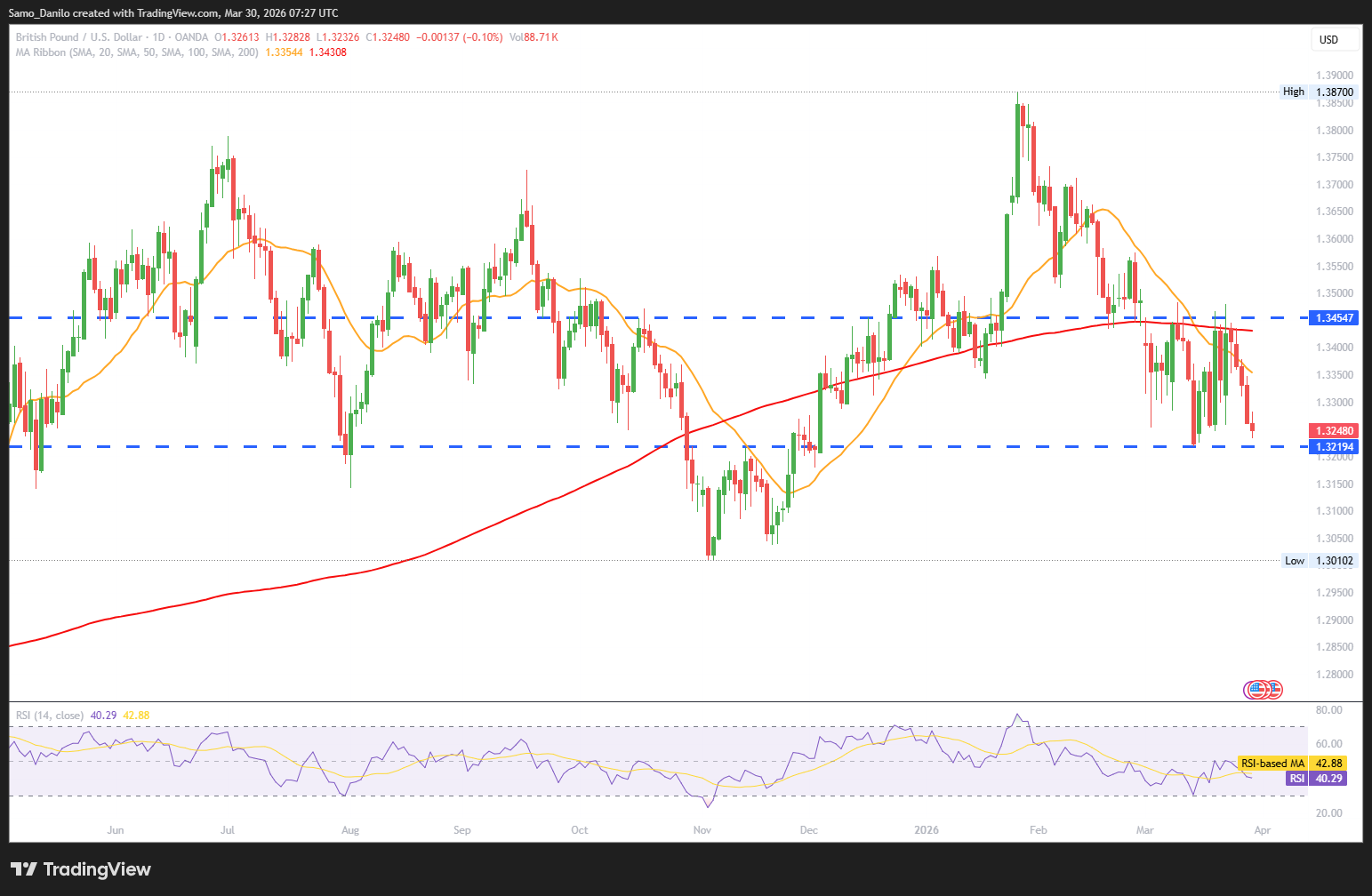
- GBP/USD Price: The GBP/USD edges higher toward 1.3270, snapping a four-day losing streak. The move suggests short-term stabilization, though broader downside pressure remains in place.
- Trump's comments: Comments from Donald Trump highlight mixed signals on the Iran conflict, with both negotiation optimism and potential military escalation on the table. This uncertainty continues to support the US Dollar as a safe-haven asset.
- UK energy: Keir Starmer is set to meet executives from major energy firms like Shell, BP, and Equinor. This underscores growing concerns over energy security and pricing amid the Middle East crisis.
- Business confidence: The Lloyds Business Barometer jumped to 55 in March, signaling a strong rebound in UK business sentiment. This improvement provides some support to the Pound despite external headwinds.
- Corporate risks: Ineos warned of delays to a major petrochemical project due to disruptions in the Strait of Hormuz. While higher energy prices may benefit parts of the sector, supply chain instability poses broader economic risks.
| SMA (20) | Falling | | |
| RSI (14) | Falling | | |
| MACD (12, 26, 9) | Falling | | |
Closing statement: GBP/USD is attempting a modest rebound, supported by stronger domestic sentiment, but geopolitical risks and energy market disruptions continue to favor the US Dollar and cap upside potential.
XAUUSD
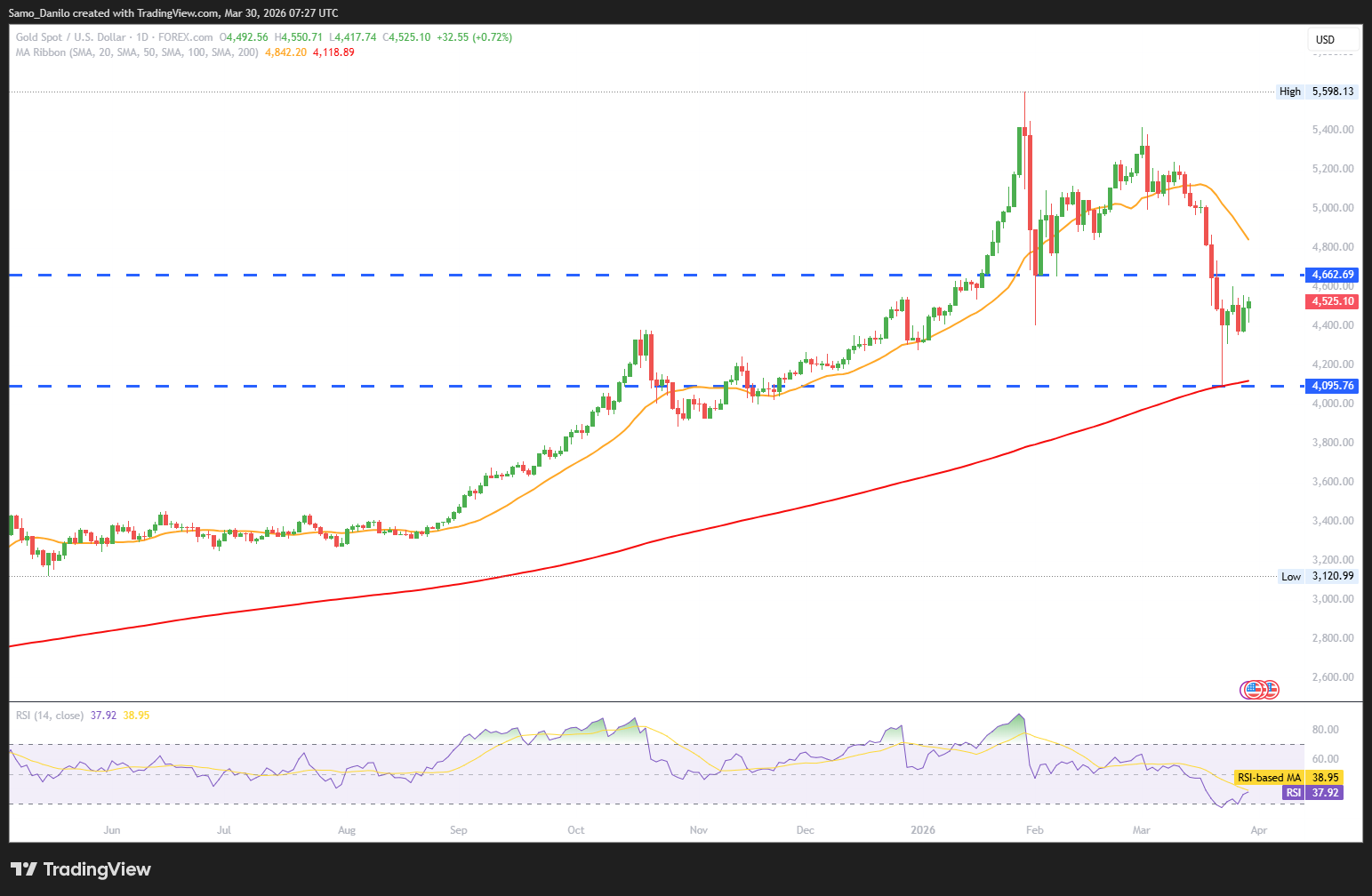
- XAU/USD Price: The XAU/USD has reversed its Asian session dip and climbed back above the $4,500 mark, building on Friday’s strong gains. This suggests renewed bullish momentum as buyers step in on dips.
- Fed leadership: The US Senate Banking Committee is expected to deliberate on the nomination of Kevin Warsh as the next Fed Chair. Leadership uncertainty at the Federal Reserve can influence rate expectations and, in turn, gold prices.
- Regulatory developments: The US Department of the Treasury is set to meet with insurance regulators regarding private credit markets. Any tightening in financial conditions or emerging risks could support gold through safe-haven demand.
- Rate expectations: Nomura now expects the Fed to deliver rate cuts in September and December. Delayed but still expected easing helps underpin gold by reducing the opportunity cost of holding non-yielding assets.
- US-China trade: China’s Commerce Ministry has initiated a probe in response to US trade actions, though Jamieson Greer downplayed the move as symbolic. Persistent trade frictions add another layer of uncertainty, supporting gold’s appeal.
| SMA (20) | Falling | | |
| RSI (14) | Falling | | |
| MACD (12, 26, 9) | Falling | | |
Closing statement: Gold is regaining upward momentum, supported by easing expectations, geopolitical and trade uncertainties, while Fed-related developments remain a key catalyst for the next move.
CRUDE OIL
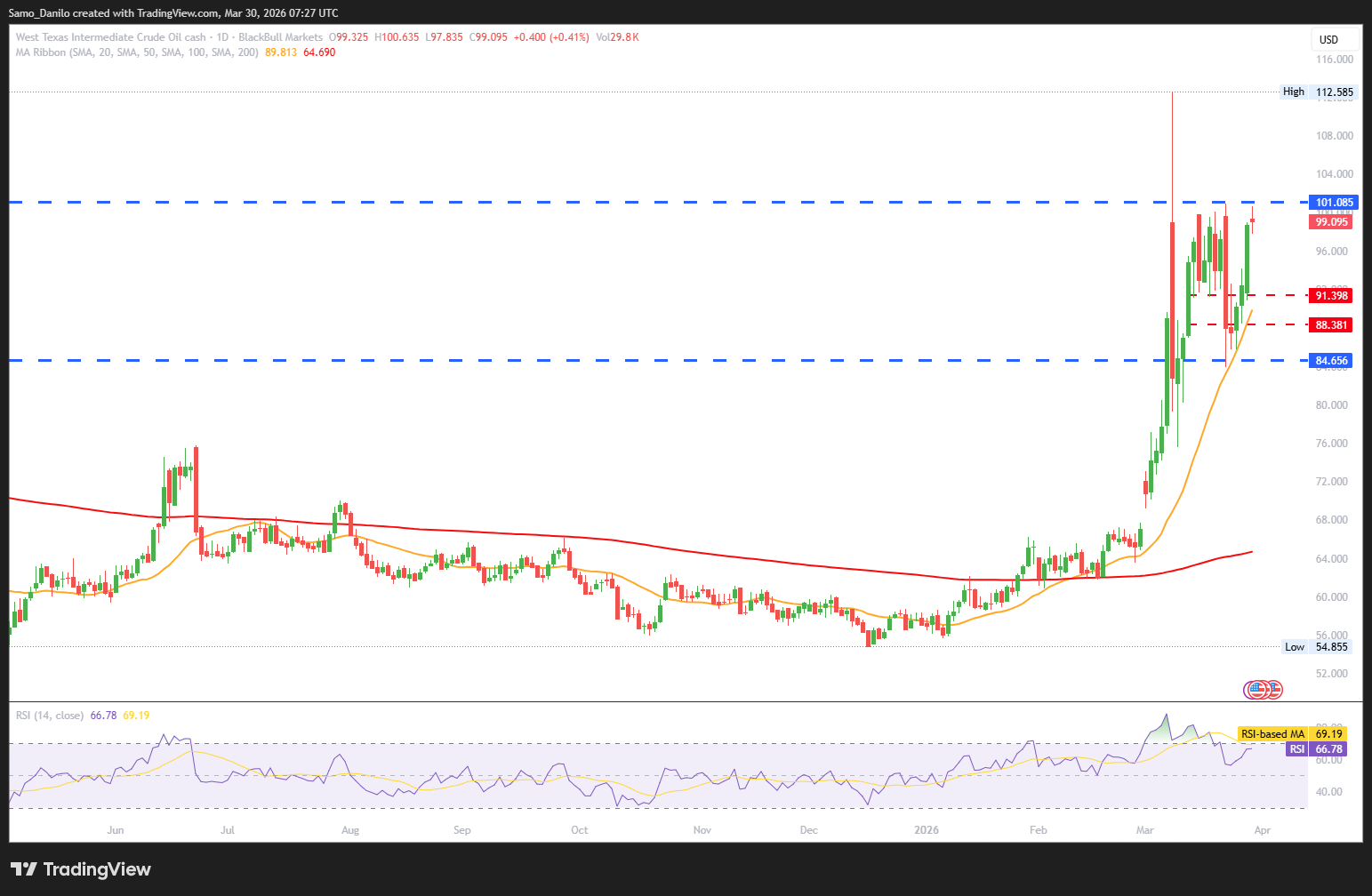
- Crude Oil Price: West Texas Intermediate (WTI) continues its upward momentum, trading near $99.40 per barrel after three consecutive days of gains. The move reflects persistent supply concerns and strong geopolitical risk premium in energy markets.
- Middle East: The involvement of Houthis, launching attacks near key shipping routes like the Bab el-Mandeb Strait, opens a new front in the conflict. This significantly heightens risks to global oil transportation and adds upward pressure on prices.
- Russian supply: Russian exporters are warning of possible force majeure on shipments from Baltic ports due to infrastructure damage. Disruptions from Russia further tighten global supply expectations and reinforce bullish sentiment.
- Trade routes: Reports of Russian oil tankers entering sensitive zones like Cuba’s exclusive economic area highlight shifting trade flows. These adjustments reflect broader dislocations in global oil logistics amid sanctions and conflict.
- Russia budget: Despite logistical challenges, Kremlin revenues from oil have surged to a four-year high. Elevated prices near $100 per barrel are boosting fiscal inflows, underscoring how geopolitical tensions are redistributing gains across producers.
| SMA (20) | Rising |  | |
| RSI (14) | Rising | | |
| MACD (12, 26, 9) | Rising | | |
Closing statement: Oil prices remain firmly supported near the $100 mark as escalating geopolitical tensions and supply disruptions across multiple regions tighten the global market, keeping the upside bias intact.
DAX
- DAX 40 Price: The DAX is trading around 22,270 points, approaching the important 22,000 level tested مؤخently. This area is emerging as a critical support zone, with a break lower potentially opening the door for further downside.
- Inflation outlook: The Organisation for Economic Co-operation and Development revised its US inflation forecast sharply higher to 4.2%. Elevated inflation expectations reinforce a higher-for-longer rate environment, which is generally negative for equity valuations.
- Bayer news: Bayer AG received EU approval for a new indication of its drug Kerendia for heart failure patients. This development provides a supportive fundamental catalyst for the healthcare sector within the index.
- Defense sector: Rheinmetall saw its price target lowered amid increasing competition in the German ammunition market. This signals potential margin pressure despite strong demand linked to geopolitical tensions.
- Structural dependence: A study by University of Sussex and King's College London highlights that German firms remain heavily dependent on both the US and China. This limits strategic flexibility and exposes the economy to geopolitical fragmentation risks.
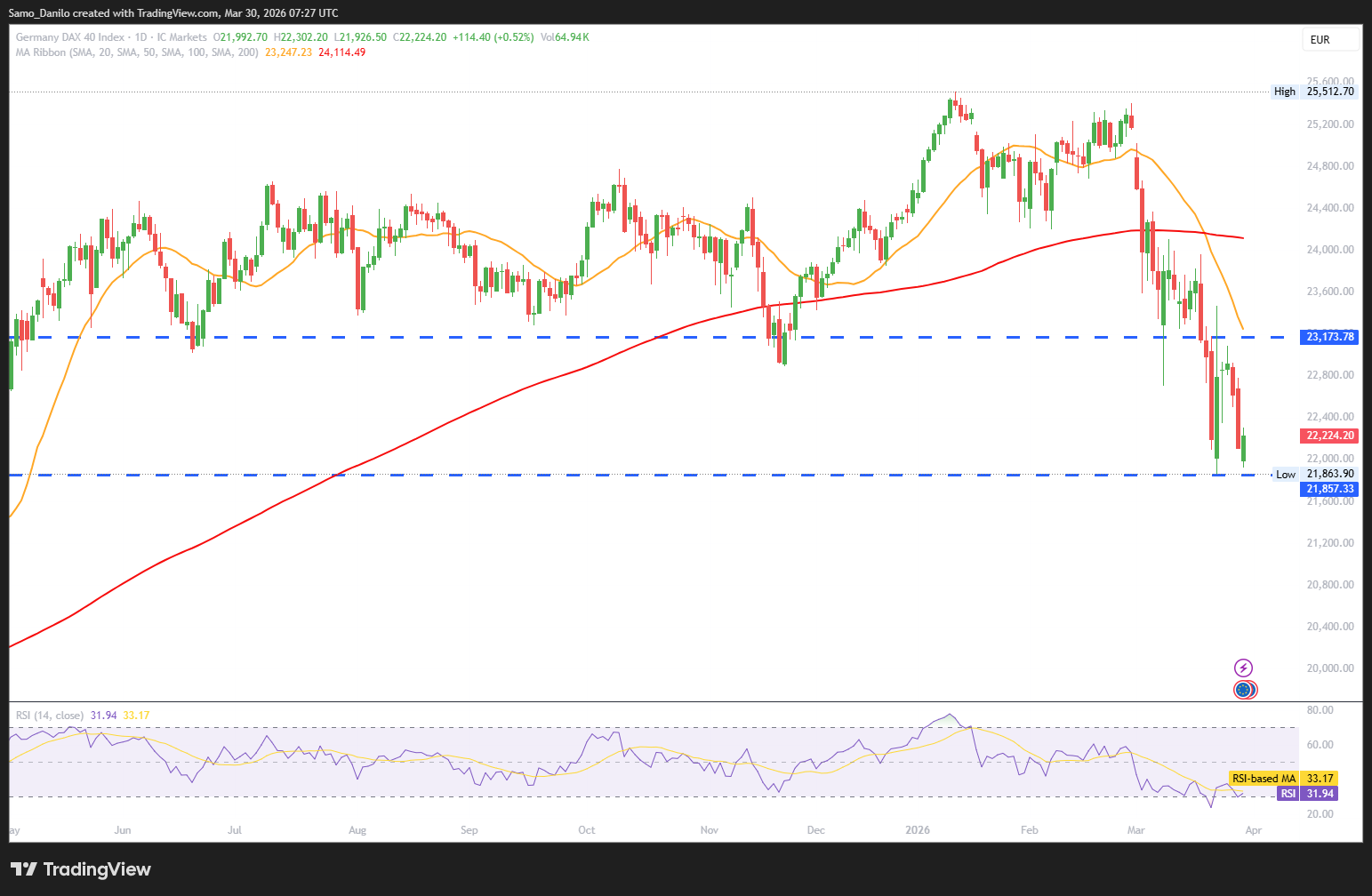
| SMA (20) | Falling | | |
| RSI (14) | Falling | | |
| MACD (12, 26, 9) | Falling | | |
Closing statement: The DAX remains under pressure near key support levels, with macro headwinds from inflation and geopolitical dependencies offsetting positive corporate developments, leaving the near-term outlook cautious.